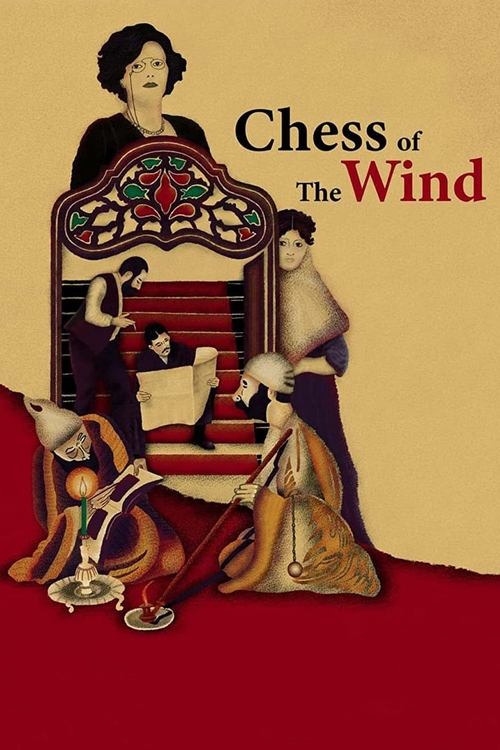
I cannot believe a film that looks this good was discovered in an antique shop; I hope the inevitable World Cinema Project Blu-ray shows some pre-restoration images. The film itself rightly bears comparisons to Visconti in its opulent view of a dying aristocracy, but the gradual escalation of tensions result in a final act turn that feels oddly close to giallo, a highly chromatic dive into dream-logic horror that masks a jugular-ripping burst of class politics. (Oddly, the final 20 minutes made me think of Knives Out if it committed to its insurrectionist view of servants vs masters rather than settled for liberal reassurance.) A major rediscovery that is going to smash its way into the canon with shocking speed.
The goldfish in the glass bowl hanging in the atrium becomes suspended among the household vitriol which surrounds it; gilded cages, etc. Here though, the glass presents the delicacy of the situation, the familial matters a microcosm of the sociopolitical environment they're situated in. It sits, burbling, bound to a life of splendor overhanging its death, the sword of Damocles inverted.The acid in the bottomless jars piled up in the basement become the antacid to the vitriol, out of sight and out of mind for things that must leave but can't leave the house they're in. One wonders why there are so many, if many were used, how many goldfish who've left this way. A household built on glass graves and as such less a house than a mass grave. When the glass shatters and the spectres break free it will be a haunt not just personal but historic, politic.
Extraordinary. A lost jewel burnished and presented to the world anew through The Film Foundation, Fondazione Cineteca di Bologna and original director Mohammad Reza Aslani's beautiful 4k restoration.In terms of the core story, it bears a striking resemblance to Les Diaboloque but it's also culturally specific. Made in the mid-70s and set in the 20s, in the aftermath of the Iranian Constitutional Revolution, it's ideologically charged. So much so that it was banned only a couple of years after its very limited release during the purging of cultural artifacts deemed to be intellectually corrupt by the anti-Western theocracy. It's not hard to see why it would've been seen to as a provocation, a challenge to the Goverance of the Jurist; in its overt expression of homosexuality - female homosexuality - and general feminist sympathies, it runs contrary to sexual-political and religious orthodoxy. The sight of the servant girl literally opening the gates to a new dawn is still a powerful image. The reels of the original film were thought to be lost, but their chance rediscovery in 2015 paved the way for the restoration of the original 35mm negatives.It's a blending of cultural influences; Sheyda Gharachedaghi's incredible, atmospheric score brings a distinctive Middle Eastern flavour to Houshang Baharlou's beautifully shot chiaroscuro interiors, clearly drawing on the legacy of the Dutch masters, Vermeer in particular. In its observation of the decline of aristocratic, class-based society, Visconti is another obvious influence - the final shot, a 50 years elision in a blink of the camera eye, pans away from the decaying patrician edifice to take in a 180 tracking shot of modern Tehran. Structurally, the film has an undeniably Shakespearean tenor; a Shakespearean tragedy, re-gendered and progressively re-imagined for a hypothetical modern Iran. There is a loose five-act structure to the film, and the static tableau of gossiping washer women we keep returning to, form a kind of chorus, letting slip expository fragments as they comment on the widower's progress. It also makes a great visual counterpart to the bulk of the internal action as the frame of the wide exterior composition is flooded with light; a direct contrast to the oppressive, penumbral cells of the first lady's ancestral hive.This is a stately and formally immaculate piece of work. The acting, direction and audiovisual elements are all top notch and though I know very little about the history of Iranian cinema it seems like it must mark the re-emergence of an important chapter in that history from one of its exiled auteurs. Sadly, the hostility to his film in his native land meant he wouldn't direct another feature for almost 30 years. The long overdue reappraisal of his work must be a bittersweet vindication of its enduring value.