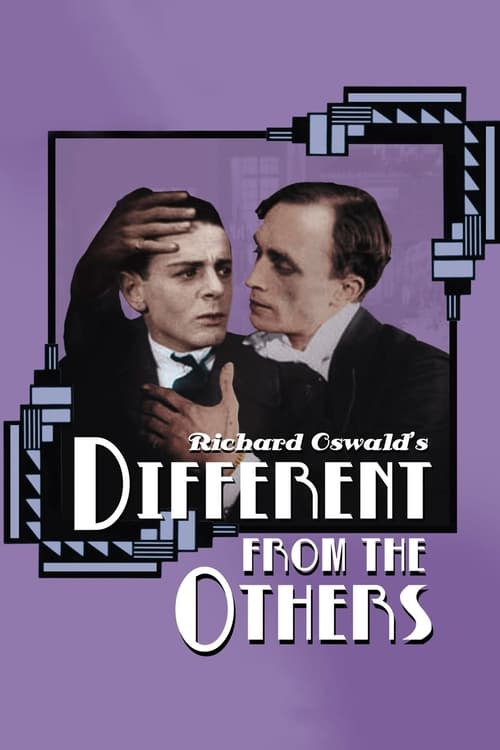
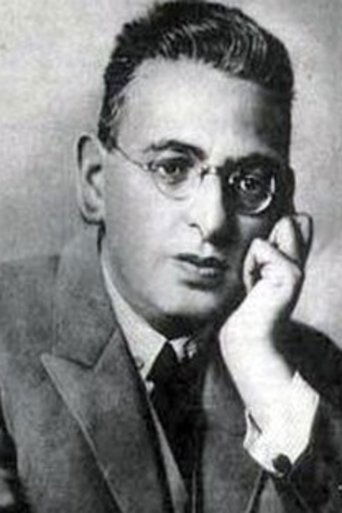
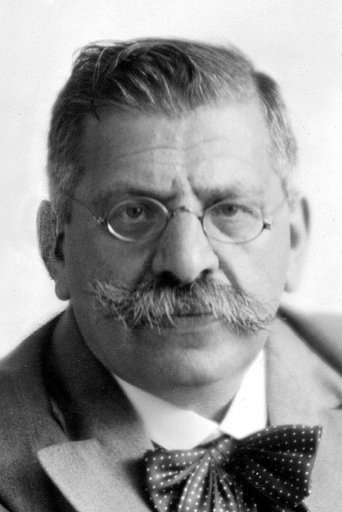
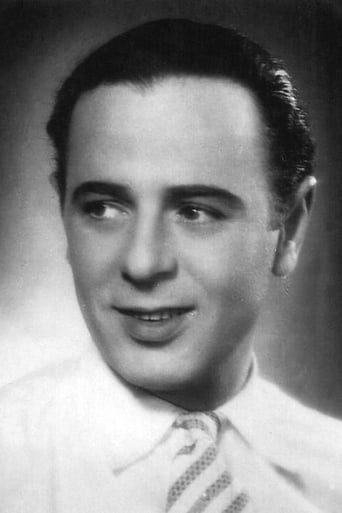
It's difficult to review a film that 1. is incomplete (All but one print of the film were destroyed by the Nazis, the version I watched had missing scenes filled in with title cards & stills) and 2. is an unashamed 'message' film.The reason I gave it the full star treatment is because this is an outright pro-LGBT film made in 1919. There is no subtext or innuendo here. It is incredibly courageous. Conrad Veidt is fantastic, he conveys the character's feelings of love & affection towards another man, and the fear of his blackmailer, wonderfully. My favourite scene is the lecture given by the sexologist Dr. Magnus Hirschfeld (who also co-wrote the film), in which we see a slideshow about homosexual couples, transgender people, intersex people, and the dreadfulness of bigotry & criminalisation towards these people. I was amazed to see such pictures & progressive politics in a film for this time. To review a film like this based on it's plot is meaningless; that isn't why it was made. It was made to present pro-LGBT politics to a mass audience, which unfortunately it didn't get. You cannot divorce it of historical context. That is how it should be judged.
Understand, this was suppressed intentionally. Every other review of this mentions that what survives is a butchered copy, made from a print that somehow escaped the Nazis. Understand that the Nazis targeted anything pro-transgender, anything pro-queer with the intent of obscuring our existence, which had flourished (relatively) in Germany since World War I - read the first five chapters of Lavender and Red for some historical perspective, and then read the rest. While in the hearts and minds of the average Nazi, the intent was probably extermination, many Nazis very well knew that exterminating us was impossible. Kill us all today, and tomorrow new trans and queer people will be born. So they knew that they must erase us from the history books, the science books, and public perception, and enact such terror against us that none would be brave enough to step outside the closet.So a film like this had to be destroyed, according to their cruel agenda. And yet, it survived.Today, the work of the Nazis and similarly repressive powers (capitalist governments in general, with a few rare exceptions) still holds sway as the agenda of the capitalists, especially in the U.S. and the U.K., pushes the idea that trans people are a new phenomenon and that it's somehow bad to teach children about queer sexuality. The decimation of Magnus Hirschfeld's library and clinic ripped a hole in the history of LGBTQ people that still hasn't fully healed. Dora Richter vanished forever, but somehow she is not forgotten. In spite of that deep wound, we persist, and many curious and determined queer and trans historians have done great work unearthing what was lost.I don't know who worked on the restoration of this film, but they did necessary work. Though the history of queer film is only a small part of recovering what was taken from us, it is an important part. You can cite an historical event, point to an individual and say, "there's this diary entry, this painting, this account from witnesses, see? it's proof! They were gay! They were trans!" And the naysayers will dismiss it easily. But film, especially a narrative such as this one, is a much more difficult document to deny. There's no alternate interpretation of this; there's no subtlety. There's no way to see this and say that no one in this era was pro-LGBTQ. There's no way to see this and say that no one had knowledge of queer people 100 years ago.It's right there, flickering on the screen.Yes, the queer and gender theory presented here isn't identical to our current understanding of LGBTQ people, but what is presented in this film is so radically progressive in comparison to Brokeback Mountain or Hedwig and the Angry Inch or whatever, because it's rooted in an attempt, an earnest, compassionate, queer-driven attempt to argue against our oppression - in this case, a specific law - by arguing that it is better to be alive and fighting, that we can change things. "If you want to honor the memory of your friend, then you musn't take your own life, but instead keep on living to change the prejudices whose victim - one of countless many - this dead man has become."In June, it will be the tenth anniversary of Kaylie's death. I have thought often lately that I want to see her again, a gentle, sad form of ideation that overwhelms me even to type. Reading these words on screen tonight seared into my soul; I have to keep living. I can't give up the fight. As much as I want to see her again - and that is a fond thought but not rooted in any belief in an afterlife - I cannot fail her. I have to fight for her and every other victim of anti-trans hatred. I have to honor her and love her in this way, because I cannot face her if I do not. No one deserves to die alone, cold, in a distant place, in so much pain.I can't help but compare the above quote to the Mother Jones quote that goes something like, "Mourn the dead and fight like hell for the living." Right now, the fascists are rising in power again. The capitalist class sees the writing on the wall; they know there is mass discontent. They know that their addiction to war-for-profit has limits and that they need scapegoats. So they have ramped up their terroristic war against immigrants, Black people, and trans people, to name but a few of their current targets, and use us as distractions, excuses, justifications for increasing the power of the police state and their control of the hearts and minds of the people. They ban books, silence teachers, and pass laws that control what we wear, who we fuck, and who we say we are. They encourage violence against us. And it's all to ensure that we're divided against one another rather than united against them.To call us scapegoats, though, is not to downplay the violence against us. When they targeted us in the 1930s, we were used then as scapegoats as well - the attempt to suppress us completely was motivated by an attempt to maintain patriarchy under capitalism, all as part of their need to maintain control over the masses. It's the same now. Their violence against us is being called genocidal by some; if seen in full context, that seems right - they are putting immigrants in concentration camps, murdering Black people in the streets, imprisoning children, taking children from their families, loosening child labor laws, stripping away every social benefit they can (especially what little there was in healthcare or food benefits), and escalating everything from anti-Asian hate to anti-semitism. It's a scary time to be alive.I keep seeing people talking about trans people fleeing states where anti-trans laws are being passed, and I get it. I get that these articles are trying to convey how terrible it is right now, and I can't help but think about how if I lose access to estrogen I might have to flee or die. But.But I also know that we have to fight. There's nowhere to run. Even in progressive, socialist countries like Cuba, where trans healthcare is free and LGBTQ rights have been voted on by the people in a way that shows massive support, the reach of the capitalists is still felt - the blockade is debilitating to the people there. Running is not an option. If we want to live, to thrive, to survive even, we have to fight.Wherever you are, fight back. Speak out. Organize. Join an organization or start one. Join a protest. Talk to people around you - especially the non-trans people (or non-immigrants, etc.) about why it is in their interest to join us in fighting back."If you want to honor the memory of your friend, then you musn't take your own life, but instead keep on living to change the prejudices whose victim - one of countless many - this dead man has become."We have a duty to live. We have a duty to remain. We have a duty to fight. This film is proof of so much - we have always been here, there have always been people on our side, and there has always been a drive to fight back. Honor that. Live that. Now is the time.