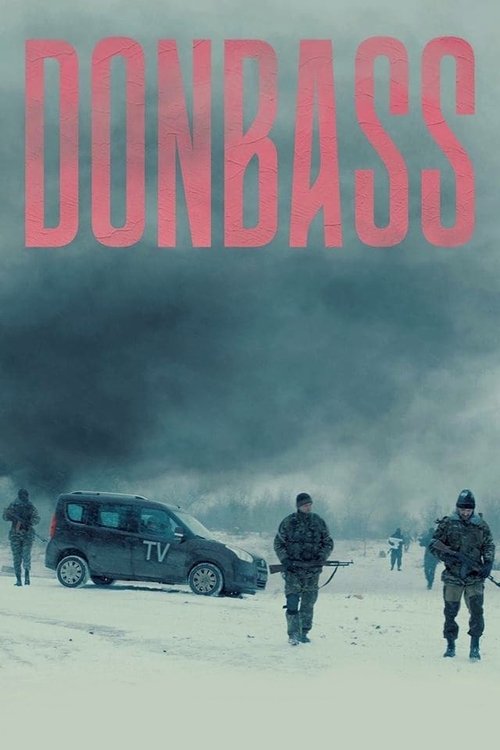
Dec 2022 update: given continuous popularity of this review (and Loznits’s continued relevance as the most important voice in cinema reflecting on the unending disaster that is post war history of Soviet countries) i just want to add smth: fuck Putin and everybody supporting the war against Ukraine few years back Slavoj Zizek penned an essay in American Affairs about processing trauma through humor, and there was this passage: "Should we then be surprised at one of the jokes from Sarajevo, when the city was under siege (and, due to Serbian bombing, the supply of gas was often cut off)? “What’s the difference between Auschwitz and Sarajevo? In Auschwitz, they at least never run out of gas.” Or what about the cruel joke popular among the survivors of the Srebrenica massacre? (To understand this joke, one has to remember that, decades ago, butchers usually asked customers whether they wanted beef “with bones or without.”) After the war, a refugee returns from Germany to Srebrenica and wants to buy a piece of land to build a house there, so he asks a friend about the price of land, and the friend answers: “It depends—do you want it with bones or without?” This is how we deal with trauma that cannot yet be properly mourned and symbolized—by turning it into a joke. There is nothing disrespectful in this. On the contrary, such jokes imply an awareness that the memory is still too hot for the ordinary process of mourning".Donbass is Loznitsa's Auschwitz and Sarajevo joke. it hits too close to home, so sometimes i thought that it's approach of turning something horrifying into something hilarious (darkly and absurdly and horrifyingly, but hilarious) is a bit hit and miss (not that an artist owes his audience a duty to condemn real-world atrocities in a particular way, but i also think that someone like Loznitsa — whom i consider the post-Soviet world's most important contemporary director — can't quite afford to take a somewhat detached, abstract stance), but then i remembered Zizek's essay and then the film made a lot of sense. in years to come i am sure it will be remembered as an incredibly important (maybe the first truly significant) attempt to process the trauma of what's been going on in Ukraine.
Donbass is a poignant and painful portrait of the conflict in Eastern Ukraine that has its roots in a complex past and an extremely turbulent recent history. With a gaze that at times borders on documentary, Sergei Loznitsa shows without concessions the vivid image of a society completely devastated by war, corruption, misery, media manipulation and propaganda. Without following a specific narrative thread, the director presents a series of appalling episodes that provoke rage and impotence, in which we observe the dehumanization, violence, impunity and division that are experienced every day in the province of Donetsk. The line between reality and fiction fades in this grotesque, uncomfortable and pessimistic work; Donbass is an unequivocal and legitimate positioning on the part of Loznitsa that reveals part of the worst of human nature, something that comes to light when our spirit is crushed by constant exposure to violence and degradation.
”When I wrote the script and I started showing it around to colleagues, to funders, they were all really shocked by the text, how strong it is. They said, my god, if this is only how it is written, one can only imagine how it will look on the screen.”Writer and director Sergei Loznitsa takes aim, and that’s putting it mildly, at the still ongoing war between Ukraine and Russia in Donbass, one of the regions central to the fighting. The movie is presented as thirteen vignettes, with one often leading to the other. Loznitsa freely admits to stealing the structure of Luis Buñuel’s The Phantom of Liberty, although that movie built absurdity on top of absurdity. I suppose you could say the same here, but this is like tragic absurdity on top of tragic absurdity. Because of the structure, there aren’t any characters to take you the length of the movie or even part of that distance. At most, characters are going to appear in two of the thirteen scenes. Loznitsa won the 2018 Un Certain Regard for best director at Cannes for this film, and it is his framing and his palpable rage that are the stars of the show.”Perhaps this is the most malicious film I’ve done so far. Most evil. Let’s call it an angry film. Perhaps it’s because of my attitude toward this war.”If Loznitsa had fire instead of a camera, a significant portion of the world would still be ablaze right now. Some of these scenes will probably stick in your mind for a long time after the credits roll. One that got me was the treatment of the German journalist (Thorsten Merten) at the separatist checkpoint. The presence of a German is shouted out, he’s called a fascist despite his denials, and a crowd of soldiers gathers around him. A commanding officer breaks it all up, and he’s left staring at the original soldier who identified him. “Maybe you aren’t a fascist,” says the soldier, “but your grandfather was.” It was an incredibly chilling scenario, and Loznitsa has noted that every one of these vignettes has been taken from either YouTube videos or real life experiences. That’s frightening. The beating of the prisoner and the chaotic, unpredictable nature of this war are also unshakable.”Every time I make a fiction film I want to come as close as close as possible to this borderline, this frontier between fiction and documentary.”Loznitsa’s camera is the other important piece of this. A fair amount of this is done in longer than normal shots and with minimal cuts. He also sometimes gets uncomfortably close to what’s going on. That technique really heightens the sense of immediacy and claustrophobia, like you are in this and you need to get out right now. Some of the vignettes drag against that idea, and the pacing sure isn’t perfect, but there is plenty more here to like than not.One final note: all of those quotes come from this Film Comment interview, which isn’t very long and you should definitely read. There is also a perfect four word description of this film in the introduction to the article, calling it a film of “historical and moral urgency.” And that’s it, that’s the movie in a nutshell. It’s really solid even if it isn’t great, and it is well worth checking into.