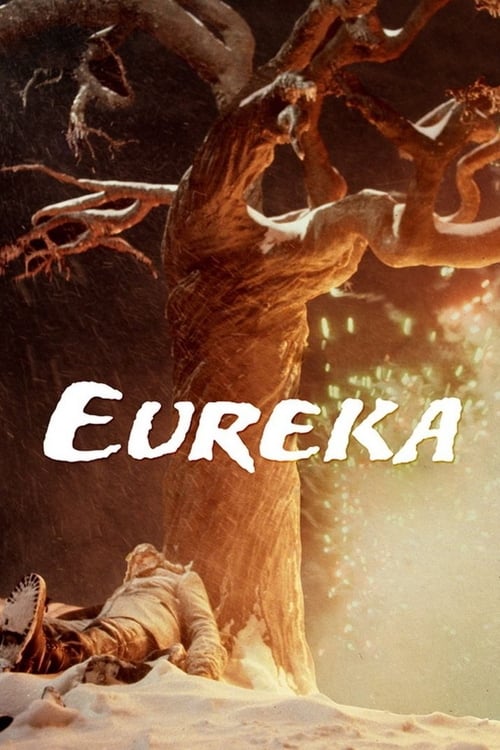
Seeing this for the first time, I would be stunned if it were not a source of inspiration for There Will Be Blood. Youthful revolt vs. nouveau riche power accrued from the ground. Paranoia, dark magic, Faust, the lie of the American family. It's all in here.
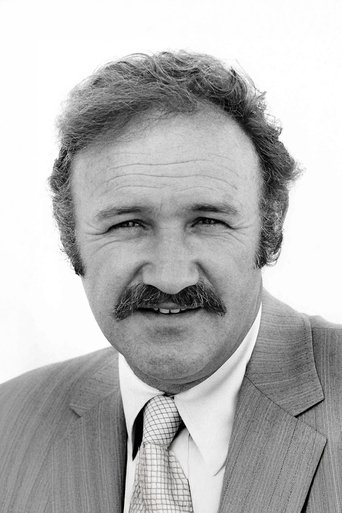
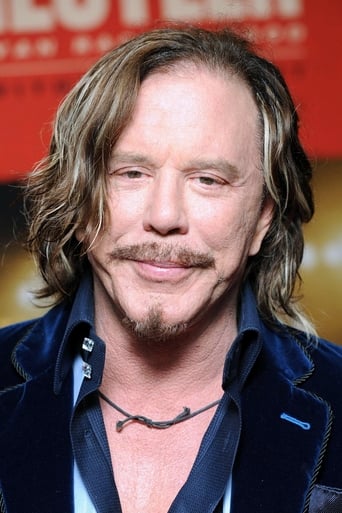
Wow.Wow. Wow. Wow.Eureka for its first three acts is one of the most amazing, bold, idiosyncratic epics I have ever seen. Then it has a fourth act, so incongruous to what has come before, it almost seems like a joke. Itself only adding to the overall oddness. For the first 90 minutes Eureka is to gold what There Will be Blood is to oil and Chinatown is to water. A virulent critique of untrammelled capitalism, through the eyes of pure ideology, that is something beyond mere greed. As Gene Hackman says about himself "[i] used to have it all, but now I just have everything".Hackman gives an incredible performance. Alternating between psychotic delight, crippling fear, but in that purely Hackman manner. Hackman is one of the great actors of failed masculinity and this performance is one for the ages. It is like Orson Welles in Citizen Kane, if Welles had been tough enough to tramp through snow looking for gold. The first 90 minutes of the film are focused predominantly on Hackman; great, bold, weird scenes of poetry of greed. The repeated refrain of: "I never made a nickel from another man's sweat" is used to absolute perfection."I never made a nickel from another man's sweat"The supporting cast that flits in and out of the film is inspired; Theresa Russell, Rutger Hauer, Joe Pesci, Mickey Rourke, Joe Spinell and Helena Kallianiotes. While equally making the film more baffling than it really should be. Pesci and Rourke are mobsters; Hauer is the antithesis of Hackman's Jack McCann. Does Nicolas Roeg manage to pull the threads together? Does it matter? It didn't to me.The film has almost a supernatural edge in the first 90 minutes section, counterpointing the greed against death. As Hackman cuts deeper into the ice to find the gold, the woman-astrologer dies. Roeg is clearly interested in death and sex and greed and cults.The film has more relaxed editing than Nic Roeg's more hyperactive work, but it is still absolutely beautiful. The Alex Thomson cinematography is absolutely jaw-dropping. Roeg is a unique director and this is another example of this. No-one makes films like Roeg.Clearly, Paul Thomas Anderson has derived much from Eureka for both There Will be Blood and The Master. It feels like the film that connects these two pictures; the occult, the gold, greed.I have been skirting around what I am calling the 'fourth' act, because it is just so strange within the narrative of the film. It is so generic. So melodramatic. It is like Jeremy Irons winning the oscar for Reversal of Fortune and not for Dead Ringers. It is so normalised that it has weird energy all of its own. I cannot decide if it is brilliant or terrible. It is certainly bold. Or not. This last 30 minutes is like watching Chinatown for 90 minutes, then court scenes from Wild Things in order to wrap up the Noah Cross plot. It is so amazingly ridiculous. Douglas Sirk on LSD. I should of hated it, I kind of loved it. The scenes were Theresa Russell started screaming about her love for Rutger Hauer in the most gauche poetic fashion had my mouth agape. I think I only shut it when the credits rolled. The next time someone asks me what my favourite film is, I think I might just say Eureka.
The first 20 minutes are some of the most rapturous filmmaking of the 1980s, from its savage, literally cold open to its explosions of despairing violence and euphoric discovery. Blood splatter and gold dust linked in phantasmagoric (-gory?) frames of artificial stars shimmering in miniature galaxies. A face disfigured and collapsed by a suicidal gunshot, and the protagonist reduced to wordless joy by the ecstasy of gold.The abrupt leap forward, from nightmarish but rewarding adventure to a retirement in obscene wealth, brings with it a massive reduction in speed to capture idyll luxury. This is a major shift for Roeg, but the stasis of much of the middle section of the film pays dividends in the radiating misery; this is The Man Who Fell to Earth without a protagonist reeling in the pleasures of an alien world. No, as Jack himself puts it, he went from being the man who had it all to merely being the man who has everything, a borderline Godardian turn of phrase that highlights the entropy of a life lived in total, unending wealth.The sedate cynicism of the film is occasionally punctuated by jolting moments, one an orgy that confronts, seduces and terrifies the white characters with an indigenous ritual that seems to act as a cosmic balance for their own frigid entrenchment. The other is a death scene that is profoundly disturbing, a chaotic end that suggests the only end facing runaway capitalism will come from other social climbers and money men, the only others who exist in this sealed off ecosystem. (Roeg does Welles one better by making his own Xanadu look like a giant snow globe trinket, only exacerbating the sense of cloistered power.The end is more than a bit dodgy with a courtroom drama that hinges on some strange, sometimes uncomfortable monologuing, but within the context of Roeg's work it fits within his cross-genre experimentation and metatextual play. I need to see the film again (and probably again) to absorb some of its tectonic tonal shifts and asides, but then the pleasure of Roeg's work is how easy he makes that task.