fighting in my soul to not give this half a star because I’m aware it was a passion project for the filmmaker, but we the (black) audience endured all that brutality, racially charged violence, and traumatic imagery on screen for what? your average cliché biopic ending? pointlessly provocative black trauma porn.…fuck off man
Just so wanted this to work and the fact that this is a personal story is so moving and touching. But honestly there are very few choices visually, sonically, or performance wise that work at all. It’s odd that an autobiographical passion project feels so limp, hackneyed, and labored. Adewale was so sweetly endearing in the Q&A that you wished (and still wish) the best for him.Ugh. This isn’t the type of thing I want to hate.
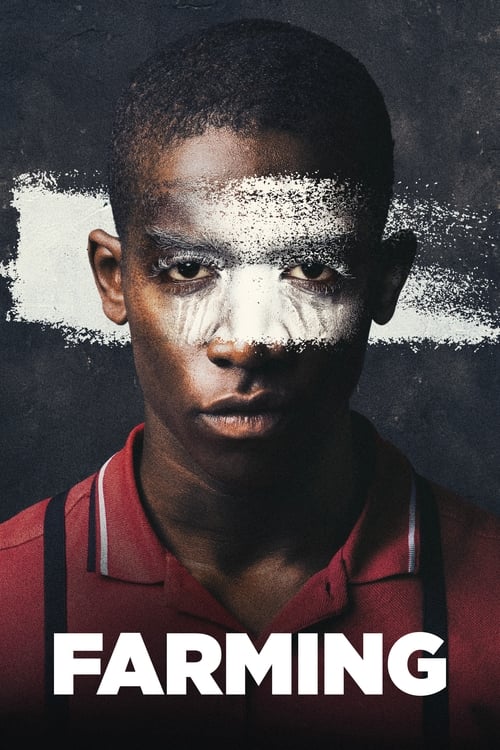
Adewale Akinnuoye-Agbaje, who I mainly know from the little seen 2012 film Best Laid Plans, has written and directed here a film inspired by his own startling youth. Akinnuoye-Agbaje was adopted by a white working class family in London in the 1960s, just one of many Nigerian children who found themselves in the UK in a phenomenon known as 'farming', from which the film gets its title. Coming of age in the racially hostile environment of Tilbury in the late '70s and early '80s meant that the better future his Nigerian parents hoped for him became increasingly elusive and Akinnuoye-Agbaje, as the old cliche has it, 'fell in with the wrong crowd'. What was surprising here was that this particular wrong crowd was a gang of racist, violent skinheads. It's an intriguing premise, but there's an argument to be made here that Akinnuoye-Agbaje was just too close to the material for it to succeed. The progression of his fictional alter-ego Enitan (played by Damson Idris) into the role of fearsome leader of contemporaries who demand that Britain be kept white is never explored deeply enough; neither in the thought processes of the skins or, more crucially, the thought processes and emotions of Enitan himself. The audience gets no real understanding of where Enitan's head is at as he starts to hang around with the skinheads and rises through the ranks, beyond his desire to want to fit in with the community around him and the alienating experience he endured when, as a child, he briefly returned to Nigeria.It's deeply disappointing, because I wanted to know what made Enitan and, to that extent Akinnuoye-Agbaje himself, tick. This kind of thing has always fascinated me. We see it in the character of Errol in Alan Clarke's Made in Britain, a black youth who falls under the spell of Tim Roth's skinhead Trevor and accompanies him to berate and terrify an Asian family, in black football hooligans of the '70s and '80s and in the near-hidden history of black British supporters of Mosley and fascism that Ben Aaronovitch vainly pointed out during the filming of his Doctor Who story, Remembrance of the Daleks, when someone responsible for casting extras failed to get the memo about the fascist characters and hired a black actor who was subsequently 'whited-up'. I find it deeply intriguing how disturbing peer pressure can be; how ethnic minorities often have to be 'more' than their white counterparts to gain their approval and prove themselves. Look at the attitudes of Tory MP's like Sajid Javid, responsible for stripping Shamima Begum of her British nationality, and Priti Patel who, as I type, is determined to go ahead with deportation flights to Jamaica despite the ongoing Windrush scandal. But we simply don't get any insight regarding it here as the emphasis lies squarely on the notion that Enitan ultimately needed to find the right path and get his life together, rather than the actual, illogical roots of the journey down the wrong path itself.The story of the farming phenomenon was pretty new to me and this proved an invaluable look at this aspect of commonwealth history. I'd liked to have seen more of that beyond a rather hammy, EastEnders turn from Kate Beckinsale as Enitan's adopted mother. Incidentally, Jaime Winstone has a smaller supporting role as Beckinsale's friend and I kind of wished she had the more prominent role as Beckinsale is caught acting working class throughout. That said, now it seems that her Hollywood career has dried up I commend her at least for trying something different. Perhaps the standout in the cast here, aside from Idris in the central role, is John Dagleish as Levi, the deeply disturbing and menacing leader of the 'Tilbury Skins'. It's a role that is a world away from the lighthearted TV roles Dagleish has previously occupied in shows like Truckers, Starlings and Lark Rise to Candleford and, in a better film, would arguably have been a great calling card for him in the industry. It's just a shame that much of Farming seems to echo Richard Allen's pulp Skinhead novels of the 1970s as opposed to This is England which it arguably wishes to emulate.It's not all bad though. The cinematography by Kit Fraser is deeply evocative of the period the film is set, with a noticeable grain that compliments the good attention to period detail. There's more good acting than there is bad and this is in no way comparable to those DTV offerings about football hooliganism that dominate the supermarket shelves and bargain bins across the land. But I can't help feeling this was something of a missed opportunity.