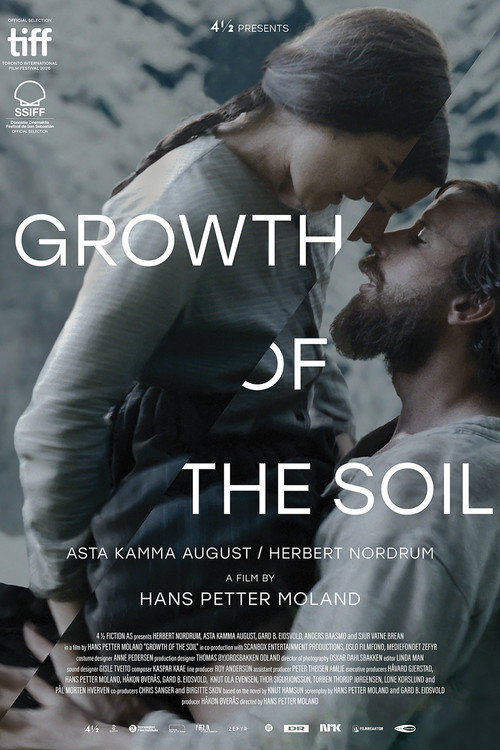


Watched at the first-ever Chicken Falls Film Festival.Based on Knut Hamsun’s Nobel Prize-winning novel, the film feels like a journey from cave to home to society: a family turns wilderness into a home and then a community through work, endurance, and closeness to the land. That’s more than a setting; it’s an idea of where society comes from, and every new comfort comes at a cost.Their shared life is interrupted by a tragedy that separates Inger from Sellanraa. When she returns, Sellanraa is still there, but she is no longer the person who left it. That change gives the film a harder question than whether a family can survive in the wilderness: what happens when the people who built a home no longer want the same life from it?Herbert Nordrum gives Isak a quiet physical certainty; so much of his life is expressed through work, and Nordrum makes that feel like part of the character rather than background.Asta Kamma August lets us sense how Inger’s changing view of the world alters her relationship to the farm and to Isak. Both are fantastic, and the way they fall in love feels so real. That makes the contrast between his rootedness and her shifting horizons all the more affecting; their scenes hold a tenderness and an unease neither performance has to spell out.The cinematography makes the landscape inseparable from their lives: fjords, mountains, the biting cold, and broken grain stalks. You feel the weather in this movie. The score is just as effective, perfectly suited to its mostly quiet, slow-burn rhythm.“I suppose none of us is quite as we should be.”2026 RankedMy Favourite Norwegian Movies RankedHans Petter Moland Ranked