
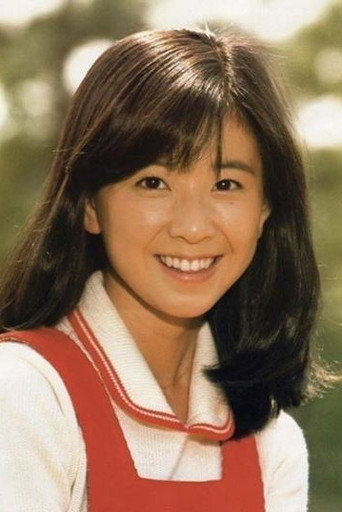

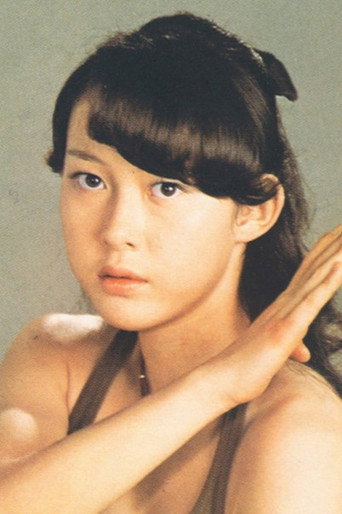
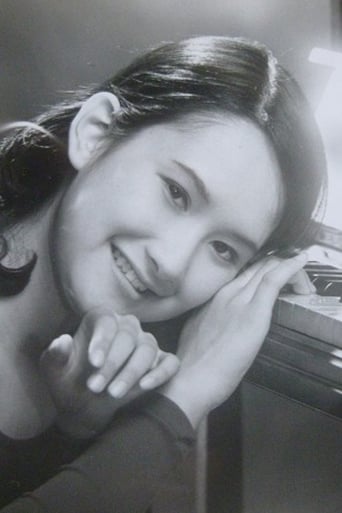

this is what sleepovers feel like when you are 12
We use cookies to personalize your experience and analyze traffic. You can opt out at any time.

Στο τέλος της σχολικής χρονιάς μια μαθήτρια ανυπομονεί να πάει διακοπές με τον πατέρα της στο εξοχικό τους. Όταν ο πατέρας της της ανακοινώνει ότι θα έρθει μαζί τους και η νέα του φιλενάδα, αποφασίζει να πάει μαζί με τις φίλες της στο εξοχικό της θείας της που μένει σε ένα απομακρυσμένο χωριό. Όταν φτάνουν εκεί όμως αρχίζουν να συμβαίνουν παράξενα γεγονότα και τα κορίτσια εξαφανίζονται ένα ένα...
Δεν υπάρχουν προβολές της «Σπίτι» στην πόλη Λος Άντζελες σήμερα.
Προβολές για Σπίτι, ενημερωμένες κάθε πρωί
Διάλεξε σινεμά και πάρε υπενθύμιση πριν κατέβει.


this is what sleepovers feel like when you are 12

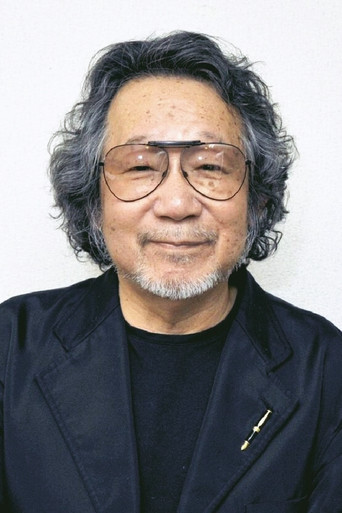
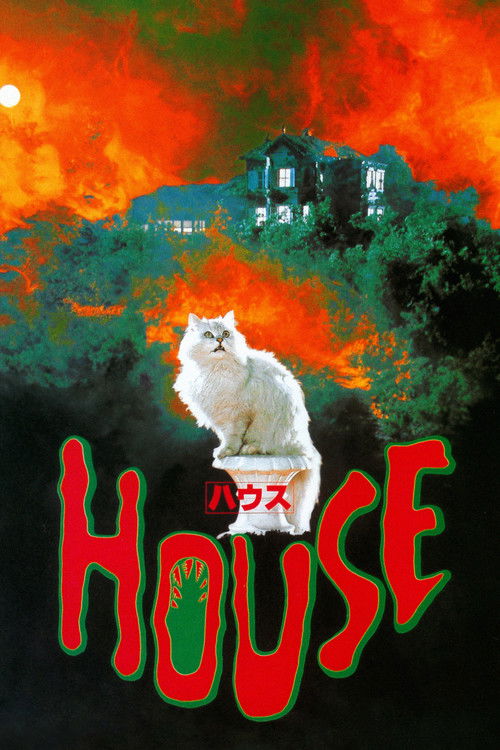
Sixty in September: 10/60There are so many things to be fascinated by in this beautiful, wild movie, but two things really stick out to me. Obayashi talks about them in the interview on the Criterion materials:One is the war and the atomic bombings. Obayashi is originally from Hiroshima. He says, quietly and candidly, that most his friends didn't survive the bombings, as a child. The second is Obayashi's sense of how children view and experience the world. He talks about their easy attraction to the strange and mysterious. Where, he says, adults see Jaws and might think for the next movie, substituting bears for the monster, his daughter conjured a kaleidoscope of subconscious fears and fantasies that were the raw material for the movie.He and his daughter discuss how House was something of an anomaly, a kind of turning point in Japanese cinema. Japanese audiences for cinema were declining, having shifted to TV and other pursuits. Films were underfunded. Obayashi directed television commercials, in addition to his own indie shorts. But everything they mentioned seemed in stark opposition to tradition. Like, I imagine, the New Wave before him, he had some love and veneration for Ozu, Kurosawa, but he deliberately composed his images to be what he imagined would offend their sensibilities most. Titling the film in English was a taboo. His pop-art poster, likewise. His gleeful dancing and singing with the cast was "ridiculed," he says. And contemporary critics either derided or ignored the film.But children seem to have loved it. It became a hit despite, even, members of Toho's own staff wishing it hadn't. And he mentions that the older generation, his father's generation saw a certain magic in it. That clicked with me, I think. It brought to mind Melies. Obayashi and his cowriter mention they had seen every important horror film released up to that point, and they would often speak in references to shots from those films. The horror tradition -- as a kind of oral culture -- has its roots in fantasy, in folklore, in primordial mysteries. And Obayashi persisted in considering this film a fantasy. It's a treasure trove of folkloric Japanese monsters. The stuff of magic and history. Classical Japanese cinema -- and even contemporary New Hollywood -- were, to generalize, largely rooted in realism or naturalism. He calls it a literary-artistic tradition. And so the wildness here, I see -- and I think Obayashi intended it -- seems like something very new and strange, but is actually a conjuring of something very old.The experience of the film is visceral and wild, disorienting, and vivid above all. But to make something so seemingly strange, as others have noted, the filmmaker cannot truly proceed haphazardly. There is a universe of experiment and innovation here. The film is a catalog of practical effects, bizarre framing, green screening, matte painting, multiple exposures, and video effects. Obayashi mentions experimenting almost daily. Again, in stark opposition to Kurosawa, he did not create a single storyboard for the film. He experimented on set, with he says, a kind of love of the unexpected. One effect is exemplary: Prof is drowning in cat blood, dissolving and disappearing. To accomplish the image, Obayashi suspended her from a rope and slowly covered her with blue paint, using the blue for a chroma key process, the blue paint showing her melting away. The film's editing is a marvel.The obviousness of many of the effects give the film a, to me, handmade quality. Obayashi mentions that he essentially made the film with his friends. At one moment, he tears up, telling the story of how be inadvertently befriended the lighting crew (the most "powerful" group on set) on the first day of the shoot. He would joke with the crew, and at one point he called to one of the lighting techs by name, saying something like, "Be careful! Don't fall now." Later that day, he lost a screw from his glasses and walked around with one lens out. When shooting had wrapped for the day and his crew were preparing to toast a successful first day, he noticed the lighting crew was missing. He worried he may actually have offended them and that the rest of the shoot would be tense. But they arrived, late, and the tech he had called by name produced the screw for his glasses, somehow found on the mess of the sound stage. He told Obayashi that to that day no one at Toho had ever addressed him by his name, and that he had promised himself to find the screw if it took all night. It touched him deeply.The story struck me, because I think you can feel this personal quality in House. It seems to be the kind of film that ignites wonder. It is cinema in that sense, a fascination with what cinema can do and the reality the camera can create. It is magic in a very literal sense. It conjures its own reality. It seems to anticipate a lot of our contemporary media idiom, where kinetic cutting, CGI, montage, and other "manipulative" techniques are commonplace. I have slowly been falling in love with everything slow and quiet in cinema. The long take. But this is a tremendous reminder of what magic movies can be. How they have an endless capacity to surprise and delight. How they can be endlessly perplexing, strange, and mysterious. How they can be an experience.I read a piece (I wish I could remember where), in which a film theorist is tackling the subject of cinema's death. And he says, in so many words, that perhaps the antidote to manipulative media, to all the ills of contemporary media culture is to commit to the documentary. The long take, again. The long look. Stillness. Watching. I love that idea. I think there is so much in it. Joe in Uncle Boonmee seems to use this approach. And part of his subtext is deeply political, historical, and self-consciously about the hypothetical death of cinema.But I remember, bubbling through this seemingly superficial or trivial film are the scars of war, the aftermath of the bomb. The bitterness of loss that creates a ghost. And that ghost devours the next generation, ignorant, Obayashi says, of war and thus incapable of truly appreciating peace. I feel like that is the real terror underlying the film, but Obayashi transmutes it with magic.Perhaps there is something fundamentally optimistic about this kind of magical film-making. It requires thinking like a child. Magical thinking. It is hard. Personally, it is for me. But I am intoxicated with it. This theory of the long take, of documentary is one way of looking, one way of cinema. But what Obayashi does is a sister path. He creates the fantastic reality of his mind.Maybe this was just a division I had in my head. But I think House brought me closer to understanding that, what I will call, the long take and the magical are not so really so far apart. But there must be something behind the technique. I hesitate. This is so long and I'm just barely working it out. Truffaut already has it: "I demand that a film express either the joy of making cinema or the agony of making cinema," he says. And I think this movie compels very much for its sheer anarchic joy in being a movie. In the same way, I think, when Tarkovsky, say, lingers and lingers in quiet. Part of it is the agony of sculpting, as he says, out of light and time, the momentousness of the task. But at the beginning, maybe, is fascination with the magic of the camera itself and the universe that has followed it.At the root, House, like the best movies I know -- even and especially, low cinema, b-movies, horror -- seems to me an overflowing love for movies or an obsession with film. The rest of the magic -- the joy and struggle -- flows from that source. To me, cinema is falling in love. And there is such joy here.

if I went missing and my six closest friends were like, “oh, she’s hungry all the time, she probably sniffed out the nearest POTATO FIELD,” my feelings would be so hurt!!!
House follows a group of Japanese schoolgirls who visit an aunt's rural estate, only to discover the building is alive and hostile.
House was directed by Japanese filmmaker Nobuhiko Obayashi in 1977, renowned for his avant-garde style and experimental aesthetic.