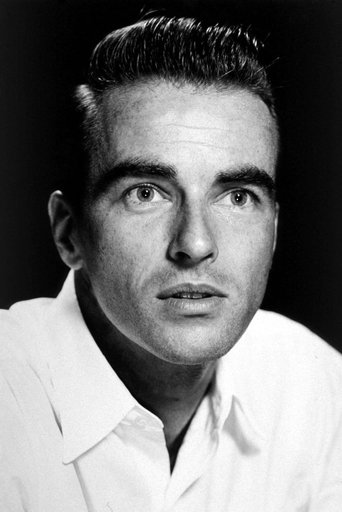



Montgomery Clift original hot priest.
We use cookies to personalize your experience and analyze traffic. You can opt out at any time.

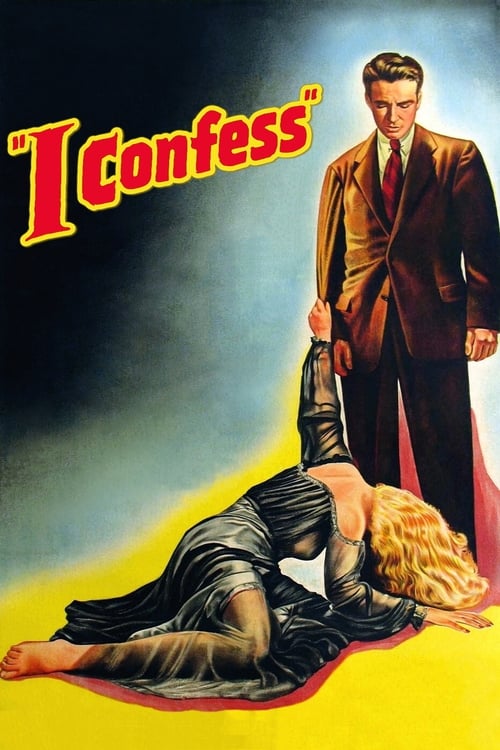
Ο καθολικός ιερέας Michael Logan , ενοχοποιείται για τη δολοφονία ενός φημισμένου δικηγόρου. Ο ίδιος γνωρίζει τον πραγματικό ένοχο, καθώς ο δράστης Otto Keller του εξομολογήθηκε το έγκλημα, αλλά δεν μπορεί να αποκαλύψει το όνομά του, αφού δεσμεύεται από το απόρρητο της εξομολόγησης. Ο επιθεωρητής της αστυνομίας Larrue, επικεντρώνει την έρευνά του στον Logan, ο οποίος είχε κίνητρο να διαπράξει το έγκλημα εφόσον το θύμα εκβίαζε τη Ruth Grandfort, σύζυγο διακεκριμένου πολιτικού, για τη σχέση της με τον Logan πριν εκείνος ασπαστεί τον κλήρο. Ο Logan τελικά συλλαμβάνεται και οδηγείται στο δικαστήριο με την κατηγορία του φόνου...
Η «Η Εξομολόγηση» δεν παίζεται σε κινηματογράφους αυτή τη στιγμή.
Ακολούθησε την ταινία στην εφαρμογή για ειδοποίηση όταν προστεθούν προβολές.
Προβολές για Η Εξομολόγηση, ενημερωμένες κάθε πρωί
Διάλεξε σινεμά και πάρε υπενθύμιση πριν κατέβει.


Montgomery Clift original hot priest.

I Confess could have turned out to be much better. My main problem with it was that it didn't seem to find the balance between being a noir and a melodrama. Owing to the fact that there was no mystery in the story and thanks to Hitchcock's sentimental direction, the noir aspect failed miserably for me. As a nostalgic drama, though, it would have worked perfectly. There were great retrospective sequences of musing on unfulfilled love, a tragic relationship, but as soon as I established a deep connection with the dreamy tone, I was swept back into the bleak, forced, artificial noir-world of Hitchcock.Because it was indeed forced. I would have liked it much better if Hitchcock had made an astute character study, if he had dealt with the psychological effects of the occuring murder instead of the murder itself. I was mortified to see Montgomery Clift, who excels at hiding his characters' real emotions underneath a surface of coolness, not given enough room to showcase his subtle acting. His character was written as a one-dimensional, ultimately good person with no underlying hues to his personality. You don't cast Clift in a movie and then not use his exceptional acting skills. You just don't.

Alfred Hitchcock lets Catholic guilt get in the way of steamy melodrama in “I Confess.” The Montgomery Clift-starring film centers around a priest who hears confession about a killing, and must not reveal the culprit at the risk of compromising his holy vows. “I Confess” is perhaps shaky in its conceit that Clift’s character would risk prison to protect a guilty parishioner. But, the screen play nearly sets up a fascinating psychology piece in the question of whether it is love of God, or love for a woman, that convinces Clift to keep the secret. It is maybe, though, Catholic guilt that keeps the Irish-rooted Hitchcock from achieving a work that examined this duality of faith. “I Confess” is too chaste to make the priest’s ordeal truly scintillating. Though, evidently, not chaste enough to avoid censorship in its director’s ancestral Ireland. The audience, however, is given slim insight into Clift’s character, other than his apparent devotion to the sacred silence of the confessional. Clift and co-star Karl Malden, both early Hollywood adoptees of The Method, likely read the script of “I Confess” with this same interest in the internal complexities of their respective parts. Even Malden’s more minor role as a detective begs for examination in the test of faith and belief derived from investigating a priest. However, the Stella Adler-abetted styles of Malden and Clift did not match with Hitchcock’s near theatrical discipline of control, and the two parties never came to a cohesion during production. “I Confess,” also, then, comes across as a film that never understands its own intent, and internal life.
A Catholic priest is accused of a murder he did not commit, but he is unable to prove his innocence because he learned the killer's identity through the sacred seal of confession.
Alfred Hitchcock directed this 1953 suspense drama, which is noted for being one of his rare Canadian-set films.
The film competed for the Palme d'Or at the 1953 Cannes Film Festival.