Just a moment...Enable JavaScript and cookies to continue
Ένας νεαρός στρατιώτης εισέρχεται στη Γερμανία με τα σοβιετικά στρατεύματα στο τέλος του Β' Παγκοσμίου Πολέμου, αισθανόμενος ξένος στην ίδια του την πατρίδα. Καθώς συναντά Γερμανούς, παλεύει με την αμφιθυμία του, συνειδητοποιώντας ότι είναι ταυτόχρονα νικητής και ηττημένος, ενώ η περίεργη φύση του τον οδηγεί να αντιμετωπίσει τις φρικαλεότητες και τα ψέματα που συναντά στο δρόμο του.
Η «Ήμουν δεκαεννιά χρονών» παίζεται σε 1 σινεμά στο Βερολίνο - επόμενη προβολή Κυριακή 15 Νοεμβρίου στις 11:00 στο Kino International.
Επόμενες προβολές: Κυριακή 15 Νοεμβρίου.
Πλήρες πρόγραμμα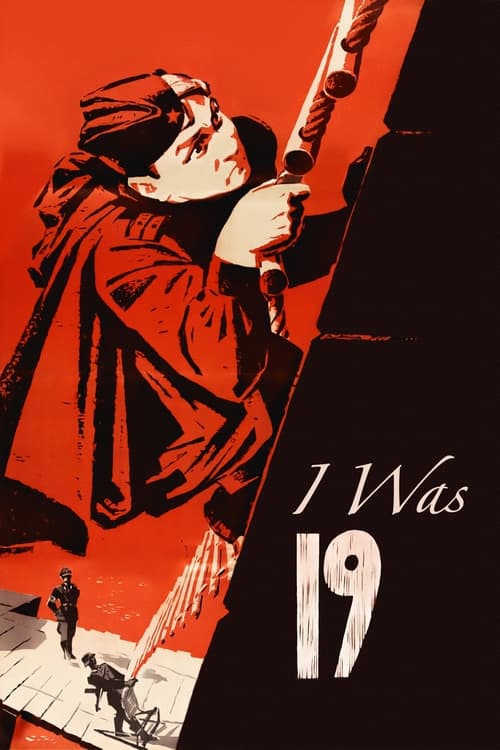
Προβολές για Ήμουν δεκαεννιά χρονών, ενημερωμένες κάθε πρωί
Διάλεξε σινεμά και πάρε υπενθύμιση πριν κατέβει.
Just a moment...Enable JavaScript and cookies to continue

The most personal film ever made by Konrad Wolf, an East German filmmaker, is a contemplation of his own experiences during the final stages of World War II. Undoubtedly, it stands as his crowning achievement. Within this film, we bear witness to the fate of the 'far-flung and neglected motherland,' as described by a 19-year-old young man who was born in Germany but raised in Moscow. Gregor, the main protagonist, returns to Germany as a member of the Red Army, also known as the Army of Liberation, after escaping Nazi persecution and seeking asylum in the Soviet Union. In this particular context, the subject of self-identification is not addressed, as its inquiry is irrelevant and the solution obvious. Wolf's work comprises numerous brief episodes that are both commonplace and heartfelt, offering glimpses into the private and unexpectedly somber aspects of life. This story delves into the concepts of comradeship, the pursuit of harmony, and the avoidance of unnecessary violence, all revolving around the profound significance of compassion and empathy even in the midst of the most brutal of wars. It draws attention to simple human qualities such as tenacity, bravery, and personal accountability. This film stands as one of the most sincere works to date, focusing more on the journey of personal growth than on the war itself. Nevertheless, it serves as a brilliant anti-war statement.

[Favorites of 1960s]Rightly considered as one of the most important postwar German filmmakers, Konrad Wolf (1925-1982) made thirteen theatrical features in his relatively brief career. Two of those were based on his war experiences as a member of the Red Army. (Wolf was only eight-years-old when his family was forced into exile due to his writer father's anti-fascist activities. After becoming a Soviet citizen, he voluntarily joined the army at the age of seventeen.) The first, and the most acclaimed, I Was Nineteen (Ich war neunzehn) is partly sourced from the war diary Wolf kept against orders while serving as an interpreter. His surrogate in the film is the eponymous teenage soldier who, for most of the duration, roams the German countryside during the final weeks of WWII with an infantry division. A hotshot named Gregor (Jaecki Schwarz), his task involves calling on the last remnants of the Wehrmacht to capitulate instead of needlessly prolonging the battle. Episodically structured between April 16th and May 3rd, 1945, the script by the great Wolfgang Kohlhaase, one of the architects of the famous Berlin-Filme who collaborated with Wolf on many occasions, credibly brings forth numerous instances in which young Gregor is unwittingly forced to deal with issues regarding memory, language and identity. Whether it's due to the matter involving a young German girl (the only time the film hints toward the Soviet violations in Germany; after all, it was made under the watchful eyes of the authorities who had just banned nearly a dozen films after the notorious Eleventh Plenum), the tense negotiations at the Spandau Citadel, or when a severely wounded German soldier mistakes him for a comrade, the film skillfully mines the contradictory feelings evoked within Gregor, who isn't always able to comprehend their true nature. Naturalistically shot by Wolf's longtime DP Werner Bergmann, this reflective yet unsentimental effort is one of the finest East German films I have seen to date.
Ένας νεαρός στρατιώτης εισέρχεται στη Γερμανία με σοβιετικά στρατεύματα στο τέλος του Β' Παγκοσμίου Πολέμου, νιώθοντας ξένος στην πατρίδα του και παλεύοντας με τη διπλή του ταυτότητα, ως νικητής και ως ένας από τους ηττημένους.
Το «Ήμουν δεκαεννέα» σκηνοθέτησε ο Κόνραντ Βολφ το 1968, αντλώντας εκτενώς από τις δικές του πολεμικές εμπειρίες ως Γερμανός εξόριστος που υπηρέτησε στον Κόκκινο Στρατό.
Το «Ήμουν δεκαεννέα» έχει ηλικιακή ταξινόμηση 12+ στη Ρωσία.
Το «Ήμουν δεκαεννέα» κυκλοφόρησε στη Γερμανία την 1η Φεβρουαρίου 1968.