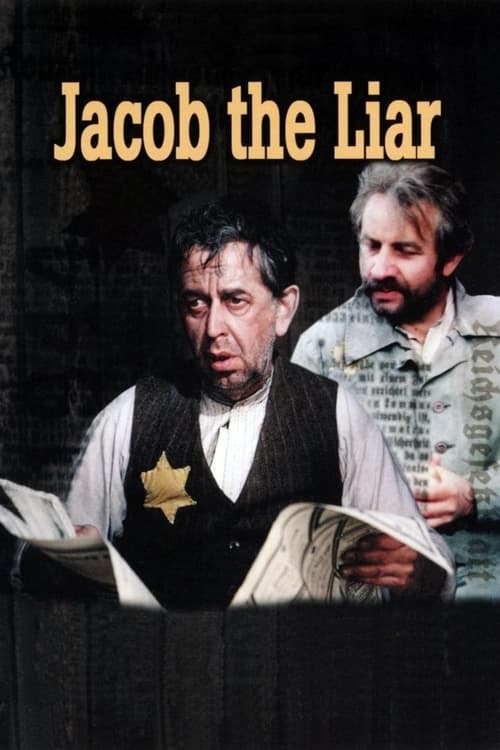


While Holocaust cinema was nothing new by 1974 - prestige pictures like Judgment at Nuremberg, multiple adaptations of The Diary of Anne Frank, and Sidney Lumet’s The Pawnbroker had already notched up countless award wins - East German director Frank Beyer broke a genuine taboo with his adaptation of Jurek Becker’s bestselling 1968 novel Jakob the Liar: he introduced humour.The film adheres closely to the novel’s central narrative. In a Jewish ghetto in occupied Poland during World War II, Jakob (Vlastimil Brodský) is arrested for breaking curfew. While awaiting processing, he overhears a radio broadcast in the police station reporting the advance of the Russian army. The following day, eager to provide a fragile glimmer of hope, he shares the news with a co-worker. When disbelief follows - after all, how could Jakob possibly have survived the police station, let alone heard such information? - he tells a small white lie: that he has a radio hidden in his home. From that moment, word spreads…and with it, hope. Soon Jakob finds himself imprisoned within his own fabrication as the lie grows exponentially, carrying consequences that become increasingly devastating.Though unmistakably a haunting tragedy, Beyer threads the film with beautifully judged moments of humour. These range from flashes of broad farce - including an episode involving an outdoor latrine - to gentler, deeply humane whimsy, as Jakob is forced to ‘become’ the radio for the young girl now in his care. Whether delivering a makeshift Winston Churchill impression or conjuring allegorical tales of hope set in fairy-tale lands, these moments create a striking juxtaposition, locating slivers of light within unimaginable darkness. The effect is not irreverent but profoundly human, acknowledging the psychological necessity of hope amid systemic cruelty and given a powerful life all of its own thanks to the superb cast from top to bottom.This is no Life Is Beautiful, however. Beyer never allows the warmth to soften the surrounding horror. The ripples of Jakob’s lie widen relentlessly, and the film sketches their consequences with a grim sense of chaos spiralling outward. As hope spreads, so too does the danger it invites, and the emotional toll exacted on those closest to Jakob is rendered with quiet brutality. And when Beyer in his closing moments ultimately rolls the dice one final time on hope versus hateful fate - and loses - the result is a film that is all at once a raw, beautiful, heartfelt and deeply sorrowful reminder of the power and pain of hope in our darkest of times.