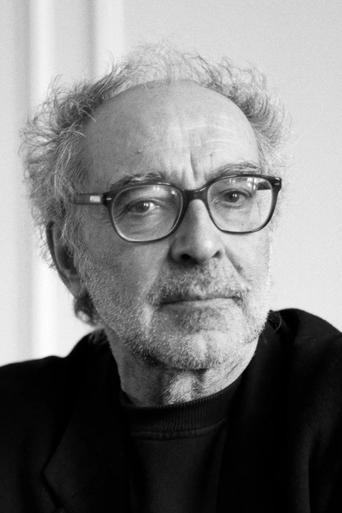
"I don't know if I made clear before but this was after Chernobyl. We are in time now when movies, and more generally art, have been lost. Do not exist, and most somehow be reinvented."One day the good folk at Cannon looking for a little more cultural value decided it would be a wonderful idea to get Jean-Luc Godard to make a film out of Shakespeare’s King Lear complete with the likes of Norman Mailer, Woody Allen and Molly Ringwald. I assume Menahem Golan was smart enough to know Godard would never deliver him an Olivier adaptation, but needless to say this starts with the desperate producer asking Godard “where’s the movie?” and goes weirder and more improbable after that. One of the many fascinating things about Jean-Luc Godard Is that he kept cheating producers through six decades and somehow remained able to make movies as more people lineup to finance him. He promised book adaptations, late sequels to early hits, star vehicles that more or less suppose to have recognizing genre motifs and turn them into Godard movies in a way or another. In some ways, he was chosen as the annoying bug in the system it allowed to keep going but he made the absolute best of this strange position. Anyway, I wanted to rewatch King Lear today because it is one of his most perverse, a fascinating investigation about cultural significance in a dead world. It is beautiful and very funny, most Godard’s best movies are very funny, a punk provocation whose shock of signifiers keep adding new meanings for me decades later. It is my second favorite movie from his 80s period which I regard as his richest when he was in complete sorrow about the world, but he remained engaged in a more direct manner with it and when he unleashed Godard the performer as cinema’s saddest jester, Jerry Lewis for a world slowly dying.
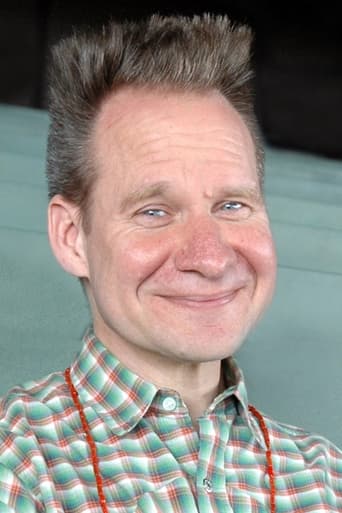
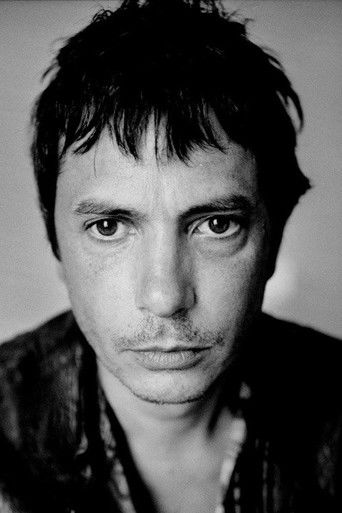
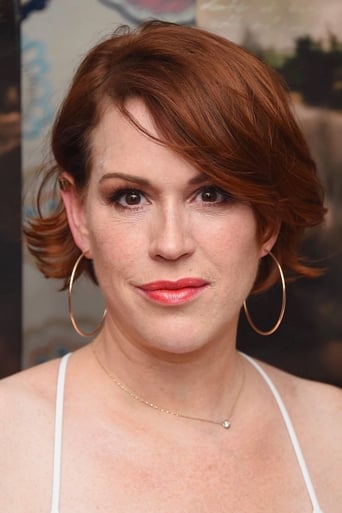
I've seen this movie how many times? Five? I guess that means I have to finally smash the heart button. If something brings me back this many times, it must mean I like it. Godard can be an intimidating figure, and his High Art reputation can get in the way of appreciating this movie. It's important to remember that he was also a trickster who liked to fuck around and make movies. This is Godard in Ray Dennis Steckler mode.We open with a voicemail message from Cannon Films head honcho Menahem Golan demanding that Godard finally complete (or perhaps even start) work on this movie so it will be ready for Cannes. We then get a few takes of Norman Mailer, who Godard in narration says left the movie after exhibiting "star behaviour." According to Richard Brody's book, Mailer left after he realized Godard wanted to imply he and his daughter were in an incestuous relationship. I guess I can see why Mailer wanted out.William Shakespeare Junior the Fifth (Peter Sellars) wanders around the ruins of Chernobyl (actually Rolle, Switzerland) on assignment from the Cannon Cultural Division, trying to reassemble the lost plays of his grandfather, specifically King Lear. He meets the eccentric Professor Pluggy (Jean-Luc Godard), who is surrounded by young acolytes (including Leos Carax and Julie Delpy), and who may or may not be a complete fraud, wink wink. He also encounters Don Learo (Burgess Meredith) and his daughter Cordelia (Molly Ringwald), dreamlike versions of characters from the play he's reconstructing. For the last half hour, everyone wanders around and does strange things, and it feels a bit like a slow-motion version of the beach party that ends Rat Pfink a Boo Boo. Rolle is a gorgeous place, and this movie is full of the sort of sonic and visual beauty that Godard could provide seemingly without effort - which, indeed, is what he does here.We see a lot of art and hear snatches of Shakespeare's words, and I wonder if Godard is suggesting that all art eventually fades into meaninglessness when the world and context that birthed it crumbles. At one point we see W.S. Jr V trying to put the petals back onto flowers. Godard clearly resented the vulgarians at Cannon, to whom the names Godard and Shakespeare were little more than empty signifiers representing cultural prestige, and this movie feels like a prank against anyone who would think Shakespeare and Godard have anything in common (although, uh, in fairness to Golan and Globus, they were a lot nicer to Godard than he deserved). Nevertheless, this movie is also about the survival and rebirth of cinema even after the apocalypse. Godard seems to put more faith in the cinema than all other art forms. In fact, I think at one point Junior compares cinema's light to the Divine Light, but maybe I'm misquoting.It ends with Woody Allen because Godard was obliged to include Woody Allen. He does nothing in particular.
for all its prankish elusiveness, there's something deeply moving here I can't shake. Godard turns Cordelia's "nothing" into "no thing" and by doing so emphasizes that her refusal is not to express love for her father but to turn that love into an object or commodity to be exchanged for what her father promises. in Molly Ringwald's soulful performance she is Virtue itself, which must finally be sacrificed so that the image (which by being made becomes an object or commodity) can be created anew. thus cinema is a cycle of death and rebirth, a site of boundless possibility and inevitable destruction, a sparkler in a shoebox.