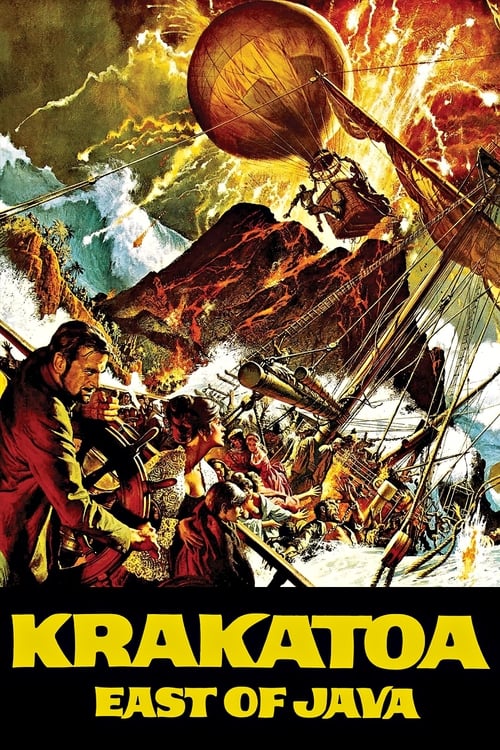
Kino Lorber put out a Blu-ray of this Cinerama film. Actually, it was shot using Super Panavision 70 and Todd-AO formats for presentation in single-strip Cinerama. The opening title sequence has the image devided into three frames just like the original three-strip Cinerama. FYI - Cinerama is a widescreen process that originally projected images simultaneously from three synchronized 35 mm projectors.Worth seeing for the 65mm cinematography by Manuel Berenguer (A Town Called Hell) and the impressive practical effects by masters Eugène Lourié and Alex Weldon (both Academy Award nominated for this picture).
1968, the year when a G-rated movie could have a scene of attempted rape. I guess the newly implemented rating system by the MPAA were going through growing pains. A year later they’d give Oscar Best Picture winner, Midnight Cowboy an X-rating. Years later that’d be revised to an R-rating. Hollywood certainly couldn’t have a Best Picture winner with the same rating as Deep Throat.As for this run-of-the mill, at-sea adventure, it’s diverting entertainment at best and badly dated at worst. I only watched for Sal Mineo as I have a fascination with his career. His part is quite small. The volcano eruption is pretty cool. Maximilian Schell makes a fine captain.
Yes, the film has an unfortunate title. But, how does the movie hold up for the rest of us who didn't watch it as either a history or geography lesson? I remember seeing this film in the theater in the late 1960's. I distinctly remember liking it, yet I couldn't recall a single scene from the movie. That told me that it was likely pretty amazing to look at, but not too strong in the story area. Having just seen the Kino Lorber Blu-ray release, I think that is an accurate assessment. It is 1883, and a Captain (Maximilian Schell) is searching for sunken treasure very near where Krakatoa is about to erupt. If you know that much, you're fairly able to follow everything else. The show has an excellent cast and several noteworthy story moments. For instance, the diving girls have a few heroic moments. The Captain is a constant source of balance among passengers and crew with blistering emotions. And there is a claustrophobic designer who goes underwater in a diving bell. However, the reason people went to see this movie ... and the real star of the show ... was the dazzling special effects. The wizard here was none other than Eugene Lourie who, in another role as Director, gave us some really fun films like GORGO, THE GIANT BEHEMOTH, THE COLOSSUS OF NEW YORK, and THE BEAST FROM 20,000 FATHOMS. In the position of Special Effects Sequences Director, he was undoubtedly over-qualified ... but, the pre-CGI effects are very impressive and exciting. Interspersed throughout the earlier part of the movie are ominous signs that something terrible is going to happen. Loud explosions sound from a crater scaring school children. A deep sea eruption and an extended, ear-piercing screech warn that something horrifying is going on under the water. Flocks of birds leave the area and dead fish bob on the waves. Even a hot air balloon is caught in a deadly down-draft. The massive eruption and the resulting tsunami are what audiences came to see. They don't disappoint. Of course, to get there, we have to sit through Barbara Werle singing a song, multiple soap opera relationships, a mutiny at sea that is resolved with a steam hose (Don't ask) and Diane Baker having multiple crying jags. At the Columbus Museum of Art, I once listened to a guest lecturer explain that the famous Edvard Munch painting, THE SCREAM (with the sky filled with distinctive orange streaks) was actually depicting how the skies in far-off cities looked after the Krakatoa detonation filled the air with smoke and huge clouds of particulate matter. Hearing that, I became fascinated with the Krakatoa story. This film is quite a decent diversion.