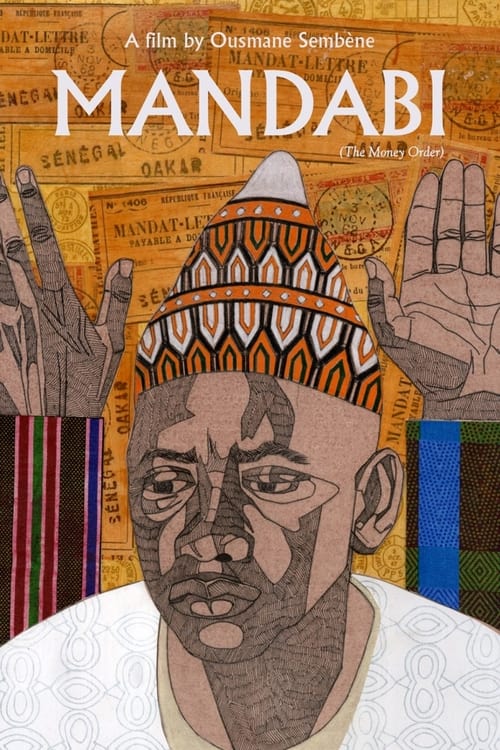


cinema in africa has developed in the context of the fierce struggles of the colonizer and the colonized and their aftermaths in the postcolonial era. these struggles and their consequences have affected our peoples at the economic, political, cultural and psychological levels, at the levels of communal representation and images of the self. so the question of african cinema is not only that of relations of wealth and power but also of the psyche. decolonization of the mental space must go hand in hand with that of the economic and political space—only the penniless deny the pleasure gained from money; money has no roots, but it grows in our hearts. for ousmane sembène, the question of political liberty is inseparable from the challenge of fusing different traditions—technological, narrative, artistic—in the service of a modern african society. sembène's didacticism centers around the implicitly political nature of his filmmaking; he exasperates and engages by the unfiltered truth of a scene of confrontation, presenting irreducible conflict, structurally developed with a radical twist under his decolonizing lens. this film; along with most of his other efforts, would be considered technically unexceptional if they didn't serve as the blueprint towards filming Black african bodies and displaying the sensitivity of our people with standards of dignity that are found to be lacking even in contemporary Black american cinema. in mandabi, sembène reveals himself as an artist of unadulterated simplicity. in scene after scene the unburied pace of the film allows time for a full understanding of both action and reaction, not unlike ozu's cinema. the film is intended as a vehicle for social and political persuasion, leaving little room for self-expressive intricacies and that sensitivity of sembène's is why he continues to shine as an artist whose work is intended for an audience of his own people; not for delusional, self-absorbed NK apologist "revolutionary-minded" whites or filmbros to gawk at. there's a special irony here, the film's screenplay is adapted from a short story written by the man who was president of senegal at the time—thus we're presented with a story written by an older social reformer who is now seen as a symbol of oppression by the youth who once sought after his guidance. this pattern isn't all too unfamiliar, taking into account the disparity that Black americans feel toward Black intergenerationalists. to achieve a deeper understanding of the common african's presence on screen, one must understand that the society of the settler is a cohesive and homogeneous community; the class distinctions internal to it are maintained, but in a friendly manner. the worker, the priest, the merchant are first and foremost settlers and only secondly members of this or that class or profession. the cohesiveness of the settler community is maintained against and in reference to the colonized, whose existence is fixed and frozen as the permanent underclass of this setup. the colony is the settler's own lived self-image; he foregrounds his individuality against the background of this collective, embodying the social status and economical stability which he lacked in europe. despite this, the first wave of postcolonial african cinema was preoccupied with the need to escape from european hegemony—politically and psychologically. even when colonialism had come to an end, there was a particular concern over acculturation and assimilation to white values and civilization—especially to french identity. even though mandabi and its characters are fairly separated from european values and thematic sensibilities; minor characters and bureaucrats reiterate the effects of the colonial economy, and the uneven development of african independence, assuring that revolutionary values would inform african filmmaking as long as postcolonial influence lasted in any capacity.