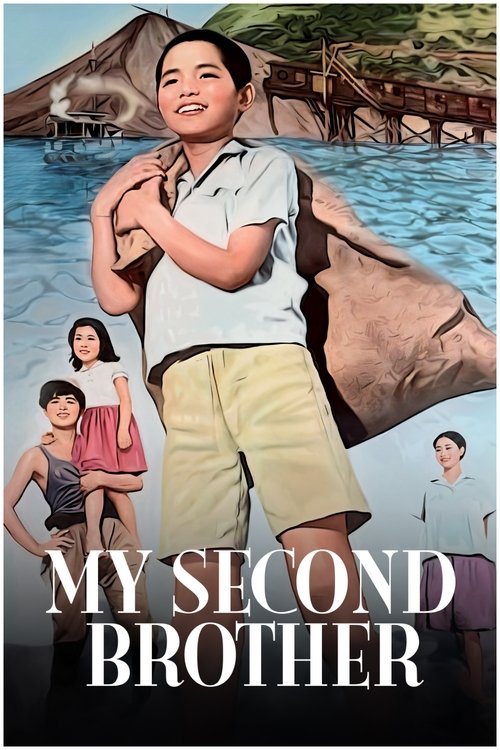
I'm still not too familiar with Shōhei Imamura's films outside of The Ballad of Narayama, so I decided to check out a lesser-watched film of his. This only has 29 reviews, which is ridiculously low, but it seems to be quite obscure to watch, though to be fair, I found it quite easily. It's a simple story following four orphans against the backdrop of a coal mining town and highlights the complexities and poverty that plague them. It's a quietly devastating portrait of poverty, and it's all portrayed through the eyes of children, most notably the second brother, whose quiet observations through the film become its main soul. It's not heightened by a loud emotional score or melodrama, but instead offers a very thoughtful look into poverty and loss and the emotional strain it all entails.I ove the cinematography here, and right from the start, the working-class town is pictured as very real and authentic. It's almost documentary-like in its presentation of working-class life, ranging from the factories to the dusty roads. I got fragments of inspiration from Italian Neorealism in this one, especially how its characters' struggles are portrayed, but it's still a very bold project from Imamura. Probably not a intentional inspiration but I felt hints of it.It's all very slow here, and it will test your patience, but it allows for the right amount of emotional weight and allows the feelings of isolation and tension within the family to linger. It's just overall incredibly complex in its themes and a lot smarter and ultimately more real than its fellow films of the period. It invites you to watch and reflect on the poverty-stricken era, and it does a good job, and it's certainly an underrated one.
Blu-ray. Japanese social drama. A film that measures the impact that an economic crisis could have on Japanese family ties in a poor family. At times, it resembles the work of De Sica or Rossellini. The film also focuses on the relationships that the Japanese had with Koreans and on the economic gap between cities and rural areas.I admit that I was not as moved by this film as I was by other works by Shohei Imamura. However, the characters are beautifully portrayed.
Imamura's fourth film as director is among his most obscure and difficult to track down, it's certainly a lesser work but fits right into the mould of lower class fringe societies living hand to mouth, in which the director took much interest.My Second Brother explores the lives of a family of orphaned children living in an impoverished mining town in which hunger, death and layoffs are a frequent occurrence. Perhaps foreshadowing the documentary films that would follow later in Imamura's career, it's stylistically less showy than his previous work and lacking in creative flourishes aside from some interesting tracking shots and whip pans, although the mining town really does look like a decaying, wretched place to live. The children of the family it centres on are the dramatic soul of the film and well acted by the younger cast, though it tends to deviate to less interesting supporting characters more often which limited my investment.The constant tearing apart and reconstituting of the family unit is quite distressing, as the big city inevitably lures away the older siblings to find work that just doesn't exist in the town anymore. The disparity between the urban and rural economy in post-war Japan clearly a major social issue at the time. Not all that gripping but another promising early film.