"I didn't bring you all the way across the Atlantic for you to write stories about gangsters. We don't have any over here . . . If you want to write that kind of stuff, you can go straight back to Chicago."The war is over, and the racketeering's good. Especially if you're Eduardo Sugiani (Joseph Calleia), the self-made, buffed-nailed, signature-accessorized (hence the nickname, "Knucksy") king of Soho’s underworld, a self-described "British foreigner" whose remit covers forgery, contraband, graft . . . and the occasional killing. The cops have been perpetually impotent re: pinning anything on him (Stanley Holloway's Inspector Rendall innocent*), but a chance meeting between fashion editor/American import Linda Medbury (Carole Landis in her penultimate film appearance**) and Annie Foss (Ruth Nixon), Sugiani's distraught, brandy-soaked ex, piques the newspaperwoman's interest. Just who was Millie Sharp and how did she wind up in the Thames? Speaking of journalism, I've gone and buried the lede. Great as Calleia's balance of charm and malevolence ("I can be nice. And I can be not nice.") may be, the real star of this show is Nigel Patrick, recreating his stage role from Richard "How Green Was My Valley" Llewellyn's play, as Bar Gorman, the nimbly-tongued Sugiani whisperer/"Mr. Telephones Dishwasher"/family man ("Mrs. Gorman, your husband's a very smart boy.") tasked with keeping both the organization running smoothly and his hot-headed boss under control. "It don't matter what they say as long as they say it. Who said that? Blimey, I did." So many words! So much accent! Honestly, I probably only understood, like, 60% of it***, and it was still magnificent."He who laughs last laughs last. Yeah, I never could get that thing right."The tonal swings can be discombobulating - snatches of brutal violence topped off with a farcical melee involving football jersey-clad vigilantes and Sugiani's latest plaything, a well-read movie star, stripped to her skivvies. As can a sinister Hay Petrie (who, like Landis, died before the film's release). But the shot compositions are consistently riveting - blocking and framing and reflections, oh my! (Edmond T. Gréville, I did not know your game) - and the bits of detail - Linda’s ambivalent relationship to shoes, the nasal difficulties of her editor ("Uncle Fudd"), Bar munching chocolates during Linda and Sugiani’s first confrontation, a game of pass-the-pup - delightful. My only real complaint is that Linda’s über-confidence comes off more like a character who knows they're surviving to the end credits rather than an actual human. Also, Derek Farr, as her ex-soldier fiancé/recruitor of gymnasium muscle, answers to "Jumbo". Jumbo. I got nothing . . . But honestly, who cares when Patrick is out here being the spiviest spiv to ever spiv? I'd gladly have watched 90 minutes of simply one-sided phone conversations. "Thanks for the tea."And thanks to Christopher for putting this one on my radar! *Exiting a meeting where he was offered a bribe, Rendall whispers an inaudible message to Bar, presumably about where he can put his champagne, to which the latter replies, "What, bottle and all!" 🧑🍳’s 😘**Actually, the last movie she filmed, but Brass Monkey was released after it.***Sadly, my fluency in mid-20th-century Cockney slang proved to be lacking. The shame is deep.Available here. Postscript - Sakana, I have no idea how this movie was custom-designed for you all the way back in 1948, but I'm more than happy to savor the results. Post-postscript - "Then he starts taking off his harps and flutes, eh, daisy roots. Boots, miss." Rhymes! Two films in a row! I must have done something to please the Universe. 🥰
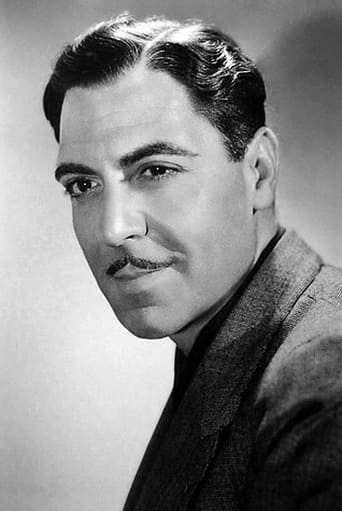
One of the cycle of 'spiv' films released in England in the wake of WWII, Noose is set during the last dominant days of an untouchable London gangster/black marketeer named Sugiani (the man of a thousand ethnicities, Joseph Calleia, here playing Italian), before he's brought down by Linda Medbury, a blithely confident American fashion writer (Carole Landis in her final film role). Before its bizarrely comedic conclusion, the film is often excellent, thanks largely to Sugiani's uncompromising intensity, and the magnificence of Nigel Patrick as Bar, his childhood-best-friend-turned-gangland-right-hand. (Look at them!)Though he appears very low in the credits, Noose very much Patrick's film, because Bar's big, glib personality is the spark around which the rest of the movie is built. Abandoning his usual posh tones and manner for a broad cockney accent and the kind of patter Dick Van Dyke would have died to produce, Patrick is incredible as Bar, smooth talking everyone from cop to killer, and completely at ease in his skin and his role, both in the world and within Sugiani's setup. Whereas Sugiani's combativeness often gets the better of him, making his mouth outrace his brain, and slowing his dexterity with English, Bar is ready for almost anything. He is trusted completely and seems to be the main point of day-to-day contact for Sugiani's men, but he is also not above being the target of his boss' ire, when things go wrong and Sugiani needs to lash out. Though we don't get anywhere near enough backstory between the men, their long-term closeness is evident not only in the way Bar is able to stand up to Sugiani and redirect his violent impulses, but also in the way they work together — Bar can predict the way Sugiani will react to everything, and Sugiani knows he can fly off the handle, because Bar is there to rein him in, if necessary.Things go suddenly south for Sugiani when Medbury, who is due to marry a returning British soldier (Derek Farr as Captain Jumbo Holle) and only recently started writing for her uncle's newspaper in London, finds out about a death that is being blamed on Sugiani. Because she's a rich, comfortable, American white lady, it doesn't occur to her that anything bad could touch her, so she goes after Sugiani in print despite the dire warnings of her fiancé, and the initial resistance of her uncle (he folds quickly, because: circulation!). The result of Linda's attack is first a faux friendly visit from Bar and Sugiani, followed by progressively more threatening visits from people who are much, much less friendly.It is in this middle section that Noose is at its best. The threat to Linda — and anyone who dares cross Sugiani — is real and concrete, and editor David Newhouse (who would, almost 20 years later, edit a little picture called Seconds) does incredible work, melding together the worlds of Linda, Jumbo, and Sugiani in just a few brilliant match-shots. Though the rest of his work is less flashy, it is nevertheless usually Newhouse who gives the film its weight, often keeping violence off-screen while focusing on little details: an abandoned stole, slipping off of a sofa; a lamp, crushed underfoot; a wedge of light coming, unnoticed, into a dim room.As suggested easier, alongside Newhouse, the key work in the film is done by Patrick and Calleia. Their performances are, by intent, a little big, but they're both such good actors that, behind their accents and bluster, their characters remain undeniably human. Calleia by this point had played so many ethnic caricatures that he could rise above them without even trying, avoiding pitfalls that might trap lesser actors, like the near-slapstick direction Noose takes in its final 10 minutes. During that final sequence, Patrick, for his part, makes Bar an island of sorrowful seriousness in a sea of absurdity, as he realizes, perhaps for the first time, that consequences for him mean sorrow and suffering for his wife and kids. It is thanks entirely to the two of them that the film survives the terrible directorial choices of its unhinged denouement.Also, we as a species were robbed by not getting to see more of Carol van Derman on screen. Here she plays Sugiani's dim new squeeze, and her physical confidence is completely transfixing, even when she's (mostly) being forced to play a one-dimension laugh-line. According to IMDb, she made two movies ever, both in 1948, and the other is believed to be lost.
Swarm brothers, I mean black market racketeers in arms—big, brash Bar (cockney!Nigel Patrick) and slimy, sauve Sugiani (I-am-Italiano!Joseph Calleia)—are a duo to contend with in post-WWII London. They come under hot scrutiny when also big and bold American newspaper lady, Linda Medbury (Carole Landis with hair as big as her personality) gets a whiff of spicy murder and decides to snoop and expose him. Meanwhile, her fiancé Captain Jumbo (Derek Farr) rouses his gym lads to also get involved with flushing out Sugiani. Jumbo’s plan of infiltrating involves donning Chelsea jerseys, which is great and all but that wouldn’t stop them from getting arrested for unlawful behaviour, says Inspector Randall (Stanley Holloway).As the “noose” gets tighter around Sugiani, he starts loosing his marbles, but fortunately he has Bar, who helps him cool his jets. Somewhere amongst all of this, there is a funny looking hitman who I recognise and also don’t at the same time. Spiv film, Silk Noose, has been described as a “screwball noir” which it indeed has the elements of fast talking witticisms being volleyed about like a high paced tennis match with Nigel Patrick at its helm and stylistically filmed with high-contrast shadows and daring shots. Then there’s all the melodrama and action that brings a sense of edginess and danger to the whole enterprise. And weirdly comical too? Talk about being a whirlwind. I wasn’t expecting the women to team up at the end but that was a comical touch I didn’t mind. Smash him up ladies!My head has been in the clouds and my heart has been feeling feels from World Cup shenanigans that I said I wouldn’t get into… Thank you for the rec @sakana as I make attempts to ground myself back in some semblance of routine again.