

G. W. Pabst in 1929: Creates a film all about moral degradation and explicitly illustrates how one woman unleashes ruin on herself and those around her.Me, 90 years into the future: Only focuses on the lesbian subplot.
Χρησιμοποιούμε cookies για να προσαρμόζουμε την εμπειρία σου και να μετράμε την επισκεψιμότητα. Μπορείς να εξαιρεθείς όποτε θέλεις.
Σκηνοθεσία G.W. Pabst
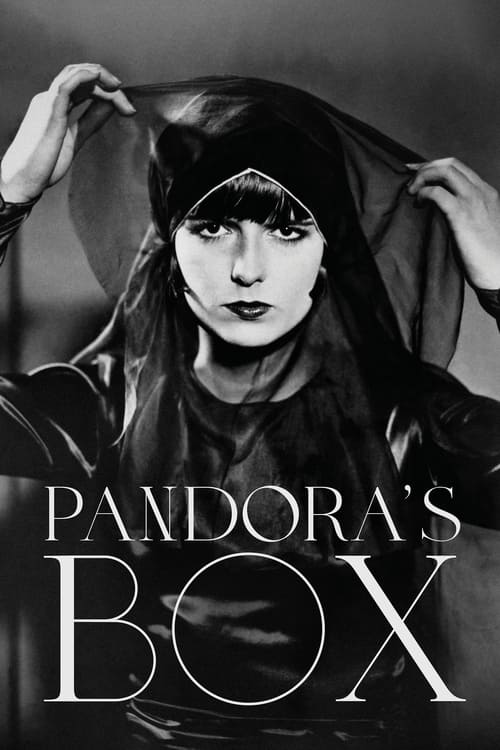
Pandora's Box
Θρυλικό, σκοτεινό δράμα
Η άνοδος και η αναπόφευκτη πτώση μιας αμόραλης αλλά αφελούς νεαρής γυναίκας, της οποίας ο αμέριμνος ερωτισμός προκαλεί πάθος και βία σε όσους την περιβάλλουν.
Η «Το Κουτί της Πανδώρας» παίζεται σε 1 σινεμά στην Αθήνα - επόμενη προβολή Παρασκευή 25 Σεπτεμβρίου στις 17:00 στο Newstar Art Cinema.
Εμφανίζονται οι σημερινές προβολές.Πλήρες πρόγραμμα & φίλτρα
Προβολές για Το Κουτί της Πανδώρας, ενημερωμένες κάθε πρωί
Διάλεξε σινεμά και πάρε υπενθύμιση πριν κατέβει.


G. W. Pabst in 1929: Creates a film all about moral degradation and explicitly illustrates how one woman unleashes ruin on herself and those around her.Me, 90 years into the future: Only focuses on the lesbian subplot.

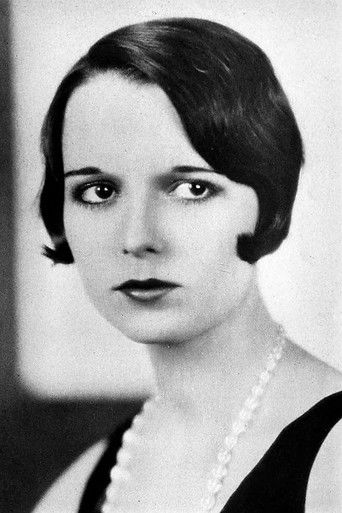
Honestly, this film surprised me; it was way better than I expected! There’s something deeply unsettling about the way Pabst shot his scenes, how he portrays desire, as if every glance, every gesture from Lulu carries a prophecy of destruction. It’s not just the body of Louise Brooks, who plays Lulu, that fascinates me, it’s what it represents: a void, a promise of freedom and ruin. Lulu isn’t a femme fatale in the classic sense; she doesn’t manipulate or plot anything. She simply exists, free from what the world seems to impose, unbound by bourgeois morality and patriarchy, and it’s precisely this freedom that made me scared of her fate. The society around her seems less interested in understanding or containing her and more determined to punish her simply for existing outside the norms, as if the film were screaming to us that, for many, desire is inseparable from chaos and therefore must be controlled or eradicated.Since I’ve mentioned Lulu, it’s impossible not to think about Countess Anna, especially as a character ahead of her time. She’s considered the first lesbian character in cinema, and the most interesting thing is how she was treated with a certain dignity, something rare, almost miraculous, for a 1929 film. There’s an honesty in the desire she feels for Lulu, a purity that needs no judgment or exaggeration as if the director knew that simply showing this love was revolutionary enough. Anna is quite a universal figure because her passion for Lulu makes her so, after all, who hasn’t longed for something impossible? She represents both freedom and the pain that comes with it, someone who sees in Lulu not just an object of desire but a promise of something greater, even if it remains hopelessly out of reach. That’s what makes her so tragic, so human.And then there’s also Jack the Ripper, whose final presence gave me chills (thanks to German Expressionism). But wait, not because his arrival was unexpected, but because it felt inevitable. Lulu is a tragic figure, doomed from the start, and her death at the hands of a serial killer feels like the final stroke of cosmic irony: the desire she personifies must be eradicated, almost like an exorcism. But what fascinates me is the contrast between Jack’s brutality and Lulu’s resigned acceptance. It’s as if, at that moment, she finally found peace, as if she knew there was never a place for her in this world and that her death was a kind of liberation. That’s what made the film so devastating yet exhilarating to experience: it’s a story about the beauty and the price of freedom, about everything we lose when we try to live outside the rules.— List: Femme Fatale Legacy

I love when a movie supposedly about how a hot woman ruins the lives of the people around her is actually about how a hot woman's life is ruined by all the men around her despite the best efforts of her lesbian bestie who is in love with her.
The film follows the tragic downward spiral of a vibrant young woman whose magnetic allure incites obsession, crime, and ruin among those around her.
G.W. Pabst directed the 1929 silent drama, which is celebrated as a high-water mark of Weimar cinema.
Yes, it is a 1929 silent feature utilizing expressive intertitles and a powerful central lead performance.
Full schedule on Mood.