



Classic Sho Miyake, from its ruminative and broken loner protagonist, to its interest in memory and its increasingly still camerawork. Beautiful.
Ο Χάτζι είναι ένας ηθοποιός κοντά στα σαράντα που έχει ακινητοποιηθεί στη ζωή του. Μετά την πρόσκληση ενός παλιού φίλου, επισκέπτεται τη γενέτειρά του για πρώτη φορά μετά από χρόνια, ενώ κατά τη διαδρομή ένα ατύχημα τον μεταφέρει πίσω στο λύκειο, κρατώντας όμως το ενήλικο σώμα του.
Η «Playback» παίζεται σε 1 σινεμά στη Νέα Υόρκη - επόμενη προβολή Παρασκευή 13 Νοεμβρίου στις 19:00 στο Metrograph.
Επόμενες προβολές: Παρασκευή 13 Νοεμβρίου.
Πλήρες πρόγραμμα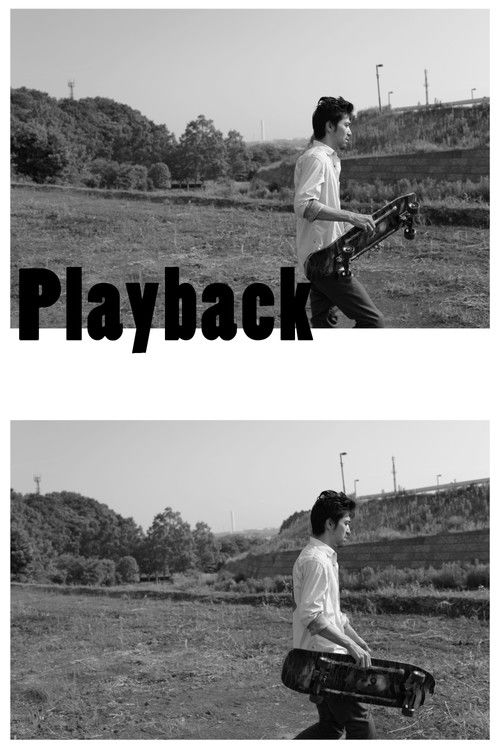
Προβολές για Playback, ενημερωμένες κάθε πρωί
Διάλεξε σινεμά και πάρε υπενθύμιση πριν κατέβει.
Classic Sho Miyake, from its ruminative and broken loner protagonist, to its interest in memory and its increasingly still camerawork. Beautiful.

重看《Playback》,最直接的感受是那份屬於年輕創作者的直率,試圖去碰撞他當時尚未經歷的中年焦慮與衰敗。那是一種「回不去了」的決絕。重複的結構、曖昧的時空,這些元素在三宅唱後來的作品中雖有延續,但從未如這部26歲拍成的處女作般走得那麼極端。十四年過去,戲中的演員班底後來反覆出現在他的電影宇宙裡,肉身與歲月的變化在此刻回看更顯意味深長(除了他過早老熟的臉、彷彿將時間凍結的渋川清彦,與至今依然亮麗的河井青葉)。電影的敘事時間是斷裂的,中斷的線索被刻意懸置,拒絕讓觀眾追問下去。三浦誠己演的「什麼鬼」猶如村上淳的某種心理投射或分身,如同他心中的 Fight Club;而渡邊真起子一人分飾母親與前女友兩角,當後者出場時,更是直接擾亂了觀眾對人物關係與時空連續性的認知。時間在這裡被打碎,所有事件皆在當下發生,無法再被單一的線性邏輯所統合。什麼是過去,現在和未來?唯獨村上的經理人說了一段如點題的對話,「人生是選擇和結果的累積」,那麼直接地用對白點題,也很少見。過去與現在的界線,在水戶市的黑白風景中被徹底抹除,令整部電影陷入一場無休止的夢遊。村上淳飾演的演員正經歷事業停滯與中年危機,返鄉之旅沒有帶來和解,反而凸顯了記憶與現實的錯位。三宅唱並無意提供心理學式的解讀,他要捕捉的,純粹是那種人生「卡住」的物理狀態。《Playback》確實顯得隨性、粗糙且具備強烈的實驗意味。它不想留下線索,也不打算給予明確的答案。電影底層其實流露著一種無法逆轉的衰亡感,無人能逃避的老去與消逝,這或許是他至今最顯絕望的一部作品。(後來真的再看不到,請看看甜甜的《Wild Tour》還有《惠子》)母親與前女友共用同一張臉孔,而河井青葉的角色僅能以影像(錄影帶)的形式存活於空間之中。然而,正是這種未經打磨的粗糙感,保留了三宅唱對電影語言最本能的探索。蓮實重彥形容一部既大膽又細膩的新人導演作品能出現在平成年代的日本,只能說是奇蹟,此話不假,但也不及三宅的好基友濱口龍介這樣去形容:「在迎來40歲前夕,「衰老」的預感襲向演員,從那一刻起,演員便展開了一場幾乎注定會輸的戰鬥……。《Playback》簡直就像是將《首演之夜》在現代重現。村上淳與三宅唱的戰鬥,和 Gena Rowlands 與卡薩維蒂的軌跡如出一轍。為了活下去,因此要無數次地去演繹(重新活一次)。不過,《Playback》的戰鬥並非單純的苦戰。不是死撐硬挺,而是輕巧地穿梭過去。村上淳稍微駝著背溜滑板的身影,向觀眾展現了所謂的「表演」並非過剩的生命,而是與生命的調和。」 Rewatching Playback, the most immediate impression is the directness characteristic of a young creator attempting to confront the mid-life anxiety and decay he had not yet experienced at the time. It is a resoluteness of "there is no going back." The repetitive structures and ambiguous time and space—though these elements continue in Sho Miyake's later works, they never go to such extremes as in this debut feature made at the age of 26. Fourteen years have passed, and the cast of actors has since repeatedly appeared in his cinematic universe. The changes in their physical bodies and the passage of time feel even more profound looking back now (with the exception of Kiyohiko Shibukawa, whose prematurely aged face seems to have frozen time, and the still-radiant Aoba Kawai).The film's narrative time is fractured. Interrupted clues are deliberately suspended, refusing to let the audience interrogate them further. The bizarre character played by Masaki Miura acts as a kind of psychological projection or doppelgänger for Jun Murakami, much like the Fight Club in his mind. Meanwhile, Makiko Watanabe plays the dual roles of both mother and ex-girlfriend; when the latter appears, it directly disrupts the audience's cognitive grasp of character relationships and spatio-temporal continuity. Time is shattered here; all events occur in the present moment, no longer unified by a single linear logic. What is the past, the present, and the future?The boundary between past and present is thoroughly erased within the black-and-white landscapes of Mito City, plunging the entire film into an endless sleepwalk. The actor, played by Jun Murakami, is experiencing career stagnation and a mid-life crisis; his journey back to his hometown brings no reconciliation, but instead highlights the dislocation between memory and reality. Sho Miyake has no intention of offering a psychological interpretation; what he seeks to capture is purely the physical state of being "stuck" in life.Playback does indeed appear casual, raw, and highly experimental. It doesn't want to leave clues, nor does it intend to provide definitive answers. An irreversible sense of decay actually flows beneath the film—an aging and fading that no one can escape. This is perhaps his most desperate work to date. The mother and the ex-girlfriend share the same face, while Aoba Kawai's character can only survive within the space in the form of an image (a videotape). However, it is exactly this unpolished rawness that preserves Sho Miyake's most instinctual exploration of cinematic language.Shigehiko Hasumi described it as a miracle that such a bold yet delicate work by a debut director could emerge in Heisei-era Japan. This statement is true, but it is perhaps not as fitting as the description given by Miyake's close friend Ryusuke Hamaguchi:"On the eve of turning 40, the premonition of 'aging' strikes the actor, and from that moment on, a battle that is almost destined to be lost begins...Playback is almost like a modern-day reincarnation of Opening Night. The battle fought by Jun Murakami and Sho Miyake is completely in sync with the trajectory of Gena Rowlands and John Cassavetes. To survive, one must perform (relive) countless times.However, the battle in Playback is not merely a bitter struggle. It is not about brute endurance, but about slipping through nimbly. The sight of Jun Murakami skateboarding with a slight slouch demonstrates to the audience that 'performance' is not an excess of life, but a harmony with it."

三宅唱作品裡的人物與情境/風景從來不是恆定不變的(什麼樣的景緻配合人物的何種情緒)關係,「風景」就只是風景本身,不與某個人或團體的意志相聯繫,它們在影片裡並非被設計為主人公某時某刻的心理影像而擁有意義。因而每當人物進入到一個情境,哪怕該情境他好像曾經來過,有種似曾相識之感,除此之外的一切都是新奇的和陌生的,他/她需要四處走動和觀察以收集情報(多走,多聽,多看),這是人物面對一堆未加整理的,脫序的純視聽符號,不帶任何目的性的遊蕩,接近於「無意義」、「無方向」的耍廢日常。追憶往事或多或少出現的迷亂與偏差,甚至完全忘卻,但身體柔軟敏感的部位會拼了命地試圖留住一些感覺,一些習慣,如彼此追逐的疲乏感,猝然倒地的切膚之痛。三宅唱在《回放》(Playback)亟欲捕獲的正是人物(演員)闖入既平凡又陌生的情境裡做出的微妙而自然的肢體反應,中遠距離鏡頭呈現的是人與環境之間時而潛藏的張力,時而享受其中的不確定性。即使是同一個地點,你也永遠不會知道接下來將發生什麼:可能是一塊塵封已久的滑板;可能是意義不明的笑容;可能是一句無心誤譯的「勃起」;可能是一群突然介入畫面的追風少年⋯⋯三宅唱的「風景」始終蘊藏著數之不盡的秘密,能夠發現什麼則取決於人物以怎樣的心態(選擇)去觀看。而當鏡頭從持續的抽離狀態(人-景)轉回人物的臉部特寫,積蓄已久的能量爆發,便是純粹的情緒時刻。
Ο Χάτζι είναι ένας ηθοποιός που πλησιάζει τα σαράντα, ο οποίος επισκέπτεται την πατρίδα του και βιώνει ένα παράξενο χρονικό άλμα στα σχολικά του χρόνια, διατηρώντας ωστόσο το ενήλικο σώμα του.
Ο Sho Miyake σκηνοθέτησε το Playback, που κυκλοφόρησε το 2012 ως πρώιμο έργο που εξερευνά τη μνήμη και την ακινησία της μέσης ηλικίας.
Το Playback κυκλοφόρησε στην Ιαπωνία στις 10 Νοεμβρίου 2012.