Yeah this was an extremely moving portrait of Adrian and Ross’s life over the last 30 years, appreciated that there’s still some levity sprinkled throughout but yeah it’s horribly devastating to watch. This and Blue Heron would make the saddest double feature ever but technically u could make it work. Though if ur unfamiliar with McElwee’s work like I was before today, I highly implore you to pull the double feature I just did today
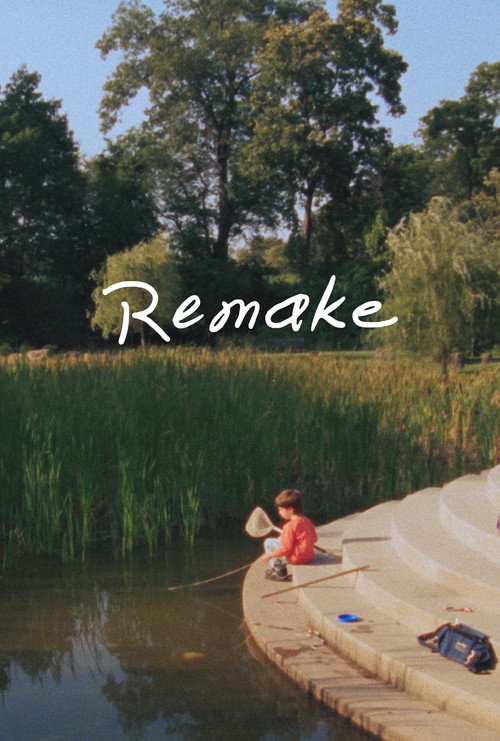
Ross McElwee’s new documentary, “Remake,” which premiered at the 2025 Venice Film Festival, suggests, by its very title, a return of sorts to a prior property. Such market expectations wouldn’t be wholly wrong: the film began as a making-of project of Steve Carr’s hopes for remaking McElwee’s landmark documentary “Sherman’s March,” a candid essayist film about romantic relationships and existential fears, into a narrative feature. Like “Sherman’s March,” however, what instigated McElwee to develop “Remake” isn’t wholly what this startlingly raw and openly reflective film is about. This documentary is a crushing essay film as a cinematic apology to a departed subject: The director’s son, Adrian McElwee. In 2016, Adrian died of a fentanyl overdose in McElwee’s home. He’d battled substance abuse, ranging from alcohol to ecstasy to oxycodone to heroin, but that version of Adrian isn’t the one McElwee initially (re)introduces to viewers. He begins with images of Adrian as a sweet, ingenious kid fishing for prawns. McElwee tells us that since Adrian’s childhood, he’d casually filmed his son for a few minutes a day every few months. This leaves him now, decades later, with a considerable amount of footage that unconsciously documented him as Adrian ever so slowly grew up and moved away, physically and emotionally. McElwee’s parsing of these remembrances is deftly interwoven with McElwee’s documentation of the fitful, planned adaptation of “Sherman’s March.” The three lenses—“Sherman’s March,” its potential remake, and Adrian’s story—arrestingly reflect off one another, capturing a director questioning his dual role of filmmaker and father. [full review via RogerEbert]
Ross McElwee seems to be the granddad of the flood of documentaries in recent years, which are centered around a filmmaker, their family, their history and traumata. it has become an own subgenre, especially in the shortfilm circuit. McElwee started his style already deep within the last century and lives it to the bone, that's obvious. it is also what rubs me the wrong way about the whole ordeal: in this therapeutic endeavor of dealing with the death of his son it becomes painfully clear that the father - surely being an okay parent in general - had one major flaw: his camera is permanently the center of all things. it's the old question of what is genetics, what environment, what is the parents fuck up, what was preventable. his son is finally lost to the drugs (the opioid crisis being part of the themes here), but while we don't have too many images of him in his last years, it is somewhat disturbing how the father is pointing his beloved camera towards a person that is deeply struggling. although McElwee isn't a bad person, it feels like an autistic spleen, an eccentricity of the filmmaker, shaping his life as much as his work. what remains is an awkward feeling for the viewer, although also a deeply saddening one.