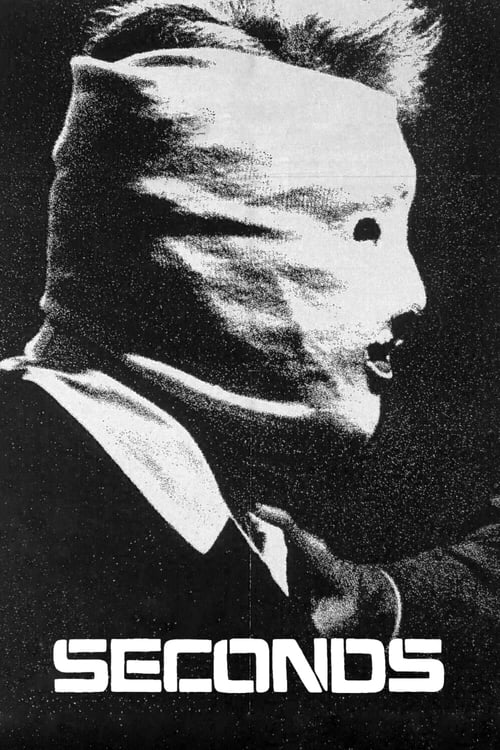
Let's get this out there first:1. the goddamn opening credits2. the goddamn editing3. the knowledge of Rock Hudson's own personal life takes his performance to Morrissey-levels of melancholy4. this should be required viewing for any filmmaker wanting to experiment with handheld/found footage/other bizarre camera techniques5. the goddamn e d i t i n g6. the double meaning of the title (measure of time/2nd)7. appearance by the mayor from JAWSThere are about a hundred ways to approach interpreting this film, and that alone is admirable, but what makes this a perfect movie is that even without intellectual dissection, it is an incredible science fiction/horror experience. It's layered, it's complicated, but thinking is not required to enjoy it. Here's what I got out of it. Let's take a look at the "feel bad rainbow". What's in there?For basically all my life (and I'm sure other film nerds can relate) I've spent thousands of hours escaping reality. Through reading, film, or my imagination I compulsively ignore what I am currently doing. Whether these constructions were fantastic (here I am winning a Grammy even though I don't make music) or benign (what if I lived in a different apartment?) is irrelevant - they were a form of disregarding whatever was bad and not admitting to myself that the only way to fix anything is through hard work, sacrifice, personal reflection, and other things nobody wants to do. It wasn't until a couple of years ago that I realized how destructive my little brain-vacations could potentially be. They are not a harmless television of the mind, but an emotional trap that you create for yourself. Instead of focusing on what you have or how you can get what you want, you focus on things that will never happen and are therefore irrelevant to your path. Not only does this keep you stuck in one place, but you spend you time WANTING as opposed to HAVING or even ENJOYING. Then there's what I like to call "The Depression Hills": a little trick depressed people play on themselves that goes something like "if I can just get ( ___ ) I won't be sad anymore". Then you get to the next hill, and think "ok well if I can just get ( THIS ), then I REALLY won't be sad anymore". No, you won't, unless what goes in the blank is "10 years of therapy and medication for my bipolar disorder".SECONDS is a literal interpretation of these things. You've got a new face (= your fantasy beach house, your fantasy self, whatever) but you're still you. In real life, we can choose to open our eyes (literally & figuratively), figure out what we're doing wrong and make it better. What SECONDS says is...WHAT IF YOU COULDN'T? What if you couldn't wake up, you couldn't escape from your escape, and it's actually just as bad as the original thing, and you didn't realize where you went wrong until it was too late? What if everything you knew was a lie, then you started over, and all that is a lie too? And what if some creepy conspiracy dudes were (literally & figuratively) holding you there? That's what made this film so jarring for me, almost dreamlike. I guess it's "supposed" to be about the entrapment of The American Dream, but on many levels it will resonate with all people. It must have hit HARD when it was released, but it is absolutely timeless. Plenty of films have examined these same themes, but none like this. There are many incredible moments I could point out or "review" but I prefer that you experience them for yourself. If you don't absolutely love SECONDS, you probably need to watch it again.
"The years I've spent trying to get all the things I was told were important - that I was supposed to want! Things! Not people... or meaning. Just things. And California was the same. They made the decisions for me all over again and they were the same things, really. It's going to be different from now on. A new face and a name. I'll do the rest. I know it's going to be different.Every two days or so I have a long, obsessive episode where I'm unflinchingly focused on one problem for hours and come to the same conclusion: that my problems could all be fixed if I were able to just have a "new" life. I could just go off into the woods for a month and remove myself from the world, emerge with some completed works, a full disconnection from social drama, perhaps a nice full mountain man beard and incredible figure that have miraculously developed from nothing more than a change in longitude. How lucky was I to choose this movie in the middle of the night in a depressive spell (well, the actual luck was that the 3 hr. Criterion extended cut of It's A Mad Mad Mad Mad World didn't have subtitles so I didn't watch it) as a distraction from this compulsion, only to come face to face with the reality of that fantasy– that your ennui and dissatisfaction aren't escaped by changing your clothes, your hair, your face. They're just misshapen. Perverted beyond all recognition into something new, something sinister and fresh-feeling. Something that tugs at your ankles with all the weight of your previous sadness, but without the good you'd curated to keep you afloat.The most confronting thing about Seconds isn't that it shows a new life isn't the cure for your current one, it's that it can't tell you what is. Nothing can. Maybe because nothing is. Life isn't a problem to be cured, it's a condition to be maintained. We dream of miraculous cure-alls as an escape, a solution that turns the key in our mind where we can't turn it ourselves.The sadness is going to set in sometimes. And the obsessions will follow. And when they do, I will continue to cope by picturing myself in those secluded woods, looking like a tiny Yahya Abdul-Mateen II.Life is built on wishes, and you've gotta keep plugging away at them. You can't give up, and you can't let the mistakes jeopardize the dream."
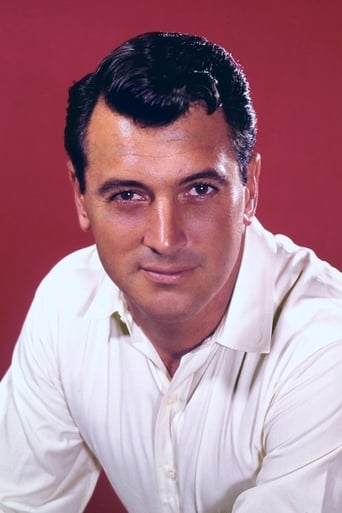
not really happy with how this turned out, but too tired to nudge it in the right direction... also, you should probably watch the movie before reading this. not like *immediately* before, but maybe at some point in your life.It’s appropriate, and perhaps nearly necessary, that John Frankenheimer’s “Seconds” is a very good film that’s dying to be great. The final film in Frankenheimer’s informal “Paranoia Trilogy,” (the other installments being “The Manchurian Candidate” and “Seven Days in May”), “Seconds” is the best and certainly the most enduringly resonant of the three, in part because it’s less of a political thriller than it is a resoundingly human one, less concerned with power than it is hope, regret and resignation.A bleak reappraisal of The American Dream, “Seconds” unfolds like a bitter cocktail of “Mad Men” and David Fincher’s “The Game”, and the decades by which it anticipated those two reference works should be seen as a testament to how urgently unafraid Frankenheimer’s film was to tear away the gauze from the raw wounds that underlie our culture, the quiet fissures in our lives that western civilization perpetuates by promising to heal. While the lack of a strict caste system still allows America to proudly wear “The Land of Opportunity” as its moniker, the promise of social fluidity is far less appealingly motivational than the possibility, however remote, of complete reinvention. Starting over. A second chance. America isn’t about self-improvement, it’s about transfiguration, not about bettering yourself, but about becoming someone better. Saul Bass’ hallucinatory opening credits sequence immediately informs us that this most ordinary man is fated for most extraordinary circumstances. On the day we meet him, a day like any other, he’s hustling across Grand Central Station towards the train that will take him home (train #2046, for those of you looking to entertain some far-fetched connections). Having spent my life between New York and Connecticut, I’ve seen Grand Central a thousand times over, but I’ve never seen it like this. In a sequence that seems to be the alpha and omega of Darren Aronofsky’s stylistic inspirations, legendary cinematographer James Wong Howe transforms the teeming commuter mecca into a dissonant beehive of paranoia, the camera – harnessed to the actors and staring at their faces through fisheye lenses – seeing every misstep in New York’s greatest masterpiece of human movement. It’s a deliciously noir opening sequence, a mysterious man tailing our protagonist until the moment the target boards his train, at which point Arthur’s pursuer taps him on the shoulder and offers over a small piece of paper. The train doors close. A bewildered Arthur unfolds the note and finds a SoHo address scribbled inside. That evening, he receives a phone call imploring him to heed the note’s invitation. The call is from his old friend Charlie Evans, but Charlie Evans is dead.Arthur is less a person than he is a richly detailed archetype. He’s the American salaryman of the 1960s, a dull creature with an ashen face who commutes from the New York City bank at which he works (fingers crossed for that promotion, Arthur!) to the model Scarsdale home in which he and his housewife sleep in separate beds. There’s genuine affection between them, obvious reservoirs of love that have been stunted by the inertia of the silent Sirkian crisis that unites the neighborhood in wordless despair, consumerism as much a catheter for their doldrums as it is for ours. Indeed, on the first and only night that we see Arthur and his wife together in their home, they engage in the same conversation that continues to recur throughout our cinema, bemoaning the conflation of life and products 33 years before Lester Burnham would insist that “this isn’t life, it’s just stuff!”, screaming at his wife as though the notion were a revelation and not a secret we all agree to share. Sure enough, Arthur goes to the designated address the next morning, winding up in a butcher shop where he fits right in amongst the slabs of hanging meat. Cut to Arthur being offered a mysterious service by a vaguely sinister company, cut to Arthur undergoing extensive plastic surgery that makes him look like Rock Hudson (in the best and most heartbreakingly self-reflexive role of his career), cut to him beginning a new life on the beach as an established artist in California. It’s preposterous, but that’s the idea, Arthur finally finding a product that seems to actually do what every other product merely promises to, something that he can pay money for in exchange for a better life (though the financials of the whole situation are a bit wonky). It’s hardly a spoiler to reveal that Arthur should be careful what he wishes for and all that, but what elevates “Seconds” from being an overlong “Twilight Zone” episode – and allows it to recover from the occasional clumsiness of its bacchanalian second act (which is alternately weird and wearisome) – is the courage the film evinces in its own convictions. "Seconds" is comprised of three rather distinct chapters, but Frankenheimer's direction allows the film to unfold as a single coherent narrative, his compositions (almost) always rendering mid-60s America in a way that feels at once both honest and unnervingly suspicious. Howe's camera, whether gliding through meat racks or bumping into the slick chest of an orgiastically happy wine fetishist, allows the picture to maintain a blunt reality that's coming undone at the corners, like the back of a sticker that's irresistibly begun to peel. This tonal consistency allows “Seconds” to become one of the rare films that doesn’t hit a speed bump when it swaps actors in a main role, Frankenheimer's story – for all of its hectic cross-country action – always orbiting around the same idea: we are never more than our context. When reborn, Arthur is an artist not because he has any great skill with a paintbrush, but because the people that populate his new life ostensibly believe that he’s an artist. His new existence isn’t undone because he struggles to connect with the hedonism of youth or because he learns that his exotic new fling is a hired hand – no, Arthur’s second act becomes an impossible fiction only because he becomes aware of how his fraudulence is reflected in the eyes of those around him. Arthur learns that he’s surrounded by complicity, nothing more than an old man in a new body. I think of the narration from “Fight Club” (every iteration of which was informed by Frankenheimer’s work), when our nameless protagonist encounters another person who fakes various cancers in order to bilk actual victims for their empathy. “Her lie reflected my lie. Suddenly, I felt nothing.”