A mood. The impossibility of putting life back together after everything has fallen apart.
Σκηνοθεσία Fei Mu
Spring in a Small Town
Νότια Κίνα, μετά τον πόλεμο. Η ζωή της Γουάν, μιας νέας γυναίκας που ζει με τον ασθενικό σύζυγό της στο κατεστραμμένο αρχοντικό του, αναστατώνεται, όταν ο άνδρας της δέχεται να φιλοξενήσει το γιατρό Ζιτσέν, έναν άνδρα με τον οποίο εκείνη ήταν κάποτε ερωτευμένη.
Η «Άνοιξη στη Μικρή Πόλη» παίζεται σε 1 σινεμά στο Λος Άντζελες - επόμενη προβολή Κυριακή 22 Νοεμβρίου στις 17:00 στο The Culver Theater.
Επόμενες προβολές: Κυριακή 22 Νοεμβρίου.
Πλήρες πρόγραμμα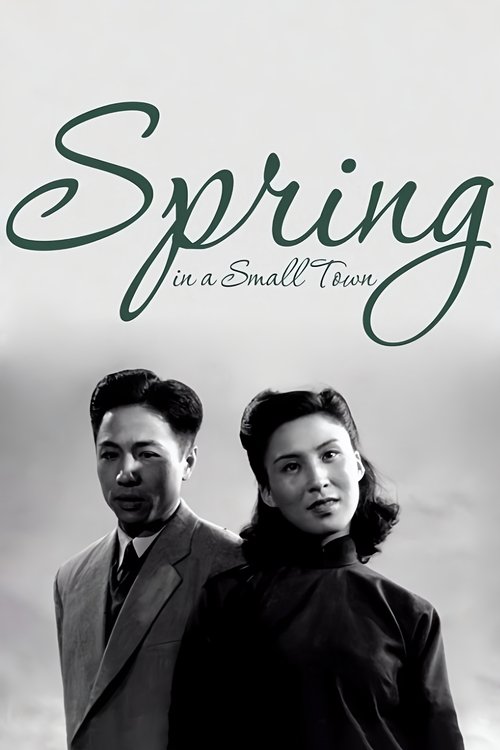
Προβολές για Άνοιξη στη Μικρή Πόλη, ενημερωμένες κάθε πρωί
Διάλεξε σινεμά και πάρε υπενθύμιση πριν κατέβει.
A mood. The impossibility of putting life back together after everything has fallen apart.

On visiting old friends, going for a boat ride, singing songs together like old times. On building your health back up, building up your will to live, brick by brick, just like the garden wall. The constant wind in the trees grows more forceful as time goes on, as time runs out. You can't hide from your memories forever, sometimes you have to confront the past to build a better future. I couldn't handle all the emotion in this film, and I'm not sure I'll ever be able to---what beauty, what sadness, what pain! Fei Mu's mastery of the cinematic form is overwhelming, once again.

Many national cinemas have that canon classic that perennially appears on local lists of the best movies ever made but is largely unknown outside the country's borders. This is China's. Notably, it topped the Hong Kong Film Awards Association's poll of the greatest Chinese films of the 20th century century — a poll conducted five years after a film it influenced, In the Mood for Love, premiered. My understanding is that it fell into obscurity for several decades while a very, shall we say, different kind of cinema existed under Mao, and its canonization came from critics and scholars in Hong Kong during the 1980s. Many of those critics probably fled the Mainland when they were children, and perhaps for them this movie represented a road not taken after the Second World War.The story is a simple love triangle set in the postwar ruins. A young wife cares for her invalid husband, and every day is the same. She is unhappy; he is depressed he can't make her happy, and is humiliated that his family home has been partially destroyed in the war. The inertia is disrupted by a visit from the husband's best friend, back from the war, who also happens to be the wife's former flame. The characters circle each other ambivalently, and the tone of the film feels somewhere between "old" and "new." Certain scenes are played for heavy melodrama, but the performances are restrained and internalized, and much is conveyed through suggestion. There is an understated elegance and intelligence to the staging and lighting of the interior scenes, and the exteriors are rich in what a certain great man once referred to as "the beauty of the wind in the trees."This feels like it came from such a distant world that I was a little surprised scanning the filmographies of its cast. Li Wei was the cruel husband from Zhang Yimou's Ju Dou! Wei Wei played a mom in Dante Lam's Fire of Conscience!The new 4K restoration feels a little off to me. It looks to my untrained eyes like they were too zealous with the digital noise reduction, and there's definitely something fishy with the sound. The footsteps, the rustling of blankets, the clinking and clanking of teacups... I hope I'm just going crazy and they didn't slap new sound effects on this thing. Still, it beats the barely-watchable DVD I checked out of the library when I was 18.
Ένα παντρεμένο ζευγάρι που ζει σε μια ερημική μικρή πόλη στην μεταπολεμική Κίνα δέχεται την απρόσμενη επίσκεψη ενός παλιού φίλου του συζύγου.
Το "Spring in a Small Town" σκηνοθετήθηκε από τον Fei Mu το 1948, πρωτοπόρο κινηματογραφιστή στην ιστορία του κινεζικού κινηματογράφου.
Το "Spring in a Small Town" κυκλοφόρησε στην Κίνα την 1η Φεβρουαρίου 1948.