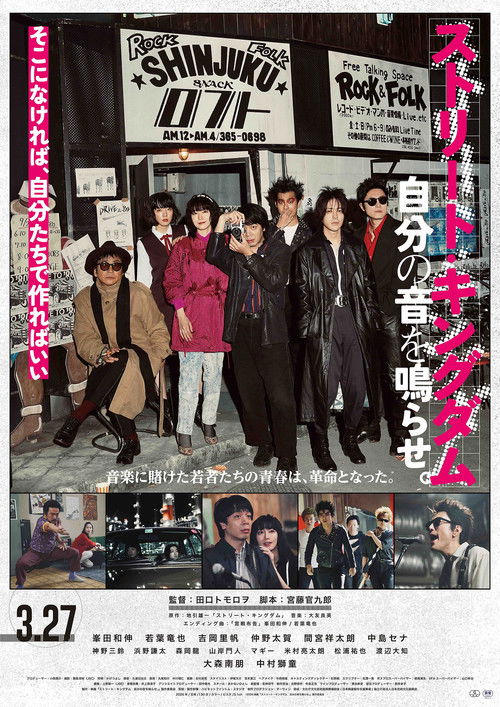
Video review: youtu.be/4Q7bgC3ASWIFantastic feel good movie about the birth of Japanese punk and Telegraph Records. Perfectly captures the DIY mentality community feeling of the time (not that I experienced it... Probably it's a pretty idealized version of what actually happened, but who cares if there is so much passion and love involved?). Including original photographs of the bands helps a lot, too.Tomorrow Taguchi should direct more (punk movies).
I like Tomorowo Taguchi both as an actor and a director. Iden & Tity is a great movie that should be seen by more. It's a great movie about a music scene by someone who was a part of it. So, I was very excited to see his newest effort that focuses on the Tokyo Rockers movement and based on the autobiography of Yuichi Jibiki, one of its most important photographers and later, label owners. (He's the guy behind the famous The Stalin photos, for example, I learned. Also, in a blog post Jojo Hiroshige says there are also Hijokaidan photos, though I couldn't spot them...) Plus, I recently read Mark Player's Japanese Cinema and Punk, where he speaks a bit about the movement, so contextualizing it, even through a mainstream kind of comedy was like something made precisely for me. I think you know where this is going with a preamble like the one above, but Street Kingdom isn't particularly good mainly because of terrible pacing and what feels like an excessive length. It's a bit longer than two hours but it feels like much more than that, especially towards the end, where the focus changes from Jibiki's role as photographer to that of a label owner and the movie becomes a bit more melodramatic and somehow less rooted in the reality of having a DIY label. Kind of sappy and corporate, if that makes any sense. This all doesn't mean that Street Kingdom is bad, though. The sets are great, they look and almost feel like coming from the period, and the fact that the band photos we see are the real thing, and not recreations, is amazing. It roots the movie in the reality of the performances and the people, giving it an almost documentary-adjacent feel at times. It's like many of the concert scenes are reenactments. Plus, as Jojo himself mentions, Tomorowo includes a large portion of JAGATARA's "Mou Gaman Dekiman," which is simply amazing. We hear Akemi Edo's voice with different actors quietly singing with/over him, very emotional and touching.
it’s so cool to see a glimpse of tokyo’s punk scene and how it all started there. a lot of good music and bands i didn’t know of that i will definitely look into.it was really nice to see the real photos taken back then, i think they serve as a strong tool to document the period. and as a photographer i really liked to observe the story through Yuichi’s eyes. the movie felt a bit stretched towards the end but i really enjoyed watching it!“what do you want to do when you become free?”PUNK.