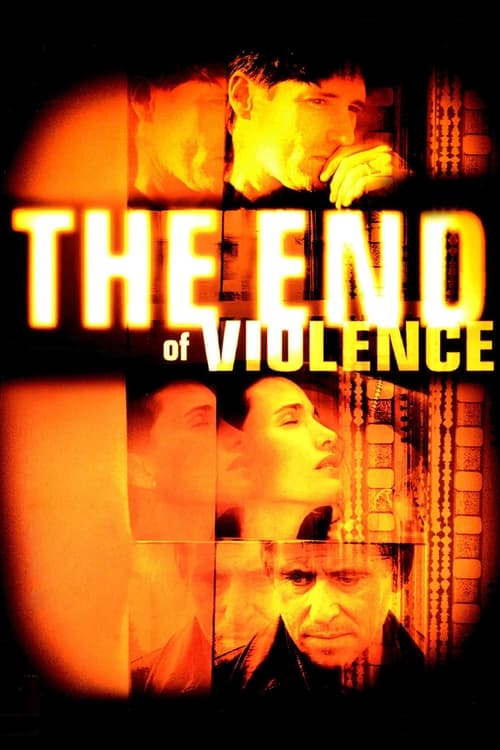
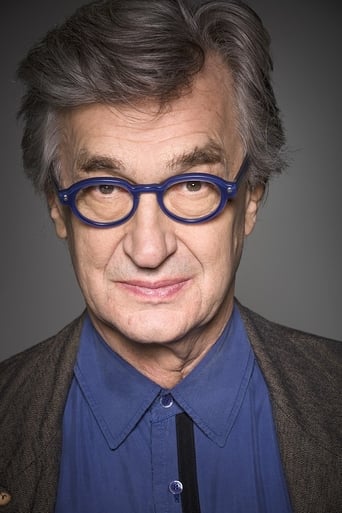
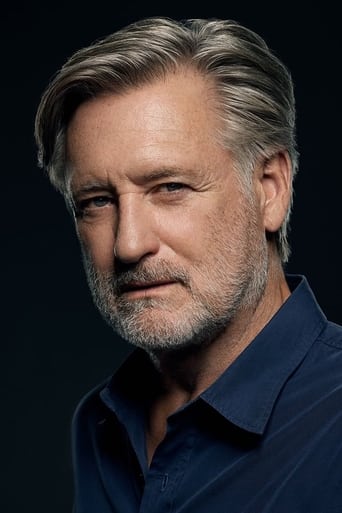
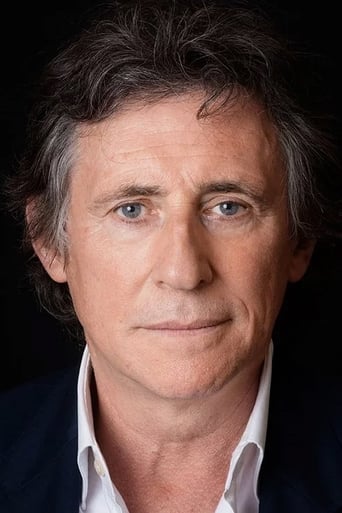
If someone were to show you The End of Violence with no context and with the opening titles lopped off, would you be able to identify it as a Wim Wenders film? I absolutely would not have been able to do this. In fairness, this is only the fourth -- and by far most recent -- narrative film directed by Wenders that I've seen and the first that doesn't give him a screenplay credit. It's also the first that I wouldn't feel comfortable calling a good movie.As far as not good movies go, I found this one remarkably interesting. In its makeup and personnel, I might have guessed this was David Lynch or Robert Altman or maybe even David Cronenberg or Steven Soderbergh or Lawrence Kasdan, if I didn't know all of their resumes back and forth. That's respectable company to be in, but it sets Wenders' film up to disappoint by comparison.It's an ensemble movie centered on a successful producer (Bill Pullman) who gets kidnapped in the desert and somehow manages to kill his abductors and escape, laying low with Mexican gardeners who find him. The producer's wife (Andie MacDowell) has just told him she intends to leave him. We look at this turn of events from the perspectives of police detectives (led by Loren Dean in his brief in-demand period), a computer scientist (Gabriel Byrne), and another film production.Wenders assembles a compelling cast, that runs deep with talent, with supporting roles filled by the likes of Frederic Forrest, Nicole Ari Parker, John Diehl, Udo Kier, and Henry Silva. His cinematographer Pascal Rabaud does good work. But the script by first-timer Nicholas Klein feels full of miscalculations and false notes. It is determined to make a name for its writer and say something profound about the film business, but it's written from the outside and doesn't have much to say. The mystery loses our interest quickly. The social commentary rings hollow. It's tempting to forgive the faults out of an appreciation for a better era of filmmaking, in which a thinking movie for adults by a filmmaker who's made at least two genius works of art could come and get lost in the mix during an end-of-year that gave us fine films by Fincher, Tarantino, Ang Lee, Gus Van Sant, Curtis Hanson, James Cameron, Francis Ford Coppola, James L. Brooks, and so on. But those works endure and this one noticeably pales in comparison.Now, to return to the hypothetical question with which I opened this review. How does one enter a movie randomly and blindly in 2026? It's maybe the only thing I miss from the days of cable movie channels. And I can't think of any easy way to do that with streaming or physical media.1997, Ranked
"Define violence"Mike Max (Bill Pullman) has a level of control over his reality as a producer controlling every element of what makes the screen in his gory action movies. Ray Bering (Gabriel Byrne) has a parallel experience as a high level surveillance operative who sees real life horrors on screens. Their worlds tangentially brush when Mike finds himself implicated in a whistle blower plot against a high level government spy agency. The End of Violence has some interesting elements but it's a near complete misfire. Pullman's gravelly line delivery and steely gaze go a long way. Byrne's increasingly pensive demeanour conveys real unease. I don't think Wenders reconciles the thematic elements and never quite ties them together inextricably enough to make the script work though. The most interesting thread is the comment the film makes on how entertainment reflects and reinforces violence in society. In this sense Byrne is dealing with the knock on consequences of Mike's amplification of a very real problem on the occasions when he might be able to intercede from the shadows. Throw in the layer of Loren Dean's Detective who became a cop because of Mike's movies and you have something that is more interesting in theory than it is in execution. No Wenders film is entirely bereft of brilliance. There's an incredibly well staged scene where Mike goes home to check his computer after going missing and flits around the house like a ghost to avoid being detected by his wife Paige (Andie MacDowell) who has no clue if he's alive or dead. It's tense and a touch sad and has some real electricity to it. As a movie about movies as an awakening to threats in the world and our vulnerabilities to them in search of a definition of what violence is beyond the obvious physical answer it's kind of cool. The struggle to stop being complicit in a society that causes violence is still entirely relevant, though the film doesn't tap into it enough. The real issue is that The End of Violence moves at a glacial pace and feels mostly impenetrable. The cast is good, it has a small splash of 70s paranoid spy thriller genre, and a great Tom Waits needle drop. There's an X-factor here, but this ultimately doesn't really work even though it ends on a strong note making the point that living in fear makes you an enemy of yourself. Life is unpredictable, but unpredictability and the anxiety that can go with it is not always a bad thing. [Final thought - It's been awhile since I've seen Netscape Navigator in action!]
` 🎬˒ ⟡ “by the way, I love you” ⊹ ࿔ ۫ ۪ This one left me sitting right on the fence. The End of Violence is only my second Wim Wenders film (sadly), so I’m still getting a feel for his work — and honestly, I didn’t know how to talk about this one here right away. I even postponed writing this for nearly two days, thinking some grand thought would strike. (Spoiler alert: it didn’t) Still, I liked it. Even with its pacing issues and some stretches that felt unnecessarily long, there was something quietly engaging about the way it unfolded. It holds you in this haze of mystery, where you’re never fully sure what’s going on or where it’s heading until you hit the very end — and even then, it doesn’t hand you easy answers.But the ending, as quiet and unresolved as it felt, stuck with me more than I expected. It left me with this lingering thought: stop worrying so much about what could go wrong. About how fragile things are, how many invisible dangers surround us. Yes, bad things can happen — but they always could. That doesn’t mean you stop experiencing life. You just live with that uncertainty. You move through it. There’s a strange kind of peace in accepting that.