

Mood
Ρώτα το Mood

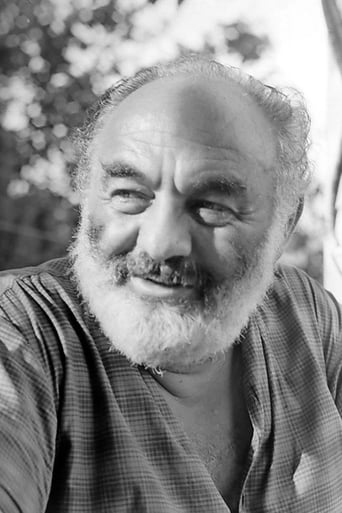
Σκηνοθεσία Sergei Parajanov

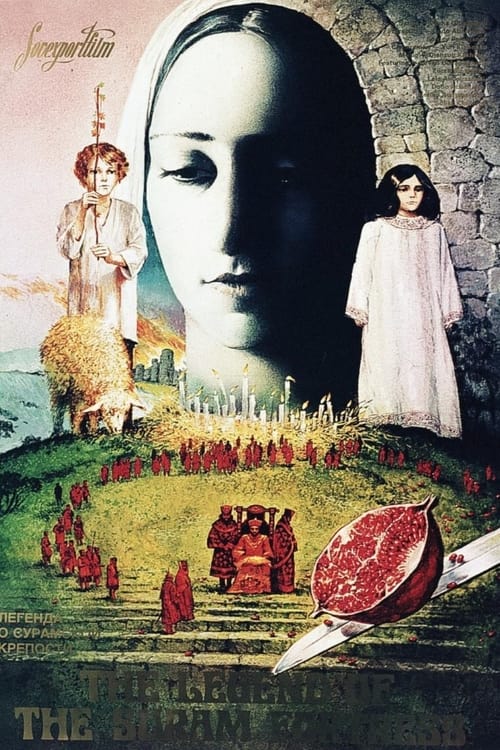
Ο θρύλος του Κάστρου Σουράμι

The Legend of Suram Fortress

Ατμοσφαιρικό, θρυλικό δράμα

Ο Ντουρμίς Χαν είναι ένας χωρικός σκλάβος που απελευθερώνεται από τον αφέντη του. Τώρα αποζητά τρόπο να εξαγοράσει την ελευθερία της αγαπημένη του, Βαρντό. Αφήνει τον τόπο του και συναντά έναν έμπορο, τον Οσμάν Αγά που του αφηγείται την ιστορία του, αφού κι αυτός κάποτε ήταν σκλάβος. Ο Ντουρμίς εργάζεται πλέον για τον έμπορο και παντρεύεται μια άλλη γυναίκα που του κάνει ένα παιδί, τον Ζουράμπ. Ο μικρός μεγαλώνει κι εργάζεται δίπλα στον πατέρα του, ο οποίος, αντίθετα με τον γιο του, έχει ασπαστεί τον μουσουλμανισμό. Όμως, οι Μουσουλμάνοι γίνονται απειλή για τη Γεωργία και ο βασιλιάς διατάζει να υποστυλωθούν όλα τα κάστρα. Ένα από αυτά, το Σουράμ, δε φαίνεται να παίρνει επιδιόρθωση και είναι έτοιμο να πέσει. Ο βασιλιάς ανατρέχει στην Βαρντό, που είναι πλέον μάντισσα, κι αυτή του υποδεικνύει τον Ζουράμπ, πως πρέπει να τον χτίσουν στα τείχη για να μείνει για πάντα όρθιο το κάστρο.

Letterboxd

Πού παίζεται

Η «Ο θρύλος του Κάστρου Σουράμι» δεν παίζεται σε κινηματογράφους αυτή τη στιγμή.

Ακολούθησε την ταινία στην εφαρμογή για ειδοποίηση όταν προστεθούν προβολές.

Ο θρύλος του Κάστρου Σουράμι

Find more films like Ο θρύλος του Κάστρου Σουράμι

Showtimes in your city.

Download on the App StoreGet it on Google Play

Συντελεστές

6

Κριτικές θεατών

Thorkell August Ottarsson4.5

As is often the case, artists are punished for making their greatest masterpieces. That was the fate of Sergei Parajanov when he made The Color of Pomegranates. He was not allowed to make another film and put in prison (on charge of homosexuality) to silence him. He would be imprisoned 3 times in his life, one of the main reasons why he died of ill health. Color of Pomegranates was published in 1968 and it was not until 1986 (18 years later) that the world got to see a new film from the master. And what does he film? A story about immurement. Was there a hidden message in this topic? I think so.Immurement is a motive found in so many legends. Albania has The Legend of Rozafat Castle, about a woman who is bricked up inside a wall to make it stronger /her breast is left outside so she can feed her child). Georgians have this, The Legend of Suram Fortress about a man immured inside a wall to make a fortress stronger. And similar stories are found through out all of Europe. What is even more amazing is that skeletons have actually been found inside walls. So this is not just a symbolic story but a testament of a terrifying sacrifice found all through Europe. It's easy to see why the communist party thought this was a good and safe topic for Parajanov. Imprison and sacrifice someone to make a country safe? Well, they did that all of the time. This could even been taken as a "thank you and I forgive you" statement from Parajanov. His acceptance of his imprisonment. Well it might be so if the story in the film did not hint at hidden motives. There are some spoilers here.Durmishkhan is in love with Vardo and wants to marry her. He is given freedom but she has to stay behind. He promises to come back for her but fails to keep his promise. Durmishkhan marries another woman and has a son with her. His name is Zurab. Vardo becomes a fortune teller. She finds out what really happens and it is she who suggests that the only way to safe the Suram Fortress is to immure someone who looks just like Zurab inside the walls of the fortress. Zurab ends by doing it himself and thereby saving the fortress. End of spoilers.It's Vardo's motive that hints at a hidden message in all of this, and the fact that this is all being done to help an evil prince to keep his power. The film can be read as Parajanov take on the lie within the Soviet system. They are told that sacrifices are needed to keep USSR safe but these sacrifices are just made to help a corrupt government to keep control and power. The film is visually breathtaking. Beautiful does not begin to describe it. It is poetic and other wordily. The style is perfect for a folk story/fairy tale. A lot of the imagery comes from icons and Muslim paintings, with almost two dimensional imagery where things are arranged from top to bottom (like on a A4 paper) instead of from close up to far away (like in most films). No one but Parajanov could have made this film and sadly no one will ever dare to make films like he did. A must see!

Luke Whittle5.0

This Georgian folk tale was told in a typical Parajanov fashion with tableau like scenes, which are of course mesmerising and effective. Despite that Parajanov was disallowed to make films since The Colour of Pomegranates, I was surprised that his style was very much in tact. The beginning in particular was very captivating, and it drew me in first time watching it.In comparison to The Colour of Pomegranates, this film has a more linear "story" structure. The story all told through images, all well prepared and beautiful. This is probably, however, his most hopeless and bleakest movie. Tonally it's much more darker, the music is menacing throughout (barring the beautiful dance sequence), and the characters speak about dread and some of the scenes have a sombre tone. It fits brilliantly with the story, which is dark story about Georgia's fortress that keeps crumbling and Durmishkhan and his son have to find a way to stop the fortress crumbling to save Christian Georgia. There were some subtle hints of Parajanov's displeasure for the Soviet government, who cut his films and imprisoned him for a number of years. One scene in particular has a man who has to throw pomegranates only for the soldiers to cut up the pomegranates with sabers, which the juice would hurt the man's eyes, a metaphor for The Colour of Pomegranates being censored. Another scene where a man runs for his life for converting to another religion amidst fear of persecution.Overall a brilliant movie (my third favourite behind Sayat Nova and Shadows of Forgotten Ancestors, also brilliant). This is one of the films showing Parajanov's craft, despite the darkness, despite it being one of my favourites, I would suggest watching The Shadows of Forgotten Ancestors or The Colour of Pomegranates first. However, if you love art cinema, particularly avant-garde or unique films, or a fan of Parajanov's work so far, you may find this film rewarding.

Filipe Furtado4.0

Myth and freedom. The popular imagination pushes towards sacrifice while the images conjured by the filmmaker expanda the scope. Paradjanov feel for color and movement remain stunning.

Συχνές ερωτήσεις
What is The Legend of Suram Fortress about?+

It is a visual retelling of a classic Georgian folk tale about a fortress that repeatedly crumbles until a young man offers his life to be entombed within the walls to secure the structure.

Who directed The Legend of Suram Fortress?+

Sergei Parajanov directed the film in 1985, marking a celebrated return to filmmaking after a long period of political restriction.

Does The Legend of Suram Fortress follow a traditional narrative structure?+

No, the film consists of a series of static, painterly tableaux rather than a linear plot, relying heavily on symbolism and atmosphere over conventional dialogue.

    We use cookies to personalize your experience and analyze traffic. You can opt out at any time.