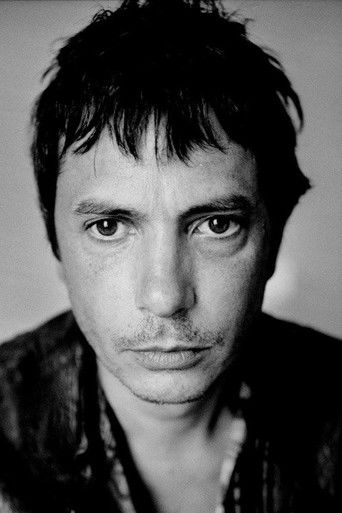


Before sunrise for insane people
Στην αρχαιότερη γέφυρα του Παρισιού, δύο άστεγοι, ο εθισμένος στις ουσίες Αλέξ και η Μισέλ, η οποία χάνει σταδιακά την όρασή της, θα ζήσουν μια παθιασμένη ερωτική ιστορία.
Η «Οι Εραστές της Γέφυρας» παίζεται σε 1 σινεμά στο Βερολίνο - επόμενη προβολή Κυριακή 1 Νοεμβρίου στις 12:00 στο Cinema Paris.
Επόμενες προβολές: Κυριακή 1 Νοεμβρίου.
Πλήρες πρόγραμμα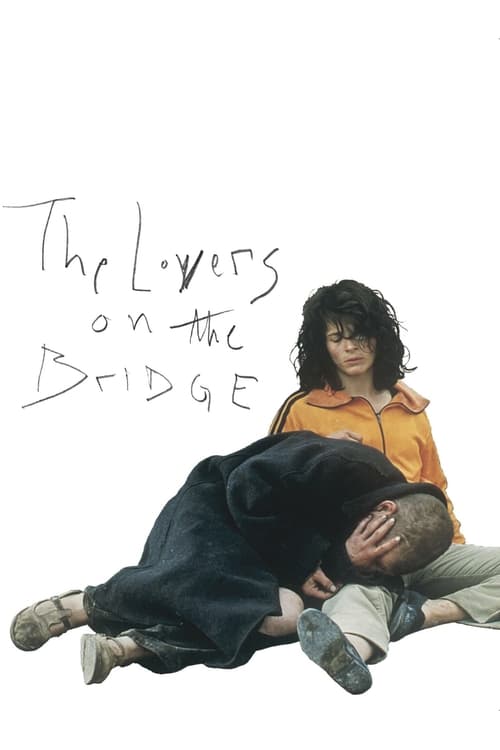
Προβολές για Οι Εραστές της Γέφυρας, ενημερωμένες κάθε πρωί
Διάλεξε σινεμά και πάρε υπενθύμιση πριν κατέβει.
Before sunrise for insane people

#Binoche-athon'If you love somebody, tell him tomorrow: "The sky is white." If it's me, I'll answer: "But the clouds are black."The perfect love is the one studded with imperfections.Love is not ideal. There's no such thing as a match made in heaven, nor love at first sight. Instead, it is a bond enmeshed in conflicts and misunderstandings; a constant state of volatile disequilibrium.Director Leos Carax doesn't overromanticize the burgeoning affection between two talented artists swept onto the street by life. He paints their tattered bond against the naturalistic backdrop of Paris and constructs a faux dreamscape set in the 'city of romance' that punches you in the stomach whenever its glitter falls away to reveal painful reality: two down-and-outs on a ruined, desolate bridge trying to hold onto the rail and survive.The Lovers on the Bridge made me think about the slight but meaningful difference between the phrases 'pureness' and 'purity' when considered in relation with love. When we say 'pure love', we might imagine an immoblie, permanently true quality of pureness. But love is not static. It is constantly transformed, shaped by its two corresponding puzzle pieces. It is a perpetually shifting state of purity that is never linear, its course never predictable; a state torn by wild fluctuations and drawn-out distances, frayed at oh-so many places, frayed, but never broken.Juliette Binoche's and Denis Lavant's incisively raw portrayals made me think about both parties' relation to the concept of love and the realness of the other person in front of them. Do we really love the other or are we comforted by the idea that someone is attached to us? Are we as attached to them as they are to us or do we delude ourselves that we are in love with them and not with the idealized concept of being loved by another? Would we be able to let them go if it meant they would live a happy life afterwards - without us? What does it say about us if the answer is 'no'? How can we find all the answers?The Lovers on the Bridge made me think about all this, but first and foremost, it helped me realize something else: it doesn't matter. There are things in life that cannot be approached from a rational point of view, things where the deepest analysis won't bring you closer to the truth. What truth, anyway? Sometimes it feels as if there were more lies and ambiguities than truths in life. Often the disharmony is the thing that brings us the wished-for harmony. This harmony is nothing but an idealistic concept itself; and that's exactly what makes it everything. If things in life were naturally balanced and unequivocally straightforward, love would never stay alive.After all, the perfect love is love born of imperfections to rise above perfection - and to stay there.

The ‘happy ending’ to this film left a very bad taste in my mouth. Apparently Carax originally intended that Alex drown Michele in the Seine; he altered the ending to appease Binoche, his lover at the time. The original finale would have possibly been more authentic, considering the toxic nature of the characters’ relationship and Alex’s manipulative and abusive behaviour. Some of the set pieces in the film are spectacular, but how anybody can consider The Lovers on the Bridge ‘romantic’ is beyond me.
Τοποθετημένη στην παλαιότερη γέφυρα του Παρισιού κατά τη διάρκεια της απομόνωσής της, η ταινία παρακολουθεί μια ταραχώδη σχέση μεταξύ δύο άπορων νέων που παλεύουν στους δρόμους.
Σκηνοθετήθηκε από τον Leos Carax το 1991, γνωστός για το διακριτικό οπτικό του στυλ και την ποιητική του προσέγγιση στον γαλλικό κινηματογράφο.
Έλαβε ευρεία κριτική αναγνώριση και επαίνους σε ευρωπαϊκά φεστιβάλ κινηματογράφου, εδραιώνοντας την κατάστασή του ως σημαντικό έργο του κινηματογράφου της δεκαετίας του 1990.