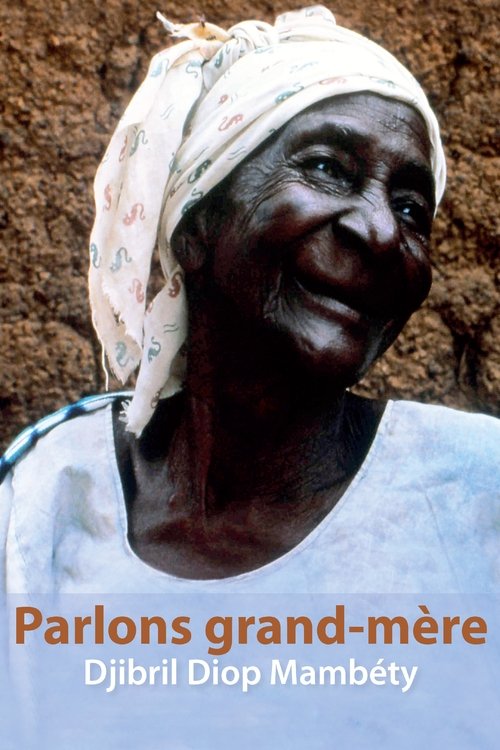
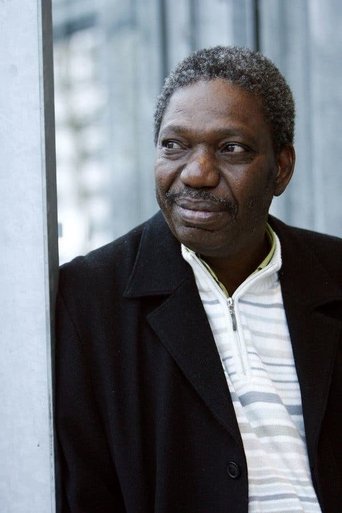
"To make films, it’s easy. You have to close your eyes. Have you closed your eyes? You just close your eyes. And you see points of light… And then you open your eyes, and you have a story"- Djibril Diop MambétyThis was never going to be anything but 5 stars! My dear friendCatharina (if you aren’t following her already, we could all do with more Catharina in our lives), specially made an English subtitle track for the ONLY online copy of this film, the ONLY Mambéty I have not been able to see until now, and sent it to me as a gift on my 22nd birthday. Needless to say, it is one of the best gifts I’ve ever received! And this film is in itself a gift to the world. I was more or less ecstatic all the way through, between feeling so much endearment for Catharina, heart-broken about Idrissa Ouedraogo’s recent passing (what an enormous spirit), and mixed excitement for and dread of finally seeing this film! I, of course, immediately knew I was in a Mambéty film: the rich 35 mm flooded with undertones of dark blue, the koan-like narration in his beautiful raspy voice, the lightness of touch, the fierce dedication to and affection for his subjects, the ebullient movement and cutting that genuinely creates the sense that the film was “found” post production. This last point ties into what I love most about Mambéty and why he, and this film more distinctly than any of his others, kind of pins down a lot of what I look for in movies. In Parlons Grand-mère, Mambéty could finally cut the crap and really make a film about intuition. A film that simply follows the path of least resistance, while keeping a keen eye for the beautiful confluences of nature, and then gathering these moments into a thoughtful, cohesive reel. Mambéty was a staunch anti-materialist; After he received the critic’s prize at Cannes in ’74, he refused the glamour that beckoned. Only 15 years later he made this, the perfect answer to why he did so. His films answer to no master, not even to himself. He pared his films back to the purest elements. They are little pockets of light and sound. “This tale is thrown to the sea. The first to breath it will go to heaven”, rings the closing line of his final film, The Little Girl who Sold the Sun. His films are meant to be “breathed.” They achieve a lightness that not even Bresson or Ozu could quite master. Those guys were still under the influence of cinema, swimming with or against its currents. Mambéty was something truly unmoored, conjuring his beatific tales and gifting them to sea. I have utmost faith that I will meet him one day in heaven!
You can watch this one here (there are no official subtitles available, and apparently no unofficial ones either so if you plan on renting it know that all very cool but very scarce voice overs by Mambéty are in french, and pretty much all the rest in Burkina Faso's mooré. If you don't speak it, like me, guessing will have to do!).____________________________________Making a movie can be quite a magical thing. For a given period of time you have to practically live with a certain group of people - sometimes friends, sometimes people you’ve never met before, sometimes both. This coexistence can be quite intense and you get to know them: what ticks them off, what makes them laugh and share intimate and unique moments no one’s ever gonna be able to fully understand apart from you and your crew/cast colleagues, specially when filming far from home. And then it all ends. Perhaps you’ll never be in this place again or work with some people again, and these moments freeze in time. So apart from the film itself, every behind-the-scene record becomes quite special (if the experience was a pleasant one). Parlons Grand-mère is a documentary that not only registers these special moments, but takes to heart Yaaba’s message and pays quite an homage to La Grand-mère. Having already seen Touki Bouki, and having watched Yaaba immediately before this one, some things promptly come to mind.First, that the rhythm and camera movements are so playful and loose you can directly relate it to Touki Bouki and, like in said (wonderful) film, the narrative is complemented with social commentary on youth and overall conditions in Burkina Faso (in a similar way he would later do with Sénégal), without ever feeling the least bit calculated and certainly without ever losing brightness. This is such a joyous, funny film! Mambéty's narration is punctual and priceless - from what I've researched online it is always nice and interesting hearing him speak and here is no different. There's this mystical, almost prophetic quality to his speech, like it is always cryptical in some way. Little riddles give the impression that if you crack them you'll have the meaning of life in your hands. Gives the short a different tone, makes it bigger.Secondly, I guess you could say Mambéty's style is diametrically different from Idrissa Ouedraogo's. Yaaba's got a fairly down-to-earth sort of narrative, very classical, very calculated, linear cinema with many beautiful and still wide-angle shots that allow you to calmly navigate the desert landscape and its inhabitants. Mambéty's making of is much more dynamic and fragmented and loud (of course, the nature of a making of certainly plays its part in this). It suits Mambéty to deal with the unexpected, to make the best of a given moment.Both, however, share a charming sense of humour and a true love for La Grand-mère, this amazing woman who is a true role-model: not hardened by or resentful about life’s blows, someone who knows the language of children, who’s wise and kind and patient and loving. Someone who’s always worth listening to. And personifying this beautiful character is the somehow even more beautiful Fatimata Sanga. I have to say I’m a bit in love with her - with every little inch of her incredible figure. I love how Sana and Nopoko are the only women in the village who do not cover their breasts - after a bit of research I was able to confirm my suspicions that this detail's connected to the Mossi people from before the arrival of the French. All women used to walk bare-breasted because breasts were related to motherhood and nurturing. This is something that pleased me so much throughout the entire movie: such a great thing to see bare breasted women freely walking around men, specially children and old women. Kept me thinking about how great it would be if our culture did not take such offence of the feminine naked body, forever dominating and sexualizing and shaming it. How amazing and strange would it be to get out of my house with no blouse on and have people treat me normally…*sigh* (one can dream). But anyways, I felt this somehow brought Sansa and Nopoko closer together and closer to their roots, symbolising so much of both film’s messages: that the true challenge of getting older is being able to stay away from all pettiness and corruption of the adult world: to remain open-minded and unprejudiced and kind and playful. To not lose faith. Getting older shouldn't push you away from childhood, on the contrary. And in this sense La Grand-mère is a perpetual source of good, and truly ageless.“Elle est née sous le règne d’un certain roi dont nous ne dirons pas le nom, pour ne pas atteindre à sa jeunesse.Imagine…”