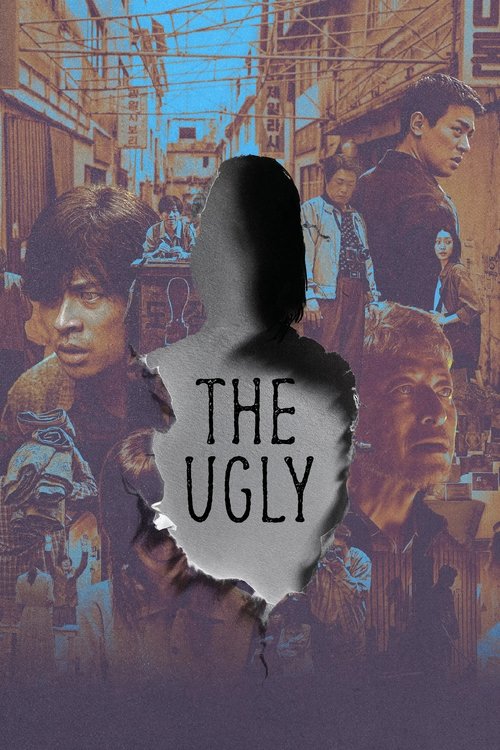
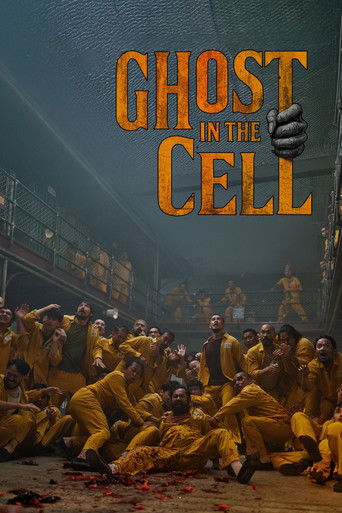
If a film conceals a girl's face for nearly the entire length of time, while every character continues to call her "very ugly," it is already leading you to the way the filmmakers are expecting you to respond. You are repeatedly listening to how others speak about her, and how dismissive and mean they are, without ever seeing her for yourself.So when the film finally shows her face at the end, and the first thing that comes to your mind is “she wasn’t even ugly,” that reaction actually proves the film’s point.Because the real question isn’t whether she was ugly or not. It’s why our instinct is to judge her appearance at all. Why is that the first thing we check? Why does our brain immediately compare her to the insults people threw at her?That quick reaction shows how easily we fall into the same mindset the movie is criticizing. This is not about how someone looks, this is about society and how society treats those who do not fit the beauty standard and how those standards influence the way we think and act potentially without any awareness.And if you think this film is misogynistic, it’s worth looking at the difference between the characters perspective and the film’s perspective. The characters might be cruel, shit, or sexist, but the film itself is showing us how that mindset works, not endorsing it. It isn’t asking us to judge her face — it’s asking us why we feel the need to
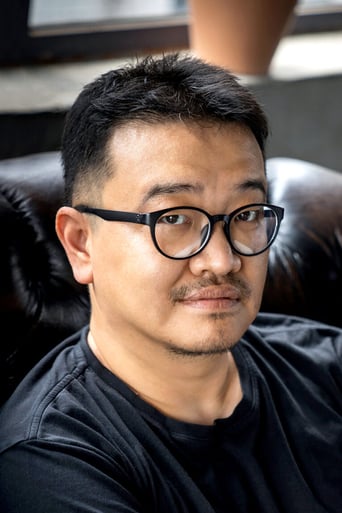
How the hell does someone end up with no funeral portrait at her own funeral just because people thought she was too ugly?South Korea is often seen as a global standard of beauty, which is admired and copied everywhere. But this film kind of pulls back the curtain and shows there is way more happening underneath that perfect image. It highlights how appearance can shape someone's entire life, and how cruel society can be towards anyone who doesn't fit that standard. This is not just a movie that highlights the pressure for fitting in in terms of appearance, you begin to experience the real emotional and social burden of living outside these expectations.The film's use of interviews and fragmented moments adds to its overall narrative technique, demonstrating how toxic beauty standards stack up over time and can eventually lead to tragic outcomes. You see characters recall a moment, then a comment, then a judgment, then an insult, followed by laughter. These are not huge events. They are everyday interactions that reveal how normal it is in Korea for people to speak negatively about someone else's appearance, and being referred to as “ugly” is not just an insult, but a way society decides whether to offer care or empathy to someone.At the same time, this isn’t meant to criticize Korean culture as a whole. South Korea remains one of the most innovative, resilient, and expressive societies in the world. But even the brightest lights cast shadows, and it is important to notice these shadows to understand the issues we all internalize. The issues shown in the film aren’t unique to Korea; they happen everywhere, but in Korea, they are especially visible. The film holds up a mirror, showing challenges that shape all of us.For someone who directs most of Korea’s successful zombie films, it’s impressive that this movie, even though it isn’t a zombie film, turns out not bad. Its message comes through clearly, and I found myself drawn into the film’s build-up. The characters feel real enough that their reactions hit harder: the swallowed anger, the effort to hold back, the quiet resignation, and even the small flinches when people say ridiculous things.If I had one real issue with the film, it’s how predictable the “who is who” and the reason why are. The only remaining mystery, how the crime was carried out, ends up not shocking, and the resolution doesn’t land with the weight it should. In a film that’s trying to voice or really confront a societal issue this widespread, the ending matters. It doesn’t need to be a happy ending, but it does need to feel meaningful, like the story built toward something.I understand the direction that the movie is attempting to take.. this issue is still happening, it is still ignored, and it is still treated like an ordinary part of life. And honestly, that interpretation fits. Society doesn’t give closure to people who fall outside the beauty standard. But I still think that a film, dealing with something this real would be better for a resolution that leaves more of an impact. Not a solution, not a happy ending, but something that feels more like a final thought than a gentle fade through.The film ends up highlighting the issue but doesn’t push it any further. It acknowledges the harm without fully challenging or amplifying it. While it builds a strong emotional argument, it steps back when it could have pressed harder, holding itself back precisely at the moment where a stronger ending could have made its message hit deeper.