tw sexual assault the night i was assaulted, by the man i thought was a brother to me, i stumbled out of his living room. i felt my childhood disappear behind me. all of the memories of innocence i experienced there, memories of the joy my departed brother felt there, memories i held desperately onto, were instantly gone. i remember so clearly how fast i ran up those stairs. the carpeted staircase i had played on years before were my escape from this man. the bedroom i was molested in, years before by the same man, was now my hiding place. it wasn’t his room anymore. my best friend, his sister, had moved into his bigger room. the only light was her fish tank, blue and bubbling. all of this felt like the ugliest joke. unable to distract myself from the hysteria i felt, i sat against the door and begged myself to wake up. I thought, I wasn’t awake when it happened. it wasn’t real. i woke up with the boy i grew up with contrasted by the man pressed on me, putting shame into me as a thirteen year old girl. it couldn’t be real at all. it could not be my reality. my friend of 10 years laid next to me as it happened. she knew what was happening, my worst thoughts told me. maybe she heard my muffled cries, shut her eyes and covered her ears. maybe she didn’t hear a thing and slept soundly as I barely made a noise. i feel her on my right side, my closest friend in the world, unable to protect me. i wonder now, as an adult who doesn’t fear that living room, how she could have let it happen. I wonder if she thinks about it now. i woke up the next morning, expecting to feel anticipation and excitement about going to my first pride festival with my girlfriend. all i felt instead was shame. my mind scrambled on the blame, my body unrecognizable to me, the thought of texting my mom, the image of running downstairs and putting a knife to his chest. instead, i sat there. completely silent. sobbing quietly with no release. the best friend i thought i knew came into the room, her room, finding me unlike she had ever seen me. i looked at her, no words coming out of my mouth. she looked at me and asked me if i had fun with him. her brother, who was nineteen at the time, had a crush on me forever, she said. it was just a matter of time before we had sex, she said. she had been waiting for us to get together. she heard me run up to her room and felt angry and spiteful. in her mind, we had run up together. the betrayal. the disloyalty. we both felt it that morning. i could never in a million years express how vengeful i felt. i alone left that house with the truth, knowing it was known and held by only one other. the only one who knew. the one who took my memories and friendship. the one who took my voice and loudness. i felt emptiness like i had never felt before. i cannot describe the physical pain i felt from the emotional anguish that plagued my mind. we shared a memory, unknown by anyone else. it destroyed me for all of my youth.i lay comfortably in bed today, as a twenty year old woman. i feel in control of my body in a way i’ve never felt before. i don’t wake up in sweats from nightmares of the man anymore. i feel somehow empowered being able to finally speak about how I escaped that part of my life, how i’ll never have to step foot in his living room again. but i will always remember. i will always remember the nightmares i did have of him, ones that followed me until recently. i will always remember how betrayed i felt every time i walked down the hallway, seeing the best friend I thought i knew, giving me her best sympathy smile. i will always remember the nights i stayed up afterwards, a text to her fully written, incapable of pressing send. i will always remember telling my mom for the first time what happened. i will always feel these things around me. when i watch reminiscent movies, talk with survivors, see pictures of my 13 year old self. i will always feel regret for not speaking up that day. it will always be there. but you do what you can, when you can, with what you can. i know that now.“you allowed this to happen”
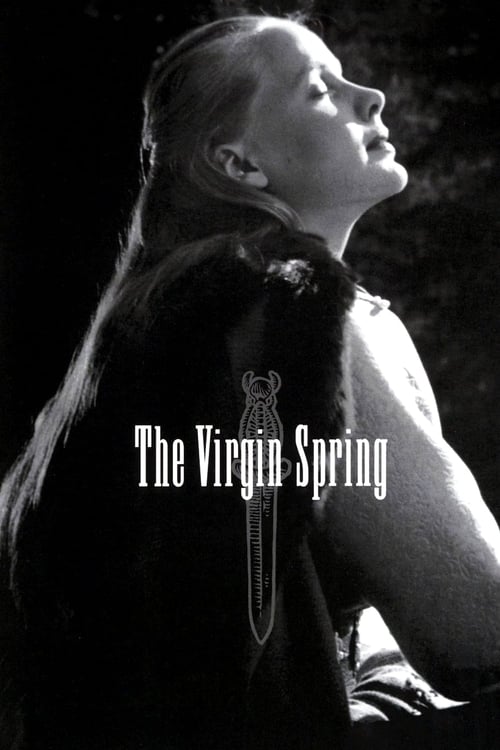
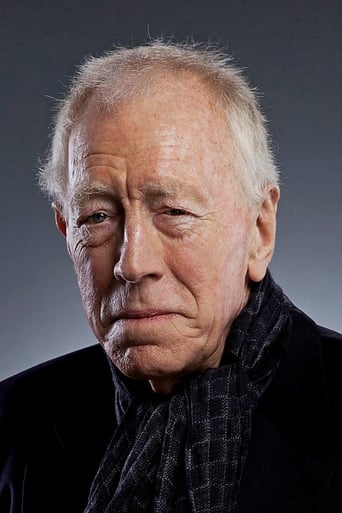
The Christianization of Scandinavia was formally Complete by 1100 AD, With Sweden being the last Norse country to adopt the monotheistic religion. This parable film takes place some two hundred years later, with the shadow of Odinism still cast across society, though fading. But when a farmer’s daughter and her maid travel into a dark wood, crossing a stream that marks some invisible boundary, they encounter an old one-eyed man in a water-mill hut watched over by a raven. We are reminded that Odin - god of war and song and madness, the Wanderer Never Lost, who breathed mind into the first human beings he carved from beach driftwood - gave his eye to Mímir in exchange for Wisdom/Poetry. And Odin has two ravens, Huginn and Muninn, who fly across the world collecting for the god the news of man. But here, in the raven haunted wood, our one-eyed man is diminished. His water mill, inoperable. Of the two women who pass his stream on their way to a distant church, the farmer's daughter and her maid, the old man is drawn to the maid. She has prayed to Odin only that morning. He has a few pagan artifacts from a dead world to show her, including a severed finger (perhaps Starkad’s, who lost a finger leading the Geats into battle against the Danes some seven hundred years before, but also reminiscent of Aurvandil’s toe, severed and thrown into the sky by Thor, where it became a star). This and other fetishes are now just trinkets in a broken box.Beyond the dilapidated hut, in those dark woods, a fable will play out. A fairy tale child, the farmer's daughter, will be harmed, and the good and Christian home from where she came will reel with vengeance and blood lust. And every living soul involved, even the daughter herself, will be guilty of something, of pride, of jealousy, of murder, all except one. A silent boy, witness to lawlessness and evil, caught in the winds of fate, and struck down by the purportedly pious for nothing more than his sheer proximity to others' dark doings.And so comes a time when the Christian farmer, father of the first fallen in this chain of sin, struggles with his own sin of violence and vengeance. A time when he questions God’s allowances, but then finally turns his face back to the light of the Christian being, the God who demands law, who demands we not kill or harm one another, who does not seek glory in war and murder. Once the father swears to purify this dark forrest with a new church, one of brick and mortar to be built with his own hands in penance for what he has done, he witnesses a miracle, the birth of a new, fresh water spring where the thing he loved most was taken from him.And though we do not see it, we must imagine, at the edge of the wood, a very, very old one-eyed man and his raven, their names long forgotten, losing the last patch of ground left in the recesses of the Scandinavian heart.Ragnarök comes not by the jaws of Fenrisúlfr, the River Wolf who would not stay bound, and not with great bombast of gods at war and serpents boiling oceans, but simply with the waning in the minds of human beings for violence as a form of governance.The Max Von Sydow Project marches on.
“The Virgin Spring’s” waters feed the loamy soil of paganism, and the weedy overgrowth of Christianity. The two aspects of devotion mingle in a forest mire of questioned faith, and even more questionable humanity. Bergman’s first collaboration with cinematographer Sven Nykvist sees the director’s visual style move away from stage-inspired chamber dramas and comedies of manners. “Spring” - at its most gentle - has the presentation of a pre-Raphaelite painting. In its most confronting scenes, it slips into the realm of medieval portrait. The film’s story is adapted from a Swedish ballad about a girl who is raped on her way to church. Bergman does not add elaborations of plot or character. He works in figure and symbolism; taking artistic liberty from the tale’s 13th century roots only through setting into the motion of film. The crisis faced by the family under trial in “Spring” is the same as it was in its own original time. Guilt or innocence, faith or pragmatism, Christianity or paganism. And perhaps, above all - whether to turn the other cheek, or claim rights on an eye for an eye. Bergman grants no solution other than the certainty of struggle. That, too, is eternal.