




jadłem pysznego kebsa jak leciało w telewizji i patrzyłem nie chcem ale muszem
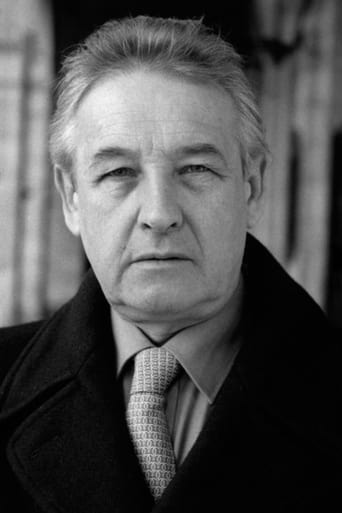
Σκηνοθεσία Andrzej Wajda
Wałesa: Man of Hope
Ρεαλιστικό δράμα
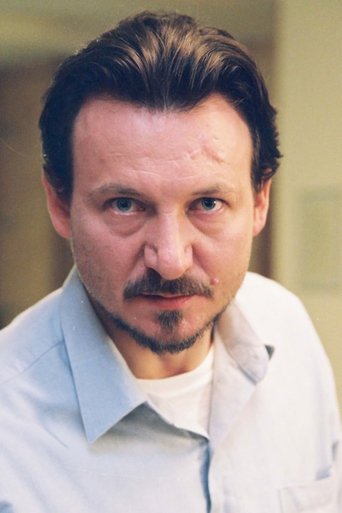
Η βιογραφία του βραβευμένου με Νόμπελ Ειρήνης και ιδρυτή του κινήματος Αλληλεγγύης της Πολωνίας, Λεχ Βαλέσα(Robert Wieckiewicz) ενός ηλεκτρολόγου στα ναυπηγία του Γκντανσκ, ο οποίος μετά τις μεγάλες διαδηλώσεις της δεκαετίας του 1970 βρίσκεται στη θέση του ηγέτη της επανάστασης κατά του κομμουνιστικού καθεστώτος.
Η «Βαλέσα: Η Δύναμη της Ελπίδας» παίζεται σε 1 σινεμά στη Νέα Υόρκη - επόμενη προβολή Τετάρτη 14 Οκτωβρίου στις 19:50 στο Film Forum.
Επόμενες προβολές: Τετάρτη 14 Οκτωβρίου.
Πλήρες πρόγραμμα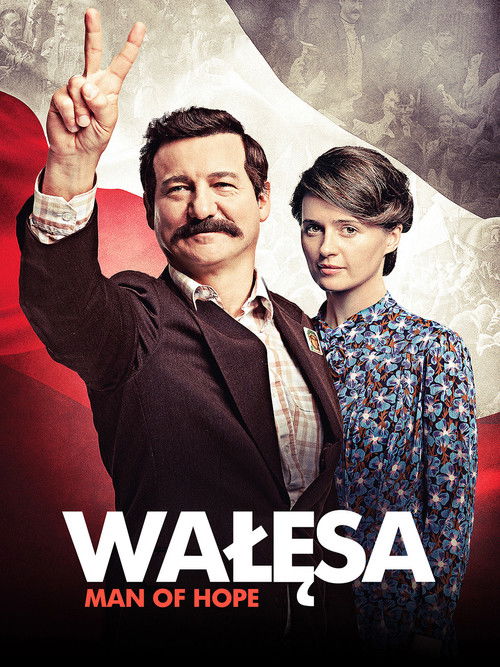
Προβολές για Βαλέσα: Η Δύναμη της Ελπίδας, ενημερωμένες κάθε πρωί
Διάλεξε σινεμά και πάρε υπενθύμιση πριν κατέβει.
jadłem pysznego kebsa jak leciało w telewizji i patrzyłem nie chcem ale muszem

Andrzej Wajda, one of Poland's greatest filmmakers, and a political voice for the frustrated Polish youth with his internationally acclaimed War Trilogy is now finishing another trilogy with his latest film "Walesa. Man of Hope" which we can call a sequel to both "Man of Marble" and "Man of Iron". Even though it's not an official trilogy, all three films deals with the solidarity movement, plus the titles are pretty similar. So why not call this "The Solidarity Trilogy"?"Walesa. Man of Hope" follows the union organizer Lech Walesa who was one of the co-founders of the Solidarity movement that eventually broke down the communist regime and turned Poland into a democracy. The film focuses mainly on Walesa's political career, from protesting in the 1970 shipyard massacres to his presidential inauguration in 1990.At the age of 88, Wajda seems to have created a worthy ending to his second trilogy, and considering his age maybe a worthy ending to an extraordinary career as well. Although it's not as powerful as the two previous films, "Man of Hope" is still a solid piece of filmmaking, at least in a political sense. The use of old footage and black and white cinematography is quite intriguing, plus it's also able to incorporate some few shots from "Man of Iron" among the footage. And the use of popular Polish punk rock music also creates the right rebellious atmosphere.It might feel like another standard biopic that depicts a glamorous heroic freedom fighter. And of course Walesa do deserve recognition for helping tearing down the communist regime and his endless fight for the workers. This movie has kind of a "happily-ever-after" ending. It ends with Walesa speaking in front of the US senate. But what most people outside Poland doesn't know is that Walesa's popularity declined during his presidency because of his policies and his stubbornness. The only negative aspect in this film is that he doesn't spend enough time with his family, which have kind of become a cliche when it comes to biopics. This film could have focused a bit more on the political setbacks.But then again, Walesa and Wajda are pretty good pals in real life. Walesa himself even appeared as himself in Wajda's "Man of Iron". To betray Walesa now would probably not been such a good idea. But regardless of Wajda's political agendas "Man of Hope" is a good political drama and a good history lesson, but not as daring as his previous work. The performances were also pretty good. I loved the chemistry between Robert Więckiewicz and Agnieszka Grochowska playing Mr. and Mrs. Walesa, with some good comical relief moments now and then. A solid film that summarizes Wajda's entire career. Thumbs up.

czy andrzej wajda zna tylko jedną piosenkę
Εξιστορεί τη μεταμόρφωση ενός ηλεκτρολόγου ναυπηγείου του Γκντανσκ σε χαρισματικό ηγέτη του κινήματος της Αλληλεγγύης και βασική φιγούρα στην πτώση του κομμουνισμού στην Πολωνία.
Σκηνοθετήθηκε από τον βετεράνο Πολωνό δημιουργό Andrzej Wajda το 2013 ως μέρος της άτυπης τριλογίας του για τα πολωνικά εργατικά κινήματα.
Βρείτε ώρες προβολών και διαθεσιμότητα για το Wałesa: Man of Hope στο Mood.