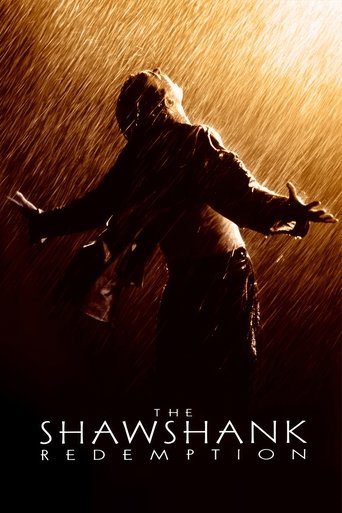
Η ιστορία εξελίσσεται σε μια βροχερή, παγωμένη πόλη της Κεντρικής Ευρώπης. Οι κάτοικοί της, έχουν καταληφθεί απο μια ιδιαίτερη ανησυχία για επικείμενες καταστροφές, η έλευση ενός περιπλανώμενου τσίρκου με κύριο έκθεμα το κουφάρι μιας τεράστιας φάλαινας και ένα περίεργο ον, τον Πρίγκιπα, τους αναστατώνουν ακόμα περισσότερο, φέρνοντας στην επιφάνεια τα πιο ποταπά τους ένστικτα. Η τελική έκρηξη του όχλου, βάναυση και χυδαία, θα οδηγήσει σε μια νέα εξουσιαστική τάξη πραγμάτων. Ο νεαρός, αλαφροΐσκιωτος ταχυδρόμος Βαλούσκα, θα γίνει μάρτυρας της αποσάθρωσης της μικρής κοινωνίας και των μικρότερων ταπεινών φιλοδοξιών και παθών των συμπολιτών του.
Werckmeister Harmonies is a film of constant symbolism and allegory. It is the greatest philosophical and political allegory since Sátántangó, another film by master auteur Béla Tarr. Werckmeister Harmonies is Tarr's most exciting film (although Sátántangó remains his best) because it's the most brimming with ideas. Adapting the novel The Melancholy of Resistance by László Krasznahorkai, Werckmeister Harmonies more than matches the quality of the masterful original text. The film is more implicit in some ways, taking the dense metaphorical nature of the novel but removing the clarity of the book's multi-viewpoint narrative. What remains though is the unfolding of a Mitteleuropean tragedy, which is hypnotically enchanting and slow, and on an intimate scale with cosmic flourishes.Werckmeister Harmonies is a distinctly political work, even if it embraces an apolitical stance of nihilistic condemnation of every side. The film opens with a tale told in a bar about the planets and the sun. This story provides a sense of community to those listening because the vast emptiness of existence and the systems that keep it going are ever present. We only feel free when we think we understand the system. This is people living drab lives, wanting change, and thinking they know how. They think history hasn't wronged them. The world as present now must be false in every way, right down to the music (hence the need for the titular harmonies). It must be false, as that is the only way to justify our faults. We must revert back to the old system, because it must have been better since it cannot be worse. This is traditionalism masquerading as revolutionary. As a group, people will rise, but they know not why they hate or feel. They will become collectivist, but will be run by an individual and fuelled by the lies of individualism. They will become harbingers of fate, as society enters a free-fall which descends quickly before a sudden impact. Their struggle becomes a metaphorical re-enactment of the tale of hope told in the bar, but this time there is despair. This time the eclipse leaves the world darker, or at least no lighter than before. This revolution will stop, but only upon a revelation we all already know: we are destined to become old and weak, decrepit, naked, unclothed, and unmasked. Why destroy and erase the future? It's the only thing we can change. We are all set to become a lonely innocent, so why destroy ourselves and our humanity?The title of the novel - The Melancholy of Resistance - is somewhat more telling than the enigmatic title of the film. It reveals more about this contradictory uprising fuelled by anger and hate. It reveals the true overlords to be those we would call, in this Trumpian age, the establishment. The people who act out are ignorant, and their actions are met with confusion. Yet those who are confused think they are not ignorant, despite also being so in different way. No one knows or understands everything, so the futility of change is obvious. We will never all agree as never does everyone have all the facts, and if society is always full of disagreement, is it not ultimately the same regardless of who controls it? We will always revert back to disagreement and so we shall be the same forever. If society needs a leader or leaders, then it will always fail. Disagreements, by necessity, create opposing authorities and an authority that doesn't control all is powerless. This is why resistance and rebellion is bleakly meaningless. Breaking down law and order everywhere will only lead to more law and order, so why break it down? Werckmeister Harmonies depicts a power play, but for who? Tünde Eszter and the Prince both vie for some kind of power, but neither side is good and the common people will not be improved by either. Yet it doesn't really matter who is manipulating who, what matters is who the people think is doing so. What they don't understand is that they are fighting the establishment within its control and plans, so they aren't really fighting it at all. The status quo is everywhere already, yet they fight to return it. The establishment has already won. This is why the lead character suffers. He is amazed and uncertain, and those characteristics are criminal in a divided society where both sides fight for the same cause. The world is teetering on, or hoping for, an apocalypse. Unfortunately it never comes and so idealism is crushed.Werckmeister Harmonies also touches on a lot more than politics. It looks at life through its similarly bleak lens. In a world living beneath a drab sky, where every silence is sonorous, Werckmeister Harmonies becomes obsessed with the eyes of a dead whale. Given the finite and meaningless netherworld laid out in the film, maybe existence in its entirety, or at least the answers to all its questions, can be found in the gaze of a dead whale. Few in the film seem to care about the whale, indicating either the wonders of existence don't exist or are never seen by many. The eyes of a bloated whale are ugly and surrounded by ugliness, but paradoxically the sheer enormity of such ugliness is itself beautiful, and the sheer unlikeliness of its presence is a miracle. Given we're either small things in a universe of giants (the whale, the planets, the void) or big things in a universe of nothing, the whale provides us with a gateway to both. Imagining what it has seen is humbling, but knowing we have power over it is corrupting. Yet the film ends with the rotting whale in an empty town square, it is the unmissable and unmovable stench of the system. Control has reasserted itself and left the whale as the remnants of a system that was overthrown but no-one dared destroy. The establishment, the powerful, the elites, God, the state, the whale - they are all one and the same, all omnipresent and omnipotent. They're in the public square, but no-one cares or dares to interfere. This is why life isn't sad. It doesn't make you cry. Life is actually far more brutal and depressing, and it kills you. You actually end up begging for tears as your body dries up and your only solace is the waterless eye of a dead whale.One day, we will all die, and we'll gaze upon our finite existence and realise the wonder we can witness is only a speck of a reflection found in a pile of rot left out in the open to dissolve away like our hopes and dreams. Perhaps that gaze is meaningless, as is life itself. We turn around when afar and notice that gaze ultimately lingers on nothing. There is nothing wonderful to look at in this world, and you can't even cry about it. Werckmeister Harmonies is a melancholic masterpiece and I need a drink.My Top Films of the 2000s
DirkH5.0
There is no comfort in the worlds created by Bela Tarr. He has the unique ability to create his very own universe within the stories he chooses to relate. Otherworldly, yet real, Tarr's earth is a singularly harsh and unforgiving place, a place in which he chooses to explore what we are and where we are headed.Werckmeister Harmonies is no different. In harrowing black and white we are transported to an anonymous Hungarian town, out of which life is slowly seeping away. It is a desolate place, struck by poverty and inhabited by people for whom life is very hard. While we follow mailman Janos (the focal point of the story), we slowly pick up snippets of how bad it really is there. Supplies are running short, people are unsatisfied and the harsh climate seems to mimic the mood of the villagers. Change arrives in the unlikely shape of a giant whale, driven into town by a circus of sorts, accompanies by a mysterious character known as the Prince. He seems to sense the unrest in the village and taps into that with severe consequences.Writing this down, I realise the plot seems almost sensational. But it isn't. This is a deeply thought provoking work, filmed in Tarr's unique and uncompromising meditative style. Distilled to its essence Werckmeister Harmonies is a simple tale, but it is the voice telling it that makes it exceptional. Tarr has often said that he doesn't want to explain his films and that he doesn't go out of his way to put deeper, metaphysical or philosophical meanings in his films. He is of the conviction that it is up to the viewer to find whatever he or she wants to find. The story is there and the images are there to go with it, do with it what you will. I love that approach to the medium and there are only a handful of directors that can get away with it in my eyes. Werckmeister Harmonies has always remained an elusive film for me. This is my fourth viewing and I only now feel slightly ready to have a stab at describing what this film holds within it for me. To me, Tarr has captured all facets of humanity in this haunting microcosmos he has visualized. Seen through the eyes of sympathetic everyman Janos, the village seems occupied with people who are burdened with a life that is too big for them to comprehend and deal with. When something as mysterious and alien as a huge whale enters the village, it upsets the precarious balance, tilting it towards the inevitable fear caused within our species when confronted with change. When pushed to the edge, we will always resort to violence and lashing out at the nearest victim, spurred on by anyone who can convincingly claim to have answers. Tarr never hammers home his point, but gives us enough breadcrumbs to find our way. Take for instance the title. Werckmeister was a music theoretician in the 17th century who firmly believed in a structured order in music based in harmonic principles. He even claimed music could have movements in it akin to the movement of the planet, basically making it God's voice. In an intriguing monologue, Janos' uncle questions the counter-intuitive and cerebral nature of Werckmeister's theory, yet somehow it needs those very strict principles otherwise the music would sound wrong, almost primal. This notion keeps returning throughout the film. Life is a precarious balance between order and chaos, flip sides of the same coin that can't exist without each other. The gentle artistic soul (represented by Janus and his uncle) both needs and pushes away the more rigid order (here represented by Janus' uncle's estranged wife and the police officer who is her lover). In between resides the instigator, the change, life, continuously trying to upset the balance.Eventually change wins over everything, but the smallest inkling of hope Tarr seems to want to give us lies within the most pivotal scene in the film when a mob of angry looters is confronted with a naked, old and harmless man. There lies the limit of man's hate. That image of complete helplessness will turn any animal human again. I think I heard Ben Kingsley say in an interview once that the most important thing an actor needs to do is to make you forget that the artist is performing (which is kind of ironic as he's really bad at that). Tarr is one of the few directors who has that very quality. Stringing together a two and a half hour film in some 35 takes, he makes you forget the camera and pulls you into the rhythm of his story. He gives you time with his characters, allows you to study their faces and composes images that are astonishing and unforgettable. He does this with the grace of a patient painter, displaying a calm and intimidating intelligence without treating his audience with any disrespect.In the end, after this long ramble, I have to stroll back to the beginning. The opening scene of this film, for me personally, ranks among the most beautiful moments in film ever created. It is a scene that one might not return to after watching this film in its totality, but it is an essential scene to me as it entails perhaps the strongest personal connection the the film. Life, for me, is essentially about hope and amazement, granting yourself moments in which you can dream freely and feel insignificant but be absolutely fine with that. Capture and embrace the small things by regarding and appreciating the vast and incomprehensible. That scene, where a group of stumbling drunks portray a solar eclipse, guided and urged on by what could be considered the village's idiot savant, that scene is life in a nutshell, or at least, what it should be.In case you hadn't noticed Werckmeister Harmonies is, and will probably always remain, one of my favourite films of all time.
Ronan Doyle5.0
Why do I hold Werckmeister Harmonies aloft as the greatest film I have ever seen? A huge part of it, admittedly, and the thing that makes me think it will remain my favourite film to the day I die, is its profound personal relevance. I first saw the film about 5 years ago now, at a time when my interest in cinema was in the very very earliest stages of blossoming. It blew me away. Takes that long, images that symbolic, music that intoxicating, scenes that spellbinding, meanings that elusive... it was far too much for my uninitiated mind to deal with, but I knew that it was changing me. What's funny is that I encountered it entirely by mistake: up inadvisably late one night, I turned on the television just as the continuity announcer signalled its beginning and, eager to expand my cinematic horizons, settled in to watch. It was perhaps 4am by the time it finished and I, then a schoolkid, was to be up at 7. Before I left the house I'd ordered the DVD. I may have stood already at the cliff's edge, gazing out over the vast sea of cinema, but it was Werckmeister Harmonies that pushed me off; this was an experience nothing else in life had offered me, and I could feel myself falling deeply and inextricably in love with film. There was no turning back: I had tasted the drug, and nothing else could hope to replace the sheer ecstasy of being consumed in the warm glow of the screen. It's no exaggeration to say that my life wouldn't be what it is now had I not seen that film at that time, the passions it stirred so powerful that they eventually saw me uproot my life in pursuit of them in a way I never would have before.So there is the significance of Werckmeister Harmonies to me. Maybe it's why this rewatch came so late after my last viewing of it—once the DVD arrived there had been many—almost a year on from the prior one. I liked to tell myself I was giving my mind time to forget the details, to make the rewatch experience as fresh and new as possible, but these aren't images you can forget. I think really I was afraid in a sense: afraid that far greater knowledge of, and familiarity with, cinema would make me realise that actually Werckmeister Harmonies is nothing much special. Not so. Not so at all. My younger self may have known nothing about the movies, but transcendental experiences aren't born of spectacle alone. Werckmeister Harmonies hit me so hard then, and still hits me so hard now, because it consummately encapsulates the sum of humanity in its 145 minutes. Hyperbolic though it might sound, here is a film that says pretty much everything about our species, implementing the unique qualities of cinema to describe the unique qualities of man. I won't go into the specifics of its symbolism, the technical merits it abundantly flaunts, the immaculate narrative structure that makes it striking entertainment alongside elucidating art, for to do so is to fundamentally detract from it. It needs to be experienced in its own terms, the captivating hypnotism of its aesthetic allowed to work its magic as the underlying thematic poignancy creeps up behind you and sneaks in, unobtrusively but unforgettably. Werckmeister Harmonies is, I believe, a perfect film. Even if only for one man, it is life-changing.
More like this
Συχνές ερωτήσεις
What is Werckmeister Harmonies about?+
The film follows a young man in a remote, depressed town who becomes entangled in the existential chaos and societal breakdown triggered by a mysterious circus attraction featuring a giant whale.
Who directed Werckmeister Harmonies?+
It was directed by the acclaimed Hungarian filmmaker Béla Tarr and released in 2000.