
The black-and-white shots are beautiful. then there is the closing shot, a fantastic melding of escape and loss.
We use cookies to personalize your experience and analyze traffic. You can opt out at any time.

Σκηνοθεσία Albert Lamorisse
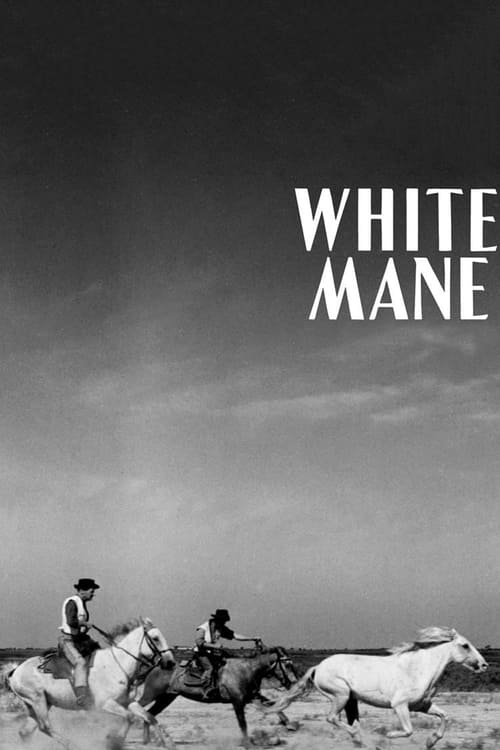
White Mane
Ατμοσφαιρικό, θρυλικό δράμα
Στις πεδιάδες της Καμάργκ στη νότια Γαλλία, ένα αγόρι ονόματι Φολκό δημιουργεί έναν σπάνιο δεσμό με ένα περήφανο άγριο άλογο, τον Κριν Μπλαν, το οποίο κανένας άλλος δεν μπορεί να δαμάσει. Μαζί, οι δυο τους προσπαθούν να ξεφύγουν από τον κόσμο των ανθρώπων αναζητώντας την απόλυτη ελευθερία.
Η «Το Άσπρο Άλογο» δεν παίζεται σε κινηματογράφους αυτή τη στιγμή.
Ακολούθησε την ταινία στην εφαρμογή για ειδοποίηση όταν προστεθούν προβολές.
Προβολές για Το Άσπρο Άλογο, ενημερωμένες κάθε πρωί
Διάλεξε σινεμά και πάρε υπενθύμιση πριν κατέβει.


The black-and-white shots are beautiful. then there is the closing shot, a fantastic melding of escape and loss.

Criterion Collection(Janus Films Kids Collection)(Foreign language film - French (English Narration)The story of a mighty horse and the boy that won his trust. "Crin-Blanc was the leader of all these horses. He was a fiery and fearsome horse to whom the other horses obeyed."I would not be surprised at all if the story/film of White Mane and The Black Stallion influenced each other. White Mane is an early version of the classic boy and his dog story but with a wild white horse in the French countryside. I was a little surprised this had narration instead of subtitles, but I suppose it was designed that way since this is a film geared toward younger kids. But the narration ends up giving it the feel of a nature documentary. Overall, it was a solid short film with great horse moments, but they aren't as breathtaking as what you will see in 'The Black Stallion'(Quick Hits) ... Spoilers:- Even for this being a short plot that comes together pretty slowly as they establish that White Mane does not have any interest in being fenced in by ranchers- The beauty of the white and painted horses really pops visually with the excellent black and white cinematography- I enjoyed the large amount of time devoted to showing horses running around and interacting including an intense scene of White Mane challenging another horse for the role of alpha of the herd- Although it is a kids film it handles the development of the kid and horses relationship in a slow thoughtful way where he fails in his first attempts to ride White Mane, and he really has to earn his chance. This comes during an intense scene of the horse dragging the kid by a rope- The film leans on visual storytelling like in the elegant dream scene where it shows how the boy desires to ride the horse by showing him dreaming about it, and we get a great shot of them together and reflected in the water- It was cute to see the boy's little sibling feed the horse hay as he treats the cut on it's leg- That had to be the flimsiest fence I have ever seen, of course the horse easily broke out of it- This short does a great job of coming together at the end as the boy helps White Mane escape the fire trap the ranchers started and then get chased by them. It is awesome to see the horse galloping at full speed across the fields and even in some water at the beach- The end is a surprise as the horse jumps into the river and begins swimming with the boy on him, and states that they were able to get to an island where they were able to live happily together in peace While White Mane is a very well made short about a kid, I am not sure if it would hold the attention of younger viewers all the way through these days. But I did get my 4-year-old to start watching it with me midway through, and he enjoyed watching the ending when White Mane hits its stride. Thanks for reading.Happy movie watching ... Cheers!

White Mane shares a similarity in approach to writer/director Albert Lamorisse’s later short The Red Balloon, both exploring the idea of a lonely boy forging a bond with an independent and free-spirited anthropomorphic new friend—a wild stallion in this instance—yet there’s a more naturalistic feel running throughout here compared to the fantastical direction Lamorisse would soon go in, this allegorical little story rooted firmly in the everyday for an approach that ends up feeling very grounded and clear-eyed.It’s beautifully shot, capturing the Camargue wetlands in a way that just helps to give a real tactile quality to the tale, extensive location filming enhancing White Mane’s struggle to remain free despite the efforts of those who try to tame and fence him in. This creates a similar ‘us vs them’ dynamic as its follow-up, though I think because WM is portrayed as almost this force of nature the bond it forges with the boy feels slightly more more well defined than the later film (equals rather than owner and pet, something that can’t be shown quite as well with a balloon, which has more of an ownership connotation). Lamorisse had such a gift for bringing his non-human characters to life, building lots of empathy for the animal at the centre of it all here as this goes on, though scenes of horses fighting each other (and seeming to actually draw blood) do feel as if they undercut that intent a little, as well as the fact that the slightly dour ending leaves this on a little too much of a sombre note. That sort of ‘escape from the problems of the rest of the world’ resolution feels like it was executed a bit better in The Red Balloon, the more overt Christian messaging at this late point seeming a little false compared to the more organic way a similar sort of moment is handled there. Even so, I suppose that approach fits this short’s more down-to-Earth tone, the mature way it’s told showing that just because a film was originally made for younger viewers doesn’t mean it has to play down to its target audience. This can make it feel a little muted at times, though, but while not quite as polished as Lamorisse’s next short (where he seems to have tweaked the formula a bit for something that flows slightly better, as here some elements can feel slightly drawn out and others a little rushed in comparison), I still really liked White Mane, an earnest and tender story with a strong empathy for outsiders that shines through at each turn.
A young boy living in the Camargue region of France forms a bond with a wild, proud horse that others are unable to break.
Albert Lamorisse, the French filmmaker who later created the Academy Award-winning short The Red Balloon.
The film relies primarily on its imagery and visuals, containing very little dialogue and only brief narration to support the plot.