for the first half, this is truly GOAT-worthy material - art is scary and dangerous, beauty is oppressive and violent, and stan and josee's relationship is among the most erotic things i've ever seen on film (the scene where stan makes josee call maguey - wowwwwww). it loses the thread in the second half, where love rears its head and the film becomes more of a traditional love triangle. but that audacious montage near the end is worth every misstep - some of the most beautiful and nightmarish experiments i've ever seen in a film.
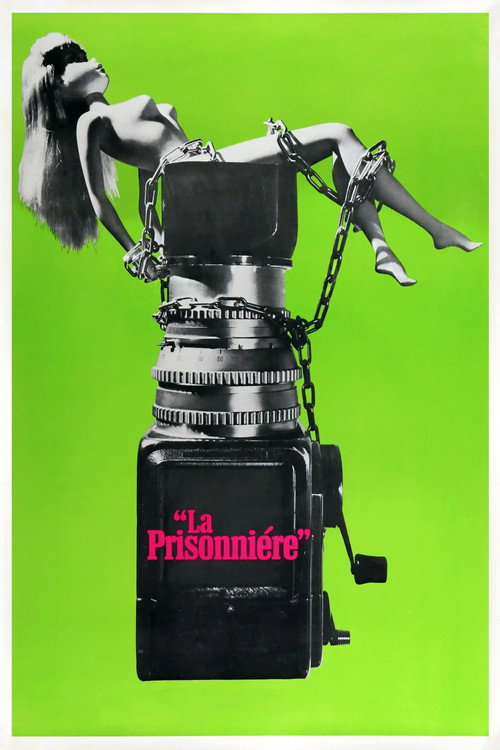
“i’m only interested in your point of view.”an open relationship, a love triangle between an art gallery owner, Stanislas or Stan (Laurent Terzieff), an avant-garde artist, Gilbert (Bernard Fresson), and the woman in the centre of it all, Josée (Élisabeth Wiener), drawn by one’s perverse curiosities, desires, and urges — ultimately forming a complicated bond that stemmed from being emotionally unsatisfied. for Josée, Stan’s presence may have unleashed her hidden impulses, which were kept closed and shielded away from her own husband — those soft touches, light glazes around one’s naked body; when one seeks to have their needs fulfilled after feeling trapped, stuck in a gilded cage of repressed emotions for so long — that intimacy unveiling layers upon layers that have been lost, hidden deeper than the surface itself. although, for Stan, he’s unable to love Josée, as he claims; with the fear mounting on him and the idea of building trust as he lacks the emotional capacity to such depths beyond the mind, body, and heart. “i only meant to be all alone with you. really alone.” to start, La Prisonnière (Woman in Chains) was my introduction to Henri-Georges Clouzet’s filmography… which just so happens to be his last film and the only one of his works that was shot in colour — as it depicts the concept that art means having the reigns to take risks, which beauty is seen through the lens of one’s inquisitive mind and masterful eye — representing the complexity of human emotions, especially when one can’t fully explain nor describe their feelings, but those moments… there’s just simply no right or wrong way to express them.“it’s me… don’t worry… everything will be alright.”
“Everyone is a voyeur.”Hitchcock was quite impressed by what he saw in European films in the 60s and longed to emulate them. Instead, he showed he was out of touch with Torn Curtain and Topaz. Henri-Georges Clouzot’s Woman in Chains (La Prisonniere) is the sort of film he wanted to make, a blending of Peeping Tom and Blow-Up, with similarities to the voyeurism of Rear Window and the romantic obsession of Vertigo, all with a solid 60s sensibility.“I’m not much fun.”Gilbert Moreau (Bernard Fresson) has given up advertising to pursue a career as an artist. Gallery-owner Stanislas Hassler (Laurent Terzieff) handles his work. Gilbert’s wife, Josee (Elisabeth Wiener), works for French TV, editing interviews with abused women. Gilbert and Josee have a seemingly happy marriage until she visits Stanislas’s apartment and discovers his hobby of taking erotic photographs of women. When she attends a session with the free-spirited Maguy (Dany Carrel), she becomes unnerved. The eroticism of Stanislas’s life uncovers something new to Josee, and her life slowly becomes unraveled.Woman in Chains looks at domination, submission, humiliation, and the general complexity of human emotions without being judgmental or psychoanalytical. People are strange, unpredictable beings, Clouzot seems to be saying, and we can never fully understand each other or even ourselves. Despite his obsession with sex, Stanislas is seemingly frightened of it. Josee is happy to be bourgeois while being repelled by her conventionality. “You have strange things.”Clouzot explores lots of issues without spelling anything out. Equally important is the film’s aesthetics. It is beautiful to look at, thanks in part to the brilliant colors captured by Andreas Winding’s camera and the production design of Jacques Saulnier. Stanislas’s apartment, crammed with modern art, is something to see. A remarkable scene with ocean waves crashing into rocks is beautiful while capturing the characters’ turbulent emotions.Wiener gives a charismatic performance, helping to hold the film’s various elements together as a woman rebelling against men’s perception of women as either saints or whores. Terzieff gives a too-sensitive-for-this-world Tony Perkins-like performance that makes Stanislas suitably enigmatic. Perhaps because I just couldn’t buy Fresson as an artist, his character never quite comes into focus. Carrel effortlessly captures Maguy’s eroticism. One of the film’s many highlights is Josee’s psychedelic nightmare at the end. Brilliantly edited by Noelle Balenci, this sequence makes similar psychedelic efforts during this period look tame, dramatizing what Josee wants and fears with a series of disconnected images. I’m not exactly happy, however, with what Clouzot comes up with just before and after this sequence. The film seems to be building up to something unexpected or profound only to back off.Random thoughts:A gallery-opening scene includes camos by Michel Piccoli, Pierre Richard, Joanna Shimkus, and Charles Vanel.The Kino Lorber Blu-ray includes a 2017 interview with Wiener in which she describes Clouzot as not being an easy person. She thinks the director is examining his complicated feelings about women in the film, which she isn’t quite satisfied with because it lacks tenderness. She also doesn’t care for the clothing and hair style Clouzot made her wear. Favorite Films of 1968.