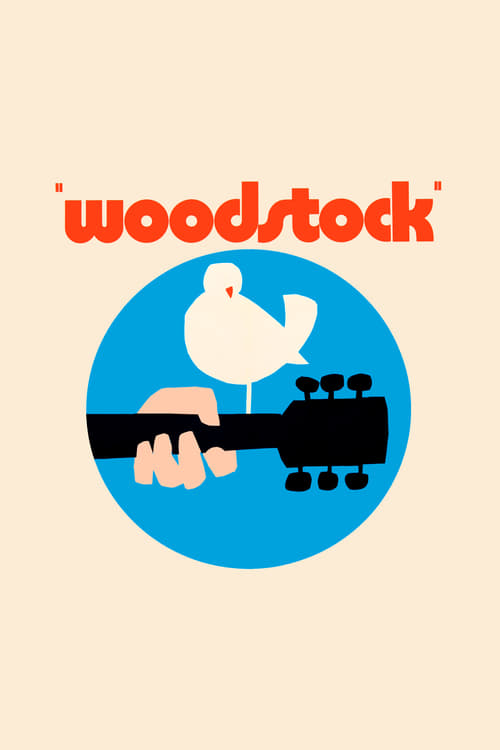



“We must be in heaven, man.”Michael Wadleigh’s Woodstock is a sprawling landmark concert-documentary that captures the spirit of the youth of the late '60s and the signalling of the end of that halcyon. Edited by both Martin Scorsese and Thelma Schoonmaker and partially shot by Scorsese himself, the documentary employed a cinéma vérité style that was reminiscent of other concert films of the time.It was August 15, 1969. The Manson Family murders had occurred just a few days ago, the Stonewall riots the month before, and the assassinations of Martin Luther King Jr. and Bobby Kennedy the year earlier. All the while, America was still reeling from the effects of the Vietnam War. And in the midst of an otherwise fraught and traumatic summer, Woodstock looked to be equally disastrous. Over its three-day weekend, a whole generation of people who felt rejected and forsaken by their country came together from all walks of life to celebrate peace, love, and experience the emotional and spiritual connection only a crowd and live music can bring. The festival famously featured some of the popular artists of the time, including The Who, Jefferson Airplane, Crosby, Stills & Nash, and Janis Joplin. It attracted around 500,000 people who gathered at the small town in upstate New York, which completely overwhelmed the organisers who had only expected 50,000. But despite the large amount of people, alcohol, and drugs, the festival went on peacefully. Local residents who witnessed the scale of the event provided food and care to those who needed it. Arguably the most renowned music festival in history, Woodstock is not only an important cultural artefact, but a microcosm of the musical, social, and political ideology of the late '60s. It was a watershed moment that marked the beginning of the end of the counterculture movement that had advocated progressive values, basic human decency, and a 'love thy neighbour' ethos. Woodstock proved to the country and the world that kindness and communion were still possible.