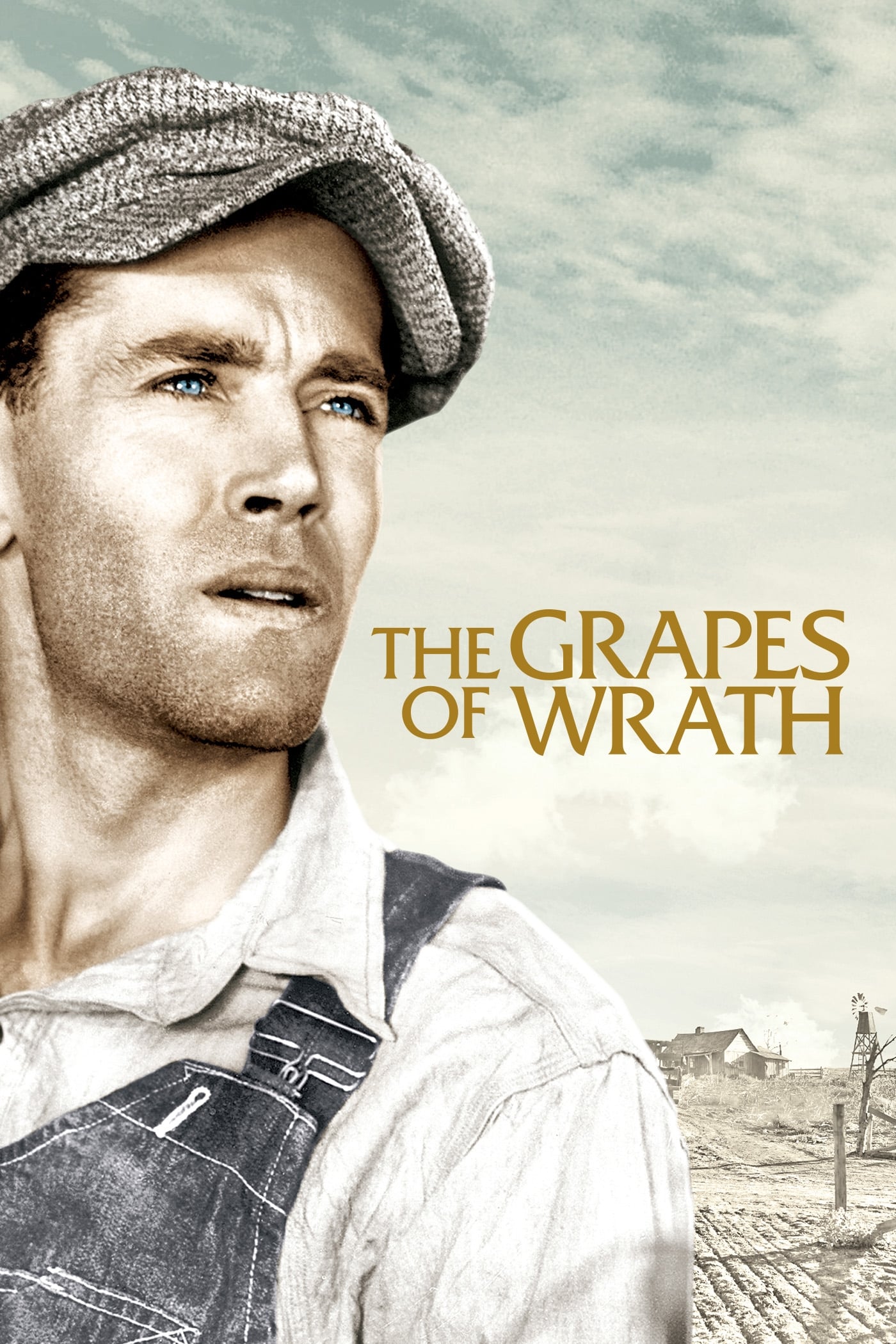







It's hard to imagine that The Grapes of Wrath was ever published in America, let alone made into a Hollywood film. Class consciousness is something rarely seen in the media, but it's important that we're aware of it. As the film shows, fighting inequality is not about ideology (being a 'red') but about acknowledging an obvious injustice. John Ford, despite his conservative associations, did make films about unions (see also How Green Was My Valley) and he creates a poetic melancholy in The Grapes of Wrath through the tale of poverty and desperation. His technique is, as always, well considered and his use of shadows and silhouettes creates anonymity amongst the suffering.It's difficult to approach a classic like The Grapes of Wrath, because every reasonably valid interpretation has already been put forward. Its story of lost dignity and the consequences of greed remain pertinent and have been thoroughly analysed. The lost preacher who sees things clearly, the American Dream unmasked as a lie, the way history is wiped away by modern advancement, The Grapes of Wrath is pretty much a cultural landmark in all the things it represents. There are key takeaways like the way law works to protect the owner class over workers, or the fact that the real tragedy when the grandpa dies is not that the characters can't pay for a funeral but that they realise it's a blessing as death means he's free from the suffering they have to deal with.Ford's The Grapes of Wrath is a powerful film but not a sentimental one. It's an exercise in hopelessness, ignorance, and the false security of promised jobs. This is a time when America became a country filled with starving children and poverty-stricken neighbourhoods (not that these don't still exist) and that's a history people need to not forget. Ford's film finds tiny joys in this very tough world and that's a counterbalance which makes it even more powerful. This is an important piece of legacy cinema, and one that reminds us of the brutality which exists in such a desperate society. Yet, when all is said and done, the world won't look kindly on those who benefited from such suffering. It's the faces of the impoverished that will change the world eventually. Truly, the people will go on forever.My Top Films of the 1940s
Tom Joad returns to his home after a jail sentence to find his family kicked out of their farm due to foreclosure. He catches up with them on his Uncle’s farm, and joins them the next day as they head for California and a new life... Hopefully.
Where to watch
1The Grapes of Wrath is showing in 1 cinema in Los Angeles — next screening Saturday 15 August at 16:30 at Norton Simon Museum.
Saturday, 15 August
Cast & crew
6What people say
There were no grapes, and no wrath, but there was communism.
“Grapes of Wrath” is a shadow of the American odyssey. As directed by John Ford, the lumbering, towering automobile of the Joad family makes its way across the frontier looking like a wagon train rattling along the Oregon Trail. Where the wagons would leave tin and furniture at the crossings of vast rivers and steep mountains, Ford films piles of discarded sundries on the outskirts of migrant camps in Southern California. As captured by cinematography great Gregg Toland, “Grapes” was, as Ford put it, “a beautifully photographed movie with nothing beautiful in it to shoot.” Toland and Ford switch effortlessly between tones in the film. The Hoovervilles have the sharp edges and claustrophobia of German expressionism. The unending plains and roads have the weighty vastness unending doom. “Grapes” is a period piece as viewed from the far-future 2020s, so it’s challenging to approach it with the frame of mind that - on its release - the ‘era’ of the story was less than a decade past. It’s little surprise that there was concern from the government that Ford’s work would be a work of communist ‘propaganda.’ Roger Ebert later speculated that the film only saw release because the Second World War preoccupied censors with villainous concerns outside of solidarity. “Grape’s” infamously tacked-on ‘upbeat’ ending is about the only aspect that prevents it from being one of the greatest movies of all time. But maybe it just requires some distance of perspective. Put against the pessimistic darkness of the film as a whole, it seems almost to be a taunt. A tease — of a promise, resolution, and resolve that can only ever exist on celluloid.
What is The Grapes of Wrath about?+
During the Great Depression, the Joad family is forced off their farm in Oklahoma and embarks on a difficult journey westward to California in search of a better life.
Who directed The Grapes of Wrath?+
The film was directed by John Ford, the acclaimed American filmmaker known for his pivotal role in developing the Western genre and his empathetic portrayals of American life.
Is The Grapes of Wrath considered a classic?+
Yes, it is widely regarded as a cinema milestone and was one of the first films selected for preservation by the Library of Congress. Full schedule on Mood.