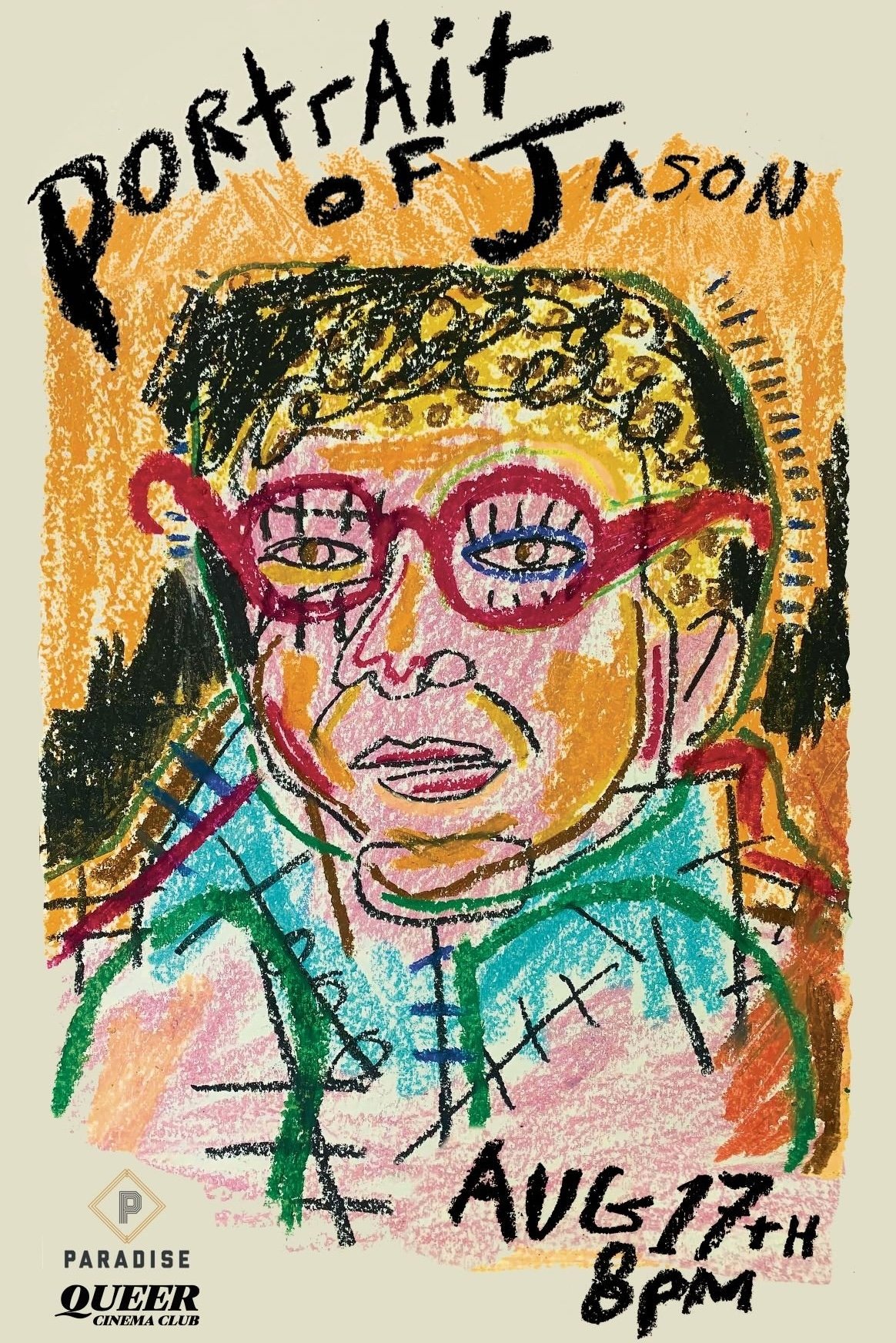



"I've suffered expensively."He is immediately charming. Jason has one of those personalities you find where the person just draws you in, where the person is loud even while standing there without saying anything. In a different body, it might be taken as taking up space, as attention-seeking, but Jason's position in the hegemonic hierarchy of our hellish society makes his personality inherently defiant. He's a gay black man; if you did not know that his life was subject to the whims and hatreds of the white and the straight who have been indoctrinated by bourgeois lies, listen to any five minutes of his monologue. Even when he's not talking about it directly, his performance, his laughter, his inviting gestures and facial expressions, everything says that he is aware that his life is suffered, not accepted. He seeks to entertain."Black soul with a white attitude... That don't make it at all."We all want attention, even those of us who lead less inherently confrontational lives. We all want to be cool, to be loved, to be accepted, to be worthy. We all want, to some degree or another, to know that other people care for us. There's no flaw in wanting to entertain, in performing, and Jason seems to an outsider--a white trans girl 50 years later--to reveal himself in his performance. Part of that revelation, though, is that in performance is survival, and in performance is protection. He isn't smoothing himself out or caricaturizing himself. He's simply holding back the vulnerable parts more often than he isn't; he's simply drawing on his natural charm. And he's good at performing. He's visibly drunk for so much of this, but his performative life seems to have made slipping into songs, into impressions, into stories, into routines second nature. He can do this impaired. If one assumes that in vino veritas, then the truth about Jason is that he is a skilled performer. His passions remain accessible to him even through moments of turmoil. "You amateur c*nts, take notice. I'm the b*tch."There is refuge in vulgarity. There is power in being something they revile. If your enemy is prim and proper, taking strength from words that offend them is another form of protection. When we reclaim their insults for us, f*ggot, b*tch, punk, tr*nny, dyke, wh*re, and the various racial epithets they've concocted from centuries of hatred and power, we are sealing off vulnerabilities, closing up wounds. Jason does both of these things, and the incredible emotional output present in his voice when he uses these various terms... maybe I am projecting, but I hear as much self-loathing as I hear outward contempt or humor. There is evidence as he draws on his masculine and feminine tendencies of a complicated relationship here, of something more than love-hate. "I'll never tell."Spoken like a mantra, over and over, Jason playfully denies detail. He is hiding almost nothing (or maybe almost everything). He does this in the face of antagonism from all around him (in life and in the film). The director, who--as many others have pointed out--obfuscates the reason for her antagonism. He repeats his refrain as he talks about the most difficult things, about homophobic child abuse, about direct racism, about his dreams, about anything he is asked to talk about, including, in the outtake, about what he did to Shirley Clarke. So many questions arise from this. As so much of this is performance, was that, too, performance? Clarke says in a clip before the outtake that she took it out because it didn't ring true, which emphasizes how calculatedly edited this whole film is. I don't doubt that Clarke had some past conflict with him, but the nature of the film stresses the question of their reactions, their interactions, of how much of what we see is genuine on either part. As the Kitchell points out, the film becomes a non-fiction film about fiction somehow; it explores the idea of truth. The scars are real. The tears are real. The anger is real. The presentation is calculated, but that doesn't make it less real. I've no idea why Clarke fades in and out of focus, why the film slips into black, but as an exploration of truth in the context of a black gay man's story, it seems incredibly fitting, a representation of the gaps in queer history and African-American history created by capitalism, white supremacy, and patriarchy. It seems impossible for it to be intentional. Like so much of lost histories, the fragments that survive, the truth that is to be garnered about the abused, neglected, and oppressed is only there by accident, fashioned by the assumptions of those that abuse, neglect, and oppress, revealing as much about them as their "subjects.""Lonely? I'm desperate."So much is encapsulated in Jason's words. His relationship with his parents is both unfamiliar in its severity and familiar in its broader complications. His redefinition through name and performance could be a whole other essay on just how potent a name change can be (and the revelation of his birth name so early on is an indicator for the emotional nature what will be revealed later). His choices for imitation--all (almost?) female icons of the silver screen--speak volumes about lack of representation as much as it does about the personas of those women or Jason's interests in film. Every story told herein is its own revelation.52 project: 60/52