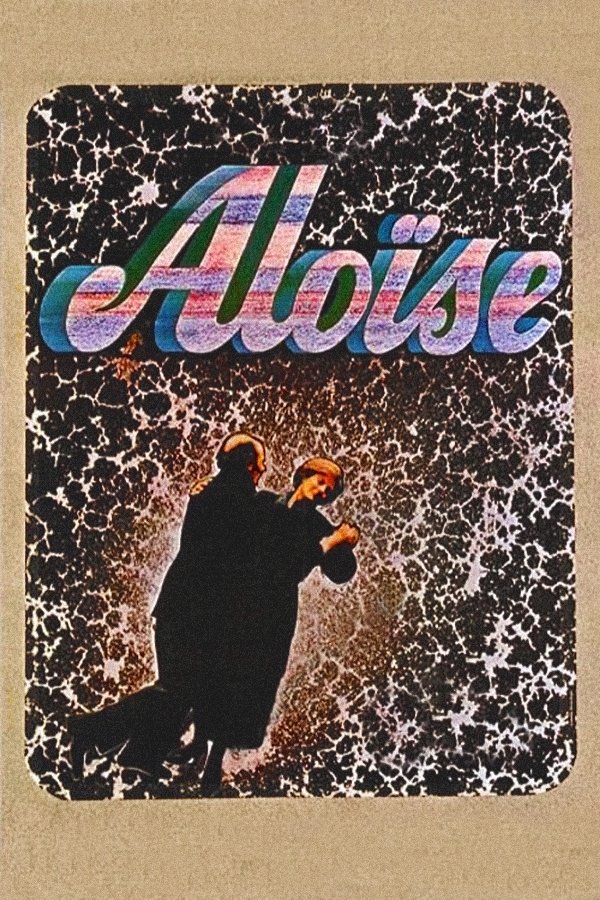


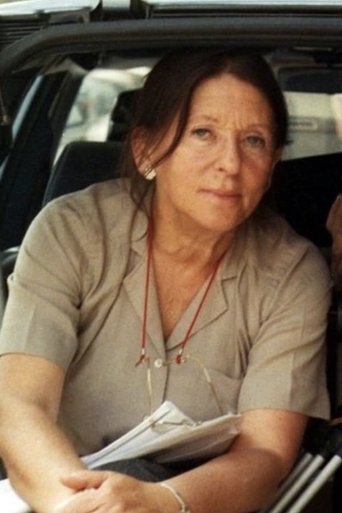
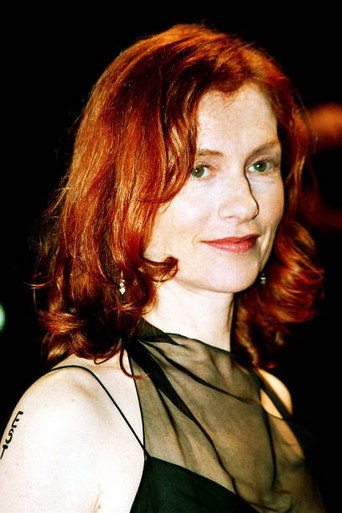
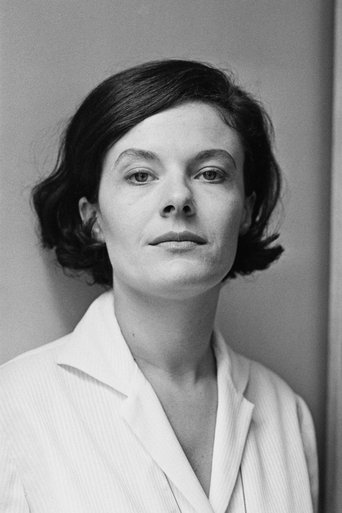

1st Liliane de Kermadec My longstanding interest in Outsider Art and the art of the disabled leads me to this, Delphine Seyrig's third big collaboration with a female director in 1975. The others are, of course, 'Jeanne Dielman...' and 'India Song', and certainly this is the lesser of the three texts. To de Kermadec's credit, she attempts to move what could have been a sensationalist story of a 'mad' artist into a more nuanced depiction of Aloïse as a woman. To this end, she tells a simple, linear story from the death of Aloïse's mother to her own death, only briefly mentioning her artistic endeavours. Curiously, she omits the figure of Aloïse's older sister, a controlling figure who denied her the opportunity to marry, an event that is framed here as Aloïse's own choice. It also downplays her obsessive love for Kaiser Wilhelm, the first sign of the mental instability that would eventually confine her to an asylum for the last forty years of her life. The omission of both these elements lends itself to a Foucauldian interpretation that her madness was socially caused by a stifling restrictions of the society she lived in, which certainly feels in accord with Dubuffet's initial assertion that the artist was not in fact mad but had delved deep into her own imagination. However, despite committed turns from both Isabelle Huppert and an excellent Seyrig, the drama feels too flatly rendered, unsure whether it wants to be commercially viable and popular or to be more daringly experimental like Akerman. It falls between the two stools in an uncomfortable manner, muddying the water as to its feminist subtext in a somewhat frustrating manner. It also doesn't help that both Huppert and Seyrig are minimalist performers, at their best when using little of their expressions to create a maximum of impact. Badly used, they can seem wooden, and certainly Huppert doesn't feel as strong as Seyrig, though Seyrig has the much meatier role as the tormented older Aloïse. There's a lot of potential here, but it doesn't feel well executed. On a very different note, the opening font for the credits is incredibly beautiful, one of my favourites in any film ever. Further reading on Aloïse Corbaz, if you're interested in reading more about the woman behind the story and want to see some of her art.awarewomenartists.com/en/artiste/aloise-aloise-corbaz-dite/livinginartbrut.com/index.php/en/artists/artists-a-f/aloise-corbaz