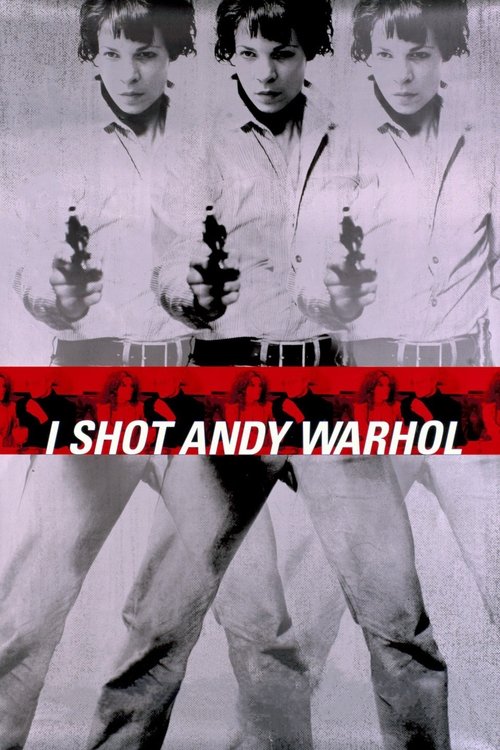
"The female function is to groove, relate, love, be herself, discover, explore, invent, solve problems, crack jokes, make music, all with love."very interesting foil to Once Upon A Time in Hollywood's image of 1969 LA, as valerie solanas' attempted assassination of andy warhol occurred just one year earlier in NYC. both violent events marked the brutal death of the freewheeling 60s, and both were (peculiarly) committed by women. director mary harron also recently released her latest film Charlie Says, which follows the manson girls as they reflect on their experiences with being brainwashed and controlled by charlie, while also learning to accept the reality of what they did. haven't seen it yet, so i can't speak to its quality/level of sensitivity, but the impressive skill on display here in her directorial debut (!!!) ups my confidence that harron was the right person to tell thorny stories like these. she exhibits a clear knack for deftly delving into the most disturbed parts of the psyche with just the right amount of empathy -- it's absolutely grievous how her career didn't skyrocket after American Psycho!!!
It is clear why Lou Reed would be upset with this movie. His scathing rant of a song calls for Valerie Solanas's death, and it was written decades after the incident in question. It's a testament to Reed's ability to convey his pain and distress in such direct and simple lyrics. It's autobiographical, more than anything else, and even when he sings about how sickness not being an excuse, I don't hear the bloodlust and cry for vengeance, but the agony and regret (made all the clearer by the fact that he spends most of the song in his signature sing-talking about how Warhol remonstrated him for not visiting while he was in the hospital). To Lou Reed, Valerie Solanas wasn't a human being.Which was, of course, the problem.It's not Lou Reed's fault, specifically. I don't know if he even ever met Solanas. It's not Andy Warhol's fault, either. But it's not Solanas's fault, either. (Blame was accurately predicted by Yesterday Girl, really.) Solanas was probably sick, yes, but it was also not entirely at the hands of the sickness. What is clear from this film is that Solanas was acutely aware of the way women were mistreated by the world, and that she was unwilling to accept it. What she was writing was considered fringe and extremist at the time; 40 years later, I gave the SCUM Manifesto to a (particularly feminist) friend of mine, who scoffed at its content, "this is so obvious." (Paraphrasing, of course.)Part of that is the predator-prey relationship society has with some ideas, especially those espoused by radical or fringe elements. Once a notion takes fire, it is effectively consumed by society, and the fringe adapts new ideas to survive. What is tragic is that in this case, Solanas's ideas were absorbed by a mainstream but not the mainstream. The patriarchal (I do love this word) dominance of society has not abated; it has merely changed. Solanas would be as much at risk of dying in poverty today as she would have 40 years ago. Her firebranding would have just latched onto different injustices. Radical feminism today owes its existence to Solanas as much as anyone, but her words would merely be the introductory class at best these days. It's not that the patriarchy has gotten more complex; it's just that it's no longer radical to claim a patriarchy exists. What this film portrays better than I could have dreamed is how, while Solanas's direct claims--that she was being controlled by Warhol and her publisher--are inaccurate in detail, in a broader sense, they're not exactly wrong. Warhol specifically wasn't nefariously plotting to manipulate her into anything. She was in his peripheral, a person he found vaguely interesting and tried to capture on film, but hardly put much energy into. She was not a non-entity, but he certainly viewed her as a thing in many ways. Her publisher was outright exploiting her with a predatory contract, but broadly speaking, what Solanas was reacting to was that her entire life was dictated and controlled by men, because men were (are) in power in our society. This is driven home by the fact that someone so outspokenly anti-patriarchal is so eager and desperate to connect with these men and have their support in her rise, and the fact that most of her encounters with men are almost exclusively negative, either stemming from their attempts to control or exploit her or her frustration in the form of abrasiveness and violence. It's an impressive portrait of a woman whose main claim to fame has been an attempted murder. Sympathetic and contextualized, she becomes much more than that, and the fact that her most famous writing has become a feminist classic as the closing intertitle suggests is a testament that she was not simply crazy or evil. That I could come away with sympathy for her despite her transphobic outbursts is not surprising; the film itself is not transphobic (it portrays Candy Darling as one of the most human characters in the entire film). (Honestly, Darling seems more put together here than most anyone else, even if she's obviously going through some shit.)(It should be noted I am addressing all of this in the context of the film, and not necessarily in context of actual events. How the film and actual events differ I obviously can't say for sure.)The biggest flaw in the film, other than a bit of trying too hard on the Warhol Factory crowd's cool, is the mixed quality soundtrack. Using modern bands, often covering period-relevant songs, kinda captures one of my biggest complaints of modern indie rock (modern for 1996, or modern for now) in that it shows how watered down some of them are. Watching those party scenes and seeing the grime of New York and the frustrations Taylor so effectively captures in Solanas remind that the music of that era was a product of that era. Trying to rehash the innovative sound of that era is... I get it. I love that music, too, and you can't fully escape your influences. But there's a disingenous feeling a lot of (not all, but a lot) modern indie rock, alternative, etc. has that comes from their influence being entirely off of CD and not from a life lived. There are plenty of bands I like--plenty I love--that have this flaw, but as an overall trend, it's a major reason why I take in indie rock with skepticism at best. So the half of the soundtrack that was Bettie Serveert and Wilco was somewhat disappointing and distracting. Blue Cheer, on the other hand, was rather thrilling, and John Cale's work was appropriate enough, obviously, even if I bet Lou Reed gave him the stink eye for it.Often this would be a lesser complaint, but I felt like it accentuated some of the more put on performances. Some of that is that the film is not exactly flattering to the Factory crowd, and a lot of them are presented as shallow cartoons--and to be fair, I'm sure there was some of that--but that also confuses their aesthetic of pop art cool for shallowness, which isn't entirely fair. This is contrasted somewhat by Jared Harris giving Warhol more than a sneer as an expression. His performance was actually rather less distant and chilled than I expected, and there was obviously a deep degree of sympathy in it. While Warhol was certainly capable of treating Valerie better or even being a more humane individual, I'm sure, he too was a product of a world that treated him as a reject and an outcast. His coifed discernment was not some cold, calculating affection, but a real expression of his self, or so the performance here suggests. Harris gets more across with his face than the dialogue could hope to convey, and even his snark has a note of kindness to it at times. It corroborates the portrait Songs for Drella would convey a few years earlier, which is that of a misfit, workaholic genius as much as an icon.