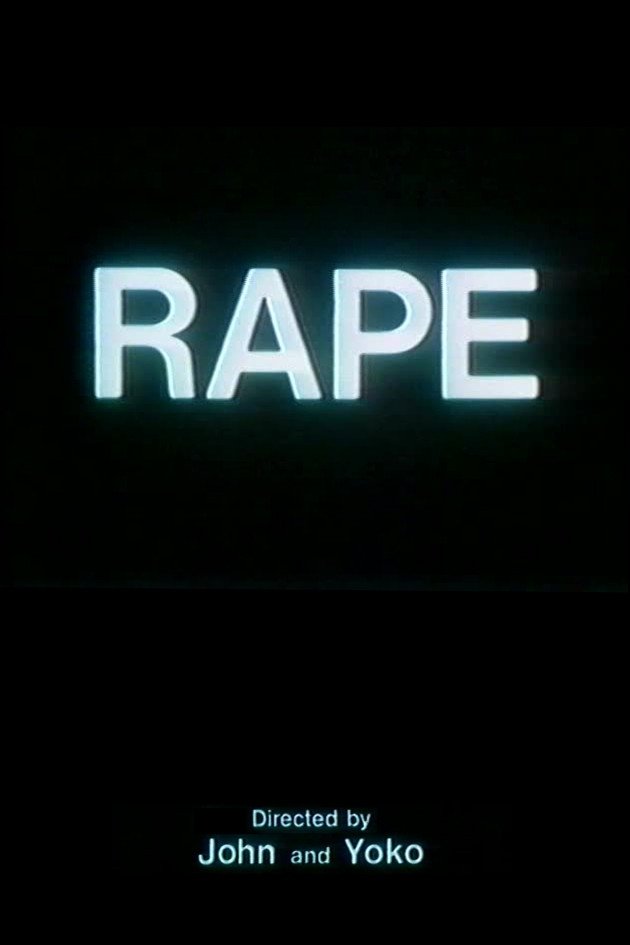
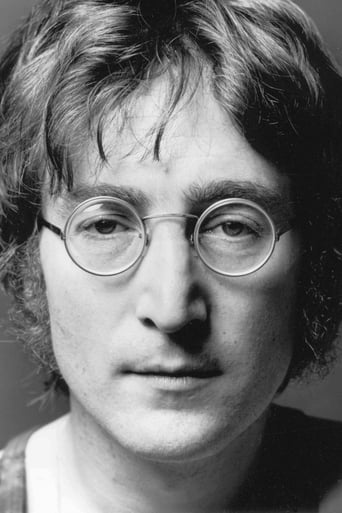
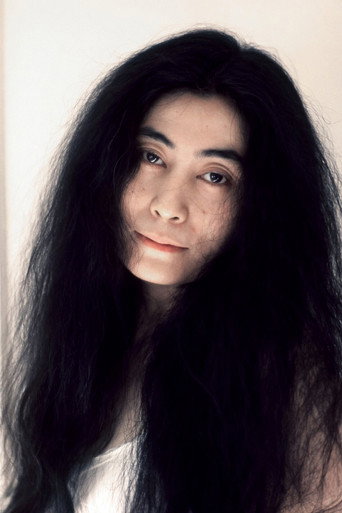
I would much prefer to like the work of Yōko Ono than to dislike it, but whenever I've heard her music or dropped by one of her gallery exhibitions during my adult life, it has always fallen squarely under the "not my cup of tea" column. So I'm happy to report that I found much to admire in this gruelling 77-minute conceptual exercise - my first encounter with her filmmaking. The directing credit goes to "John and Yoko," and while I'm sure that's true to some degree, I also just know in my heart who was the Simon and who was the Garfunkel in this particular collaboration.The film unfolds from the point of view of a documentary camera. A film crew encounters a woman walking on a street in London, and then starts following her. The crew is English, but she speaks (unsubtitled) Austrian. We follow her along the street, to a cemetery, and then catch up with her on the street again on the way to her apartment. She has been good-natured and accommodating towards this intrusion until now, but is starting to become exasperated. We follow her home, and the jittery handheld camera roams closer and closer to her body. We follow her around her small, dimly-lit apartment until, finally, we are a few inches away from her face, which she's covering with her hands. In the next shot, she's buried her face in a corner of the room, with her back to us. Finally, we hover around her as she makes an anxious phone call.On one level, the metaphors are obvious: rape is a crime that steals a person's bodily autonomy; women are also expected to be calm in the face of attempts to colonize their bodies and personal space; women are said to have been "just asking for it" if they show their rapist any kindness before the rape happens, etc. There are other points Ono and Lennon might be making that are less clear-cut to me. Is there also a suggestion that the movie camera is a tool of oppression/dominance? What is the significance of the victim being a non-English speaker? Is the point that it is easier to perpetrate violence (and watch violence be perpetrated) on an "other" whose suffering is expressed in a difference language? To what extend are we, the viewer, supposed to feel complicit in the abuse we're seeing? Personally, I don't enjoy it, but are Ono and Lennon trying to punish us, Michael Haneke style, for having slicker, glossier films about female suffering in the past? Are they saying, "Not so fun when you see it this close up, is it?"
This is a film by Yōko Ono and John Lennon, although I'd probably attribute this to Ono well before Lennon considering the artist input she had in the relationship and her filmmaking experience. Here they do what they do best, shock their audience. This is named RAPE with the explicit purpose to provoke. Despite its title, there is no physical assault in this movie at all. The real plot is about a woman being followed by a cameraman. She tries incessantly to get away to no avail. The cameraman never speaks to her or touches her, but he never lets her getaway. He even follows her inside her house as she gets progressively more upset. So then what's most surprising about this movie is how little it actually has to say about rape. Instead, this has generally been read as a film about the constant harassment from the paparazzi that John and Yōko had to go through after the break up of The Beatles. Although even with that in mind, the cameraman is basically framed as a stalker and it gets pretty emotionally intense by the end. It can absolutely be read through a more feminist lens as a commentary on rape, how rape is perceived by media, and how media itself rapes women. I would categorize this as slow cinema. Much of the movie is composed of long takes with little dialogue. It's cerebral which can be mind-numbing. Some people say that watching this feels like beating a dead horse, but I think it's perfect. It gives emotional respect to the emotions of the woman, it takes itself seriously in a way I appreciate, and the length helps this from feeling like a throwaway gag. It's a real statement and shows how seriously John and Yōko really were when they made this. It's an experience and one of the more powerful pieces of art that John and Yōko made together. Added to Avant-garde Canon
A stunning, raw critique of male privilege, rape ("she was asking for it") and abuse ("why didn't she just leave?") cultures, and the surveillance of the modern world (and this was made in 1969!). Yoko Ono and John Lennon crafted one of the most chastely disturbing films imaginable, a deeply violent film without a single laid hand. Imbued with the sort of cruelty that has become Michael Haneke's (and to a different extent, Lars Von Trier's) bread and butter, but with the pervasive grunginess of Wes Craven's LAST HOUSE ON THE LEFT. If Haneke wasn't so busy making his films impossible good looking, he may have concocted something like this. If it gets somewhat tedious around the 45-50 minute mark then the final 15 minutes are just nerve-wracking. A whole different sort of home invasion horror. Many wouldn't like it due to a perceived simplicity and lack of pomp, but therein lies part of its greatness. It's so matter-of-factly plausible that by the end, the screen filled with darkness and frazzled, brokedown close-ups, that it's all the more terrifying.