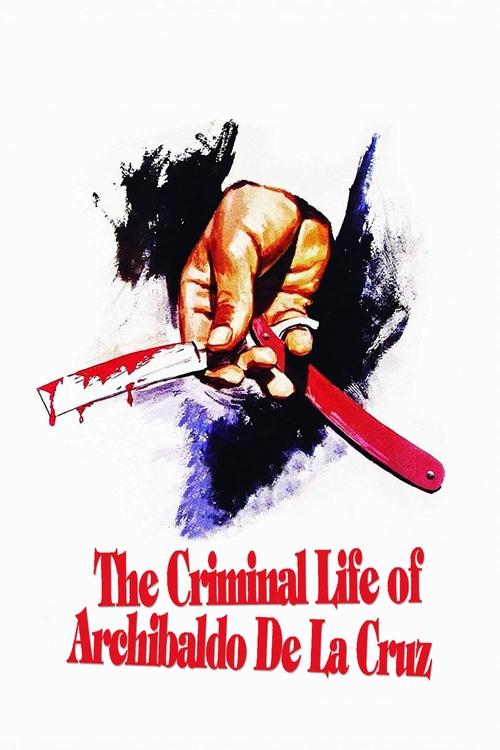
A bizarre black comedy about a man whose overwhelming ambition in life is to be a renowned serial killer of women, and will stop at nothing to achieve it - but not everything goes according to plan...
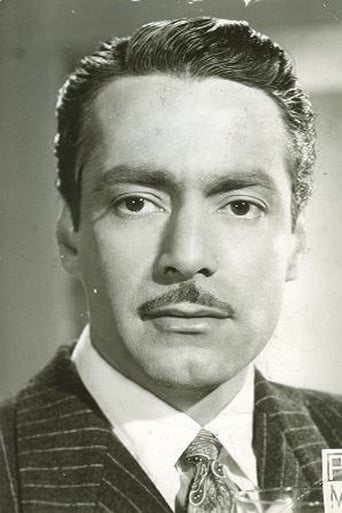
RESEÑA EN ESPAÑOL AQUIACTION! - LUIS BUNUEL: BETWEEN SOCIAL REALISM AND SURREALISMArchibaldo de la Cruz has, for as long as he can remember, wanted to become a serial killer — a ladykiller, to be precise. It all begins in childhood, when his governess convinces him that a music box given to him by his mother has the power to cause death. He tests this theory almost on a whim, and moments later the governess is struck by a stray bullet. The coincidence is enough to convince Archibaldo that he’s responsible, and more importantly, that he possesses a strange and intoxicating power.The problem is that, much like that initial incident, Archibaldo proves utterly incapable of fulfilling his dark desires. Whenever he attempts to murder the women who obsess him, fate intervenes. His would-be victims end up dying through unrelated accidents — a fall down an open elevator shaft, an apparent suicide — leaving Archibaldo trapped in a cycle of murderous intent without the act itself. He is both predator and bystander, consumed by fantasies he can never fully realize.The premise is pure Buñuel, placing the film squarely within the director’s thematic wheelhouse. It allows him to flex his absurdist instincts in a way that’s never overtly broad, but instead quietly perverse and slyly subversive. The humor rarely pushes into laugh-out-loud territory, yet the film remains consistently amusing, operating on a frequency that rewards patience and attention rather than punchlines.Ernesto Alonso — better known to many as el señor telenovela — delivers a darkly delightful performance as Archibaldo, portraying him as a man riddled with wicked urges and profound frustration. There’s a peculiar charm to his misery, and Alonso finds just the right balance between menace and pathetic vulnerability. The score is another highlight, playful on the surface but warped by distorted textures that subtly reflect Archibaldo’s fractured psychological state.All in all, bolstered by a sharp script and an excellent central performance, this is a dark comedy that comfortably ranks among Buñuel’s hidden gems. It may not be his most famous work, but it’s certainly one of the strongest entries in his Mexican period, showcasing his talent for blending morbidity, satire, and psychological insight into something uniquely unsettling and entertaining.ACTION! - LUIS BUNUEL: BETWEEN SOCIAL REALISM AND SURREALISMTODAY SCHEDULEPizza Panic PartyState of SiegeThe Criminal Life of Archibaldo de la Cruz
Joshua Dysart4.0
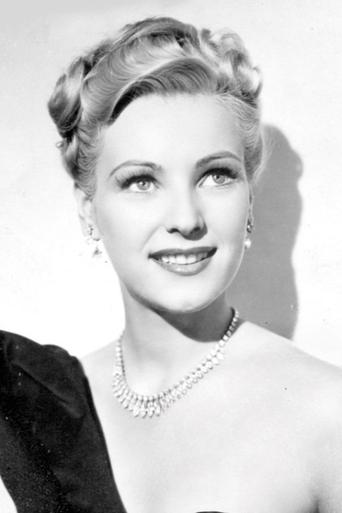
If the world doesn’t kill ‘em, Archibaldo will! (Just kidding, the world always kills them.)Oh, the Buñuelian deviousness of it all. This is near the end of his time working in the commercial Mexican film grinder. He doesn’t have full control over his work during this period, but flashes of his visual style, his themes and tone, cannot be squelched. The director is funny, he's cunning, he's distrusting of the idle upper-class, and he sees Catholicism as an oppressor. He's a fantasist and a humanist and a macabre motherfucker. God love him.Out of the gate we go full Freudian. Before the first scene is done, a boy has been caught wearing his mother’s underwear, death has been made luxuriant - clad in silk stockings - and the idea of murder has become prurient. A bourgeois mother has also trivialized a violent working class revolution that kept them from a night at the theater, but that’s less Freudian and more Buñuelian. Anyway...Pro(an)tagonist Archibaldo is a Fred Armisen looking aristocrat with all the time in the world to pursue women. But he’s fueled by a darkness born of boyish delight, desperate for the thrill and release that only a slash of the straight razor across a long, delicate famine neck can bring. Sounds nightmarish? Wrong! Buñuel’s film is downright cheerful. Practically jaunty. The character of Archibaldo is impotent and silly. Always proximal to death, but never the cause of it. Always a bridesmaid never a bride. He is a mastermind of intent and a farce at execution. And his desire grows with each failure. Then comes the sequence with the mannequin. Oh man. Sweet, sweet cinema, does the human race even deserve you? It’s just outstanding. Made five years before Psycho, at a time when overt images of sociopathic males doing horrible things to women’s bodies were simply not yet a staple in movies, the mannequin scene has tremendous socio-psychologic and comical power. It is both slight and horrifying. Just masterful.And it’s in this scene where Archibaldo’s sexual tension, never flatly stated as such, boils over in the wake of being outsmarted by an artist model and tour guide named Lavinia. (Lavinia is played by the gorgeous Czech-born superstar Miroslava, who killed herself for unrequited love by overdosing on sleeping pills the year this film came out. Her body was cremated, paralleling the eerie image here of a melting Miroslava in a raging hot kiln.) Her character in this, Lavinia, is a bad ass who 100% sees creeper Archibaldo coming from a mile away. In fact, almost every woman in this can see through Archibaldo. He’s never the object of true affection, he’s always a tool to be used for his money or to make other men jealous. Lavinia herself only comes around in the first place because Archibaldo promises her a job, and her contingency plan for getting out of Archibaldo’s house safely, assuming his intentions are ignoble (and boy are they ever), is wonderful.Side note A: the bill on the hat of my fellow countryman from Oklahoma is absolute magic. Sadly, the ending amounts to some serious weak sauce after all of this good, clean fun. It almost completely undoes everything that I love about the film. It may not be a crime to “think about murder”, my dear Judge, but you know what is a crime? PLANNING AND ATTEMPTING MURDER! Yes. Yes, that is a fucking crime! But that’s not the worst of it. I live in America. Letting an obviously dangerous man free because he seems like a fine enough - rich - chap, doesn’t feel unrealistic at all. And it's certainly inline with the themes of the flick.No, the real weakness of the ending is in the apparent curing of Archibaldo’s pathology (tied to a story device fetish object that’s, I mean, you know... symbolic, or whatever) and the absolute ruining of all the good work they had done with the Lavinia character beforehand.Here Lavinia conveniently returns, all of her street smarts somehow evaporated. Now a pawn of a script that’s grasping for a softer, happier ending to this ghastly tale most slightly told.I've been trying to murder the Collab for almost a year a now.
dirtylaundri4.5
Leave it to Bunuel to thoroughly deconstruct the Giallo years before the genre even existed.
More like this
Common questions
What is The Criminal Life of Archibaldo de la Cruz about?+
A man obsessed with becoming a serial killer finds that fate and circumstance constantly intervene to thwart his elaborate, murderous plans.
Who directed The Criminal Life of Archibaldo de la Cruz?+
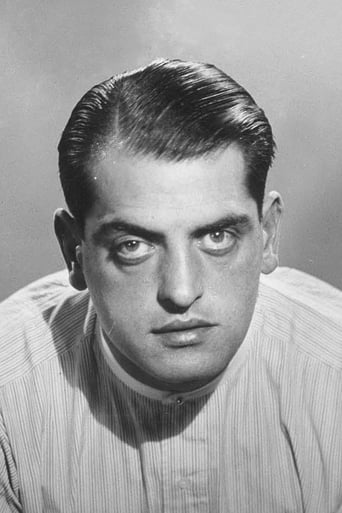
The film was directed by Luis Buñuel, a master of surrealist cinema who helmed this work during his prolific Mexican period in 1955.
Is The Criminal Life of Archibaldo de la Cruz considered a comedy?+
Yes, it is a dark comedy that satirizes the desires and social pretenses of its protagonist while maintaining a macabre tone throughout. Tickets on Mood.