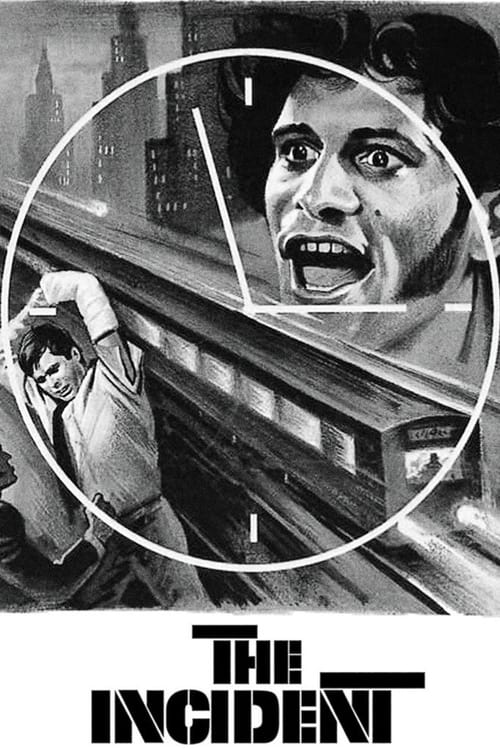
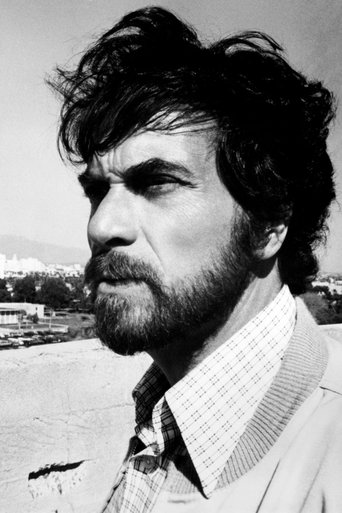
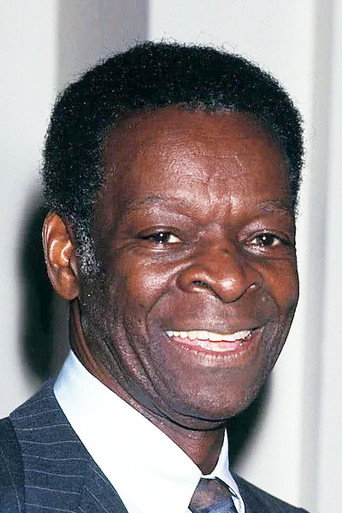
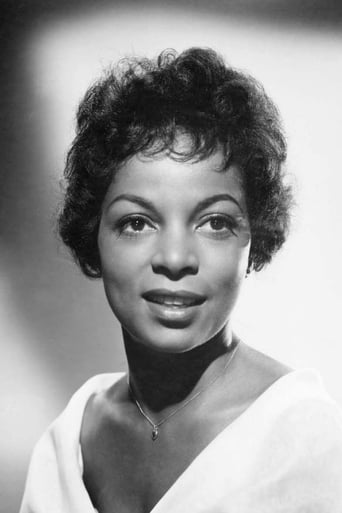
I didn't know anything about this film. Very happy Twilight Time put out a great looking Blu-ray. Martin Sheen and Tony Musante terrorize a subway car full of innocents... Beau Bridges, Brock Peters, Ruby Dee, Jack Gilford, Thelma Ritter, and even Ed McMahon.Very theatrical with big performances. But the big performances are part of its charm. Martin Sheen's non-stop, open mouth, drunken cackling doesn't get old. Beautiful B&W cinematography by Gerald Hirschfeld (Young Frankenstein).Looking forward to listening to disc commentary by director Larry Peerce.
In my review of Tangerine, I compared my favorite contemporary genre to my favorite Classic Hollywood “genre.” I put genre in quotes because it’s not really a genre; I always know when I see it, though. It’s the kind of mid to late 60s American film that feels trapped between the 60s and 70s, and ends up feeling stranger than both decades. Everything from The Swimmer, to They Shoot Horses, Don’t They?, to Petulia, to Uptight, to Whatever Happened to Baby Jane?, to Targets. The list goes on and on.While a lot about The Incident fits with this type of film, it is the cruelest of all the ones I mentioned (and that’s saying something). Joe Ferrone (Tony Musante) and Artie Connors (Martin Sheen, in his film debut) are two New York City hoodlums that are drunk and bored. They run out of bartenders and pedestrians to harass or rob, and they wind up on a subway car that keeps mercilessly adding passengers. We get introduced to all these friends, couples, and loners before they get on the subway, and-while they don’t act like criminals-almost all of them come across as bitter and unappreciative of the people they’re closest to.The insanity begins on the subway, and Joe and Artie take turns humiliating, intimidating, and harassing its occupants. It’s a fascinating study of how people react to being threatened and seeing other people be threatened. Issues of race, class, and sexuality boil over in a replica of a subway car that Larry Peerce intentionally made closed off and claustrophobic.1966’s Who’s Afraid of Virginia Woolf? is another famously rancorous mid 60s film. While only two people get caught in Elizabeth Taylor and Richard Burton’s maelstrom of bitterness and contempt, The Incident’s miscreants are taking their act underground, and no one’s coming out unscathed.Gloriously Bizarre Late 60s American Films That Can’t Decide Which Decade They’re Supposed to Be In (Through ‘71, Cause They Were [Probably] Written in the 60s)2021 First Time Watches Ranked
Two hoodlums (Tony Musante and Martin Sheen) terrorise a subway car full of passengers (including Beau Bridges, Jack Gilford, Donna Mills, Gary Merrill, Brock Peters and Robert Fields) in this drama adapted by Nicholas E. Baehr from his teleplay. It’s a searing, urgent film that explodes with an intensity onto the screen, each encounter containing a simmering powder keg of conflicts that slowly build over the course of the runtime. Musante and Sheen (in his first film role) are electrifying here as a pair of truly loathsome thugs who take sadistic pleasure in tormenting the unlucky travellers who come into their orbit, goading and bullying them to breaking point. Mustante in particular gets so much out of his role, which could easily just be one dimensional; he imbues the character with an arrogance and menace that really gets under your skin, creating a convincingly intimidating presence throughout. Having almost the entire film play out in this one location could start to become repetitive after a while, and while does start to become a little one note director Larry Peerce gives each encounter a claustrophobic intensity that makes this limited setting work, playing with the space as tensions mount. As they target each group one by one the tension slowly becomes almost unbearable, every character unable or unwilling to stand up for the individual being intimidated. These moments reminded me of the “first they came” poem by Martin Niemöller, and the film explores similar ideas of responsibility and group pressure as no one on the subway car wants to get involved so they won’t be affected, even if this more allegorical approach makes their behaviour a little unrealistic.It asks some uncompromising questions about how far we’re willing to help the people around us when they really need us, forcing the audience to become a silent and helpless onlooker in all that happens. What’s all the more disconcerting is that situations like this happen all the time, and by putting the viewer face to face with this loaded situation Baehr pulls no punches in this look at the consequences of turning a blind eye. The late sixties were a time of enormous upheaval and rising divides between increasingly separate groups, which is only amplified by putting them all together here. Each character is gradually established on their own before being brought into the same location, and this slow development of their individual personalities makes all the difference as the story goes on. The ensemble cast do an excellent job of fleshing this group out from their relatively archetypal outlines, with each making an impact, from Bridges’ reluctant soldier to Gilford’s elderly idealist to Peters’ arrogant militant. Out of all of them, Fields makes a big impression as a gay passenger who faces some of the cruelest torment, finding so much raw emotion as his character is humiliated while everyone looks on, stigmatising him as “other” and therefore not their concern. For the time, there’s a real concerted effort here to question these prejudices and unpick them, as each passenger is brought down to the same level by the situation. It’s often hard to watch, but the constantly shifting dynamics between the characters is incredibly compelling, moving back and forth before ending on a perfectly ambiguous note that brings everything full circle while leaving the questions open ended enough to leave you thinking, even if they’re not necessarily subtle.The Incident’s bleakness doesn’t make for an easy watch, and the writer’s attempts to make each character represent a larger issue don’t always succeed in practice, but it’s a brutally effective chamber piece that tackles some uncomfortable truths in a stark, thought-provoking way.