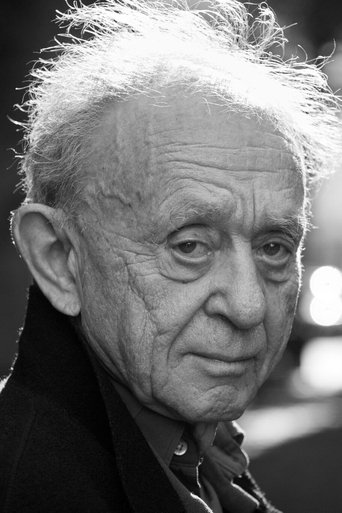

At the Q&A after the screening some doofus asked Frederick Wiseman, "What advice do you have for an aspiring filmmaker such as yourself?"Wiseman replied, "Marry a rich woman."

Directed by Frederick Wiseman
An atmospheric, gritty documentary.
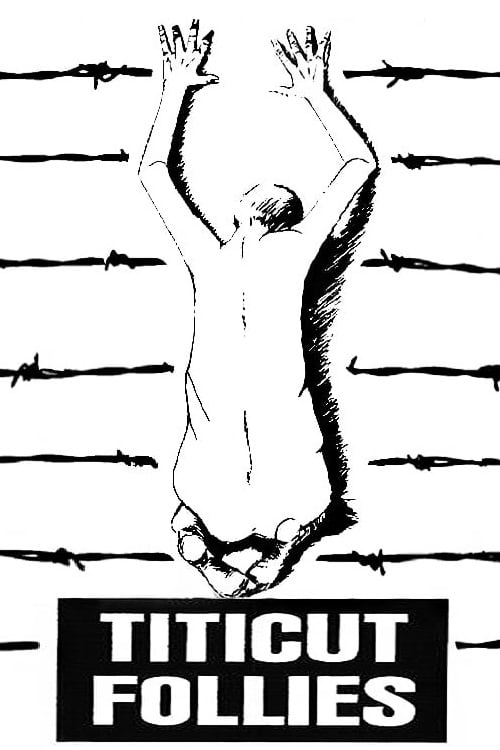
A stark and graphic portrayal of the conditions that existed at the State Prison for the Criminally Insane at Bridgewater, Massachusetts, and documents the various ways the inmates are treated by the guards, social workers, and psychiatrists.
Titicut Follies is showing in 1 cinema in Los Angeles — next screening Wednesday 5 August at 19:30 at Academy Museum of Motion Pictures.
Find more films like Titicut Follies
Showtimes in your city.


At the Q&A after the screening some doofus asked Frederick Wiseman, "What advice do you have for an aspiring filmmaker such as yourself?"Wiseman replied, "Marry a rich woman."

Too real. I've been in and out of various psychologist/psychiatrist/therapist's (or whatever they want to call themselves) offices. Some were helpful in this day of modern medicine! But I still feel like it's kind of impossible for the human mind to truly know and analyze itself. Case in point the almost absurd plight of Vladmir in Titicut Follies. He logically argues how the insane asylum makes him sicker, but the doctors dismiss him as paranoid. They prescribe tranquilizers to make him calm and complacent. Psychiatrists ask probing and irrelevant questions about his belief in God and how many times a day him and his friends use the toilet. I still feel like a lot of psychiatry involves doctor bias. They force their hangups on you and find you sick or depraved if you don't line up with their way of thinking. Thank the good alien shaking a snow globe containing our island Earth that mental health facilities have improved since the '60s. But traps still exist. One of the most frightening times of my life, I was a 21-year-old jabronie stuck in the hospital and almost put away until my girlfriend at the time burst in and reasoned with the doctors. It's a slippery slope, mental health institutions. Doctors insist on trying to make you well, but keep you trapped in a cycle of doubt and paranoia. How can you get better when you're cut off from the outside world? How can you feel well when psychiatrists keep insisting you need help and tut-tutting your every logical plea for release?Titicut Follies cuts to the marrow of this issue and asks the hard questions by remaining a quiet observer. The staff indicts themselves, harassing naked inmates and trapping them in a labyrinthine mess of purtitanical righteousness. If we don't believe in God or love our mothers and fathers too much or too little and take too many poops a day, we must be sick right? The more things change, the more things stay the same.EDIT: Shout out to the dude snoring behind me. And the chatterboxes the host had to shush. Is it just me or did the crowd get restless halfway through the movie?

Wiseman's documentary is among some of the greatest examples of how powerful film can be. It can be much more than a form of entertainment or even an art piece. It can have the power to change the world.Titicut Follies is most notable as being banned in the U.S.A. of all places for nearly 25 years (going as far as destroying all known copies from distribution) and still even today it is a film that is difficult to get a hold of and never really released or distributed properly. Despite its ban which most certainly comes as a form of censorship rather the actual reasons used (violating patient's privacy and dignity which could be more of a accusation towards the institution instead of the filmmakers) it severely helped change the way these type of places are run. It spawned many closings and cutting of funds from a variety of mental institutions across the nation including perhaps the reasons for why the Bridgewater State Hospital which was depicted in the film also closed down.The Bridgewater State Hospital is a Massachusetts correctional institution for the criminally insane. It's a miracle that documentarian Frederick Wiseman gained permission to shoot this film there in the first place. And as all with human nature when we are subjected to public display we do not always fully carry on as usual. Knowing this as a natural reaction especially when being filmed, the harsh realities shown within the Bridgewater institution were most likely even toned down compared to how they act normally. The mastery of this documentary compared to others is how Wiseman just goes in there with a camera and films without any of the normal documentary conventions such as talking head interviews, narration, or any type of filmmaker presence. About the only artificial thing he does do is stage his shots in some scenes.About the content of the film, at times it may seem like these inmates who are perceived to be criminally insane whom have at least committed some crime to be confined to such an institution are indeed the film's main subject. But then that does not appear so and an odd thing happens when as a member of the audience the people whom your sympathy is drawn towards is in fact the inmates. Call it a people versus the powers that be type of situation but when humanity is oppressed by a higher congregation, the injustices become crystal clear. There is a level of professionalism that is required to be in place at these kinds of facilities that is completely absent at Bridgewater as shown in this film. You could maybe chalk up some of the occurrences to the time period, this film being over 40 years old but only a few.The first thing I noticed was the sanitary aspect of the institution with no medical gloves used, precautions or other cleanly measures taken to insure the safety of the inmates. There is a scene with a feeding tube and man smoking a cigarette while performing the procedure that would make one grimace. There are also scenes of taunting by guards of the inmates with no respect shown. Also the man who keeps reoccurring throughout the film who puts up a very valid argument against the institution that it has only caused him more harm than good but they only look upon him as judgmental oppressors disregarding his case as being a paranoid schizophrenic. It is not even that he is requesting to be free but that he is sane and deserves to be in a prison not in that kind of facility. Many instances like these make the film feel like an absurdist twist of reality when horrifyingly it is all genuine.Titicut Follies is an important documentary and one that needs to gain more attention and recognition. It seems like the effects of the ban still shroud much of the public's knowledge of this film.
This documentary provides a raw, unflinching look at the daily operations and treatment of patients within the Massachusetts Correctional Institution for the Criminally Insane.
It was directed by the pioneer of American direct cinema, Frederick Wiseman, in 1967.
The film was banned by the state of Massachusetts for over two decades due to privacy concerns regarding the footage of patients, becoming a landmark legal case in American documentary history.
We use cookies to personalize your experience and analyze traffic. You can opt out at any time.