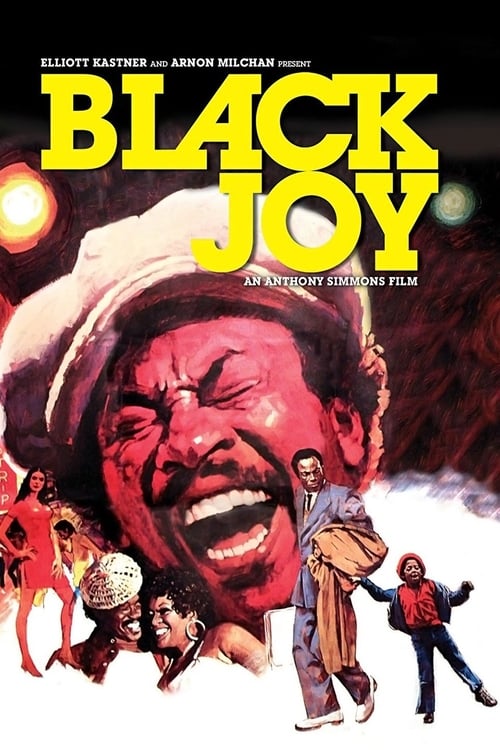


Along with Pressure, Babylon and Burning an Illusion, Black Joy is a landmark film in that it attempts to depict the experiences of Britain's Afro-Caribbean community towards the end of the last century. That it has been somewhat overlooked in the years since its release in 1977 is a tragedy, but is initially perhaps understandable when you consider the confusion that presented itself upon its debut in the cinemas; a successful opening bouyed by its entry at Cannes was curtailed when it was discovered that the music licenses for the soundtrack to be played on general release had not been paid. It subsequently took the filmmakers four more years to resolve the music rights and, by then, the film's moment had passed. The film didn't even secure a US release until 1987, a full ten years after it had been made.Black Joy is the picaresque story of Guyanese 'country boy' Ben Jones (Trevor Thomas) and his adjustment to life in England, in particular the bustling black community of Brixton. Taking him under his wing is Dave 'Abana' King (Norman Beaton), a wily street hustler who, with silver tongue, impresses upon Ben the necessity of a partnership between them both. This partnership doesn't prove to be evenly balanced; Ben works during the day as a binman, before coming home to cook and clean and hand over his wages to Dave, whose contribution is to show Ben how to enjoy life! Despite this imbalance, there's a warmth to their friendship and the film is ostensibly about the remarkable, unbowed spirit that exists within the immigrant community, one that remains optimistic, positive and yes, even joyful, in the face of hardship, prejudice and deprivation. It's this sense of survival at all costs that powers Black Joy. It would be easy to consider Dave's actions, his cunning exploitation of his friends naivety and his reliance on his girlfriend Miriam (Floella Benjamin) for handouts; paying her back by sleeping around and generally neglecting her, as reprehensible. But it's important to view the film within the context of its time. The Afro-Caribbean community were blighted by racism, both institutionalised (as we witness as Ben arrives at Heathrow, greeted with suspicion and a full body search by white immigration officials) and casual (see the later bigoted comments from David Ryall's butcher when Ben as the audacity to ask for directions, or the 'banter' he endures at the hands of his burly workmate on the binwagon) that would arguably keep them from entering gainful employment and a good and steady living wage. Excluded from the opportunity to be the breadwinner, it's easy to see why a character like Dave would take from wherever he could get it to enjoy just a glimpse of a social life and leisure-time that his white counterparts would take for granted.The film's depiction of the Afro-Caribbean experience for its women at the time is thus an interesting one. Characters like Miriam and her sister Saffra (Dawn Hope) are depicted as intelligent, confident women who can multi-task as breadwinners and homemakers. But feminist success is missing in their, or rather specifically Miriam's, seeming acceptance and easy forgiveness of their menfolk's transgressions. I can understand the criticism that the women are sidelined and depicted as similarly meek doormats as Ben, equally I can understand the complaints that Dave is emblematic of all the the negative stereotypes of the Afro-Caribbean community, but it would be foolish to try and pretend that these characters or this situation did not exist. At the very least, Black Joy tries to illustrate just why it may be like this.Viewed today, Black Joy is an insightful snapshot of inner city life in the late 1970s. The bubbling, multicultural diaspora of Brixton is captured with a great vibrancy that showcases both the frustrations of life for its subjects as well as their good humour. You really get a sense of the dilapidated streets and the colourful nightlife, whilst the film features a great reggae and soul score including an appearance from The Real Thing in one club scene.