Oh Godard, how rebellious! How carefree! Conventional filmmaking be damned! Let's have three, no, four people talking at once, while the phone's ringing. Let's have the water tap running while a conversation and a narration is simultaneously going on. Let's have everyone demanding for attention in one single frame, let the background be as busy as possible. Doors opened and closed, books thrown to the floor, computers making weird noises. Let's have multiple plot lines running together at the same time, let each dialogue be a challenge to interpret. Let's skin away the exposition and let the audience figure it out themselves. Let them be the détective.That's it, of course. I'm supposed to be the détective. I'm supposed to détect. I get it now. No problem, let's see. We have this cheating wife. This guy who owes money. And there's this-Ah, who am I kidding. I got nothing.
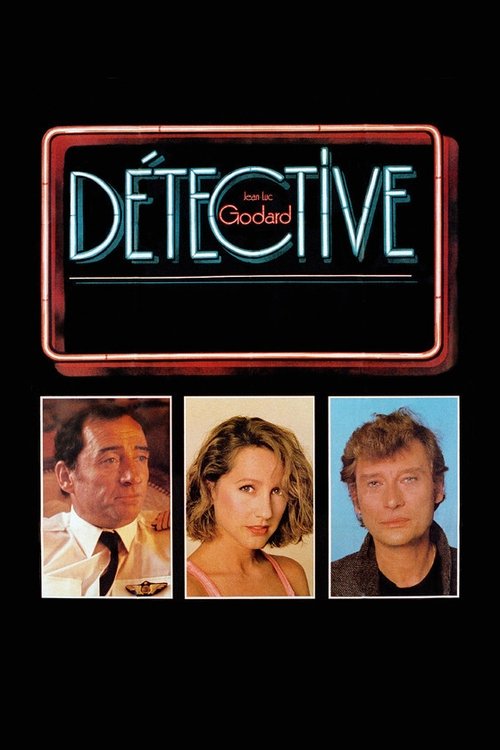
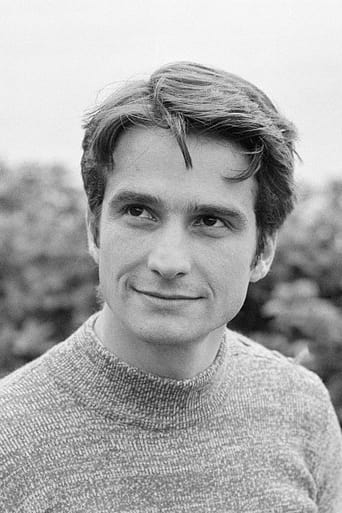
The age of the main character is over, and all that Paris amounts to is a city of extras in Jean-Luc Godard’s “Détective.” Calling back to the structure of Edmund Golding’s 1932 “Grand Hotel,” Godard’s film is a series of interweaving characters and stories set almost entirely in the Hôtel Concorde Saint-Lazare. If in Golding’s classic work, everyone is a star (Garbo! Crawford! Barrymore!), then in “Détective,” nobody is. The film is, though, populated with an array of French icons, including iconic rock star Johnny Hallyday. Still, there is but a scant second spared for a close up of anyone. Each of the characters is shrouded in the vagueness of the expectation of assuming their roles.The scene is this: A famous boxer has died, two police inspectors are investigating. Any answers beyond that lie in unraveling how each of the involved parties respond not only to one another, but to art itself. In an assurance that all the subjects we are watching are merely bit players themselves, we watch them in their own process of observation - of people, of literature, music, and film. Not even the first party witnesses, it places the audience in a position of third hand understanding. Comprehension passed through multiple veils, each shoddy in their own unique ways. The characters of “Détective” each attempt to find themselves through art. Whether it’s a boxer reading Shakespeare, or a gangster’s 16-year-old daughter (moll? Advisor? A young Julie Delpy!) playing clarinet. And then there is the viewer; taking in this art on art with the apparent ambition to find logic enough in it to piece together a mystery. In his eighth and final appearance in a Godard film, it is Jean-Pierre Léaud who perhaps is the index of answers. Godard knowing uses Léaud’s iconography in French cinema within “Détective,” casting him as one of the crime’s investigators. Léaud absorbs himself undercover in various hotel roles as he attempts to solve the murder. In positions spanning from a waiter to a butler (ever, slightly inept), he loses the distinction of his star persona by being always an ensemble member. Always an observer. Always a viewer. Just like we, the audience. One last time, an insert character in a piece of art that is, about the creation of art - this time, acting (literally) in our place. The viewers, no more than extras to the extras themselves. Observers to the observed or, as “Détective” puts it; martyrs.
The relationship between the story and the image can be handled in any particular way. However, depending on how it is handled it can be easily understood or difficult to grasp, and even be shaped into something that has never been experienced before. The possibilities of cinema are exactly there. When you see this film, you will understand.