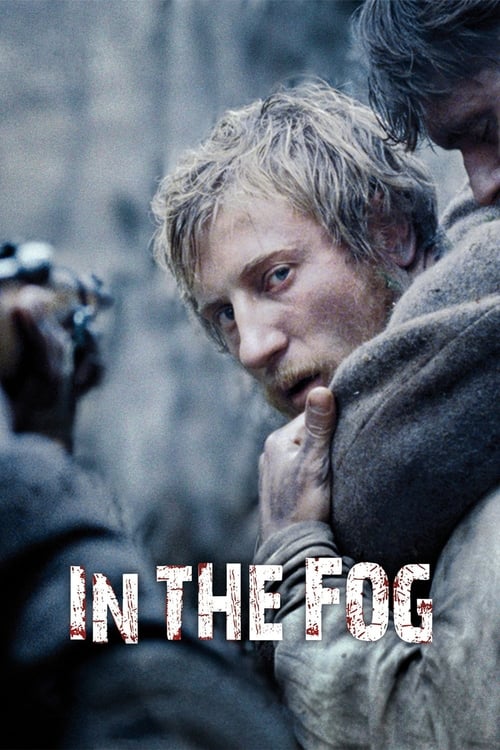


Nominated in 2012 for the Palme d'Or at Cannes and based on the novel Vasiliy Vladimirovich Bykov, the story combines three stories of characters who were affected by the German invasion in 1942, which occurred on the Russian border, its director Sergei Loznitsa (known mostly for making documentaries) combines the stories of each character in a good way, three men members of the resistance who lived through different episodes and encounters with the Nazis, the film becomes human in its story and has tinges of rawness, that rawness that we already know well from documentaries, books, and films as legendary as Schindler's List or The Pianist. In the Fog slowly delimits human irrationality, the uselessness of war, since at the end behind that fog is the inability of men to see beyond their noses.The director's second feature film follows the same path set out in his debut My Joy, this time the action is set in the context of World War II, which although many are already tired of the use of the theme, I think there are still many stories to tell from different perspectives, and this is what Loznitsa achieves, dedicating his film to explore and unveil part of human nature and moral dilemmas in wartime. With an impeccable technical and visual display, the director undertakes the journey of pain and guilt with a somewhat slow, leisurely, and contemplative pace towards the everyday.That is the basis of the story, which although I linearly tell the synopsis, the film's narration is precisely the opposite, with recurring flashbacks and a constant change between present and past, where little by little the viewer himself unravels the web of the story. A story that contains a lot of pain and makes a frightening portrait of the weight of conscience and guilt. The rhythm of the film is increasing in the course, from the slow beginning, where we are introduced little by little to the characters and some of their actions, in this contemplation of the human being and his surroundings, undoubtedly it will remind us of a lot of the great Russian master Andrei Tarkovsky, especially in his film Nostalgia, with many landscapes and movement that reminded me of that specific film. This suggests that Loznitsa has respect for the great Russian directors, who so masterfully and poetically described the everyday life and the nooks and crannies of being human.In the Fog flees from the conventional war cinema more focused on the great battles, patriotism, or the heroism of a character or group, on the contrary, take care of the psychology of the human being within the hostile environment of war. An extreme situation where man is dragged to change his way of being to survive, even at the cost of sacrificing any kind of friendship or family ties. Mistrust, immorality, and meanness are the only valid weapons to fight against the oppression of a savage enemy where there is no middle ground: "you are with me or you are against me".It is in this middle ground that we find Sushenya, a good man who has always been loved and respected by his neighbors, who is now, despite everything, repudiated, accused of working for the Germans and betraying his comrades, just an innocent who does not want to meddle in one side or the other; But against his will, he will be dragged by the events being manipulated by the Germans and finally persecuted by his friends and those neighbors who, consumed by the struggle and distrust, will sentence a man who could lead them to the gallows.The performances are very outstanding and natural especially Vladislav Abashin and Vladimir Svirskiy, the cinematography is excellent, the direction is very remarkable, with several long sequence shots made with great pulse and detail, although they do not have the musical accompaniment, they keep you in expectation and with great intrigue in the most exciting scenes and what to say about the various symbolisms in the film, especially the greatest of all, as is the same fog, great protagonist, which is always present to hide the horror, misery, evil and despair of human beings.For me, the biggest flaw that can be put to In the Fog is its excessive slowness because except for a few flashbacks perfectly done, the main plot often sins of being stretched without there being any need for it. After all, it is good and perhaps it was not necessary to tangle it so much. There are certain moments in which the abuse of the sequence shot slows down too much the course of certain events. There is a lot of footage that seems unnecessary after seeing the final result. The solemnity that is intended to achieve with certain shots and scenes of long duration is not effective, especially at the beginning when the viewer is still unaware of the story and the characters that will be found. The more than two hours of duration could have been limited, without giving up the slow tone with which the film is presented and obtaining a similar or even more powerful final sensation, I say this because I am not against this type of introspective cinema, I see it stimulating and a great alternative to the cinema of evasion that predominates in the billboards, but to be a satisfactory exercise is necessary to touch the soul of the viewer and I am afraid that In the Fog did not come close in mine at all to that effect. Even so, I consider that what is important and salvageable in a work like this is that it shows the war as it is, that is why we have a harsh, cold, cruel, aggressive, dirty, uncomfortable, discomforting, nefarious, devastating, sad and unfair film, just like that, because in this story there are no heroes or villains, there is no group of brave soldiers who manage to come out on top against the invading army, there are no "alpha males" who seem like gods descended to earth fighting on the side of the good guys, no, because here the war is shown as it is, it is not intended to glorify anything, we feel the war, we feel the agony, the struggle against nature itself, in a desolate and hopeless environment, you have to see that ending.In the Fog is a dramatic and realistic look at resistance and the great moral and human sacrifices that must be made in extreme situations. A film of complex characters superbly developed through powerful flashbacks. A cruel and anti-war story that knows how to convey like few others the barbarity of war, its injustice, and the terrible effects it has on the human soul.