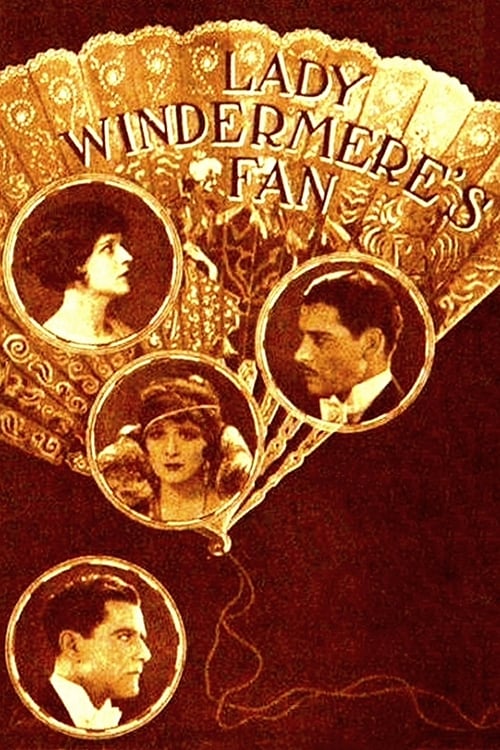


If you were to skim the surface of this film, it might seem a fairly conventional melodrama, ladled with on-the-nose social satire and contrivances that make for somewhat schematic plotting. However, Lubitsch avoids the pitfall of placing emphasis on the build up towards the reveal of Erlynne’s background as the Wilde play seems to do (haven’t read it), and instead seeks to ground his melodrama in a naturalistic context. Part of how he manages this is by making no character in this film unworthy of empathetic observation and dignity. For example, just as Darlington is about to meet the husband of the woman he loves, Lubitsch holds on a shot of Darlington outside the door nervously collecting himself. Other directors might have cast Darlington as the suave mustache-twirling Casanova type, but Lubitsch understands that he is acting out of love even if it expresses itself in a possessive manner. Lubitsch grants nearly every major character with these moments of solitude in which he registers movements with his usual generosity. By playing these quiet moments against the more mannered performances in public settings, Lubitsch establishes the contrast between the fictions that characterize this class milieu and the calculations that characters anxiously make in private.Mrs. Erlynne serves as the catalyst to bring about the masochistic hysteria within both Lord Augustus and Lady Windermere, forming the basis for melodrama. When Lord Augustus stumbles upon a large cigar in Erlynne’s ashtray, presumably belonging to another suitor, he allows himself to get swept into a jealous rage, which Lubitsch depicts in a long shot of Augustus walking away from the camera and childishly grabbing a statuette (phallic symbols abound). Lubitsch eventually reveals Erlynne to be indulging in a Lubitschian game of sadism in which she withholds the truth that the cigar belonged to Augustus to torture him with thoughts of infidelity. This attempt to pry Augustus away from his class-based conception of Erlynne as a loose woman is mostly successful as he reaches out of the frame to take Erlynne’s hand as an apology. Erlynne removes her hand from Augustus and Augustus looks down like a wounded puppy dog, prompting Erlynne’s hand to again enter the frame, but this time in the form of a playful slap that brings a wide grin on his face (cause he knows that means he’s about to get laid). Erlynne’s attempts to transcend her class are ultimately met with considerable barriers despite some lovely moments of grace along the way. During a lengthy scene at a ball, Lubitsch cuts from Lady Windermere’s solitary moment of anguish over her husband’s presumed infidelity to a sequence in which a ringleader of older women traverses the room to gossip about Erlynne’s supposed promiscuity. A great visual gag occurs when, just as the ringleader ceases gossiping, Lubitsch cuts to her POV for a group shot with a seemingly endless procession of men entering the frame to meet the intriguing Mrs. Erlynne. Lubitsch provides a visual double to this shot after Mrs. Erlynne compliments the ringleader prompting her to warm up to Erlynne, which in turn leads women to gradually enter the frame and greet Erlynne. Just like that, without succumbing to condescension, Lubitsch visually satirizes the tenuous class judgements that are completely cast aside when someone of Erlynne’s social graces can bring all the boys (and girls) to the yard. Lubitsch cuts to a door opening as if to signal a transition from performance to interiority. We return to Lady Windermere grieving and Darlington extends his hand into the frame to console her, but she rejects it. This image of a hand intruding upon a frame of private torment mirrors that of Lord Augustus in the one-shot I discuss above, and her rejection indicates that she’d rather wallow in pain than face uncertainty over her husband’s fidelity… or that she just doesn’t want to get hit on by Darlington. I could go on and on about this film, but I’ll leave it there for now. The ending is one of the greatest I’ve ever seen. Without giving too much away, I’ll say that Lubitsch alters the Oscar Wilde ending to emphasize Erlynne’s sexual agency, and in doing so, prefigures the very ahead of its time gender politics of Design for Living.