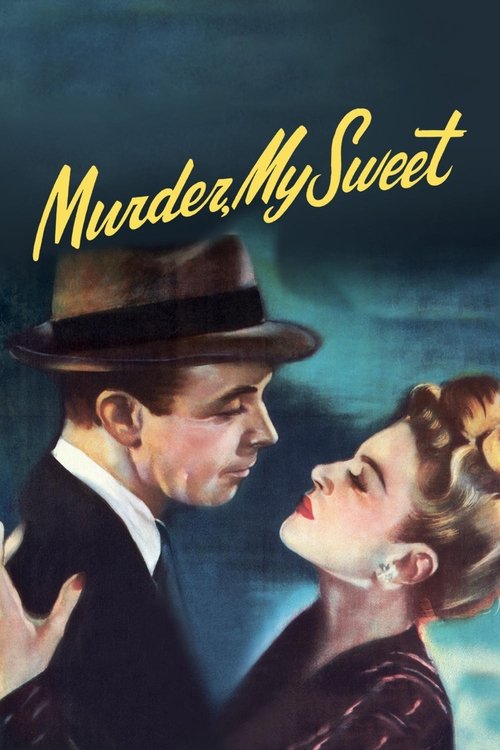

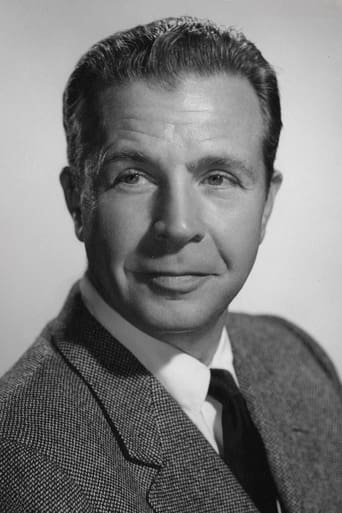
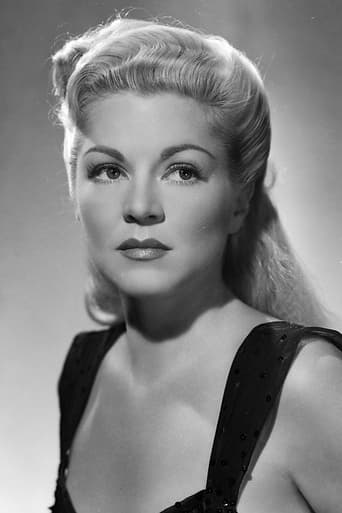


Film noir is generally seen as a post-war innovation, mirroring the more jaded, cynical outlook that the world possessed after the cataclysmic conflict. Mr Raymond Chandler would have every right to disagree. In 1944, not only did he co-script what for me is one of the finest (and noirest) films ever made, Double Indemnity, but he also provided the source material (the novel Farewell, My Lovely) for this marvellous movie from the perennially underrated Edward Dmytryk.Dick Powell transformed his frothy image in one fell swoop by personifying private detective Philip Marlowe so well and delivering Chandler's hard-boiled lines (via John Paxton's sharp script) as though born to them. We are introduced to him blindfold and under interrogation for multiple murders, and his voiceover reveals in flashback the twisty plot that led to him being under this literal spotlight.This naturally involves not one, but two nefarious dames, nicely played by Anne Shirley and perfectly embodied by Claire Trevor. Trevor's introduction, all leg and lingering look, has her instantly marked as a shady lady, and boy does she run with it. Indeed it's a weakness of the picture that we don't get enough of her grasping schemer.Cinematographer Harry J Wild plays beautifully with shadow - one exquisite shot has Trevor reclining on a sofa with only the smoke curling up from her cigarette signalling her presence. Dmytryk's direction is similarly assured, using his camera inventively and displaying a sure sense of pace, as well as providing a twisted subjective sequence when Marlowe has been pumped full of narcotics.Voiceover. Flashback. Femmes fatales. The shadows of the soul. If this isn't film noir, I don't know what the hell is. Mr Chandler, we salute you.