there’s a beach scene here that puts this up there with moonlight and aftersun. whole thing crushed me
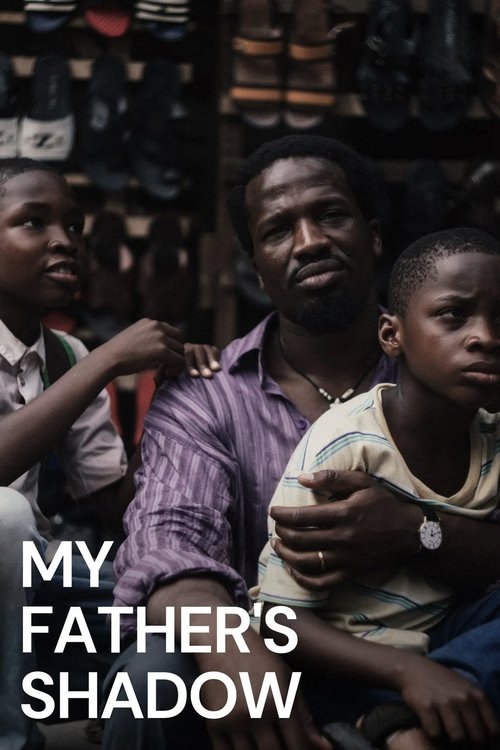
Two young brothers explore Lagos with their estranged father during the 1993 Nigerian election crisis, witnessing both the city's magnitude and their father's daily struggles as political unrest threatens their journey home.
My Father's Shadow draait op dit moment niet in de bioscoop.
Volg de film in de app om bericht te krijgen zodra er speeltijden bij komen.
Speeltijden van My Father's Shadow, elke ochtend ververst
Kies je bioscoop en krijg een seintje voordat de film van het doek verdwijnt.
there’s a beach scene here that puts this up there with moonlight and aftersun. whole thing crushed me

June 24, 1993 will become known as one of the most consequential days in the brief history of post-colonial Nigeria, but — for the two young boys at the heart of Akinola Davies Jr.’s semi-autobiographical drama “My Father’s Shadow” — that date is destined to be remembered for considerably more personal reasons. It was on June 24, 1993 that Major General Ibrahim Badamasi Babangida, refusing to accept that the citizens of Nigeria had overwhelmingly voted for the people’s champion MKO Abiola, annulled the results of the country’s first democratic election since the military coup 10 years earlier. It was also, this poignant and vividly realized film invites us to imagine, on June 24, 1993 that brothers Akin and Remi were invited on a rare trip to Lagos with their dad, Folarin, a strong but mysterious figure in their lives who was often away from their family for months at a time.Over the course of their wistful and chaotic journey into the big city (a two-hour drive from Ibadan that becomes an odyssey unto itself, thanks to Nigeria’s petrol shortage), the boys will come to see their father in a brilliant new light — one that will light up their dreams for decades to come. Set at a moment when Nigeria seemed to be on the precipice of a new dawn, “My Father’s Shadow” tempers a nascent sense of hope with a lingering air of hauntedness. The horrors of a recent massacre are splashed across newspaper headlines, but men like Folarin (“Gangs of London” star Ṣọpẹ́ Dìrísù, entrancingly tough and tender all at once) are eager to move forward and invest in their children’s future — to steal it back from the military.“If you die for Nigeria, you die for nothing,” someone says. Folarin would prefer to stay alive. His kids barely know him, but — like most fathers, and absent fathers in particular — he looms over their lives like the sky itself, and the boys would struggle to conceive of a world without him in it. And yet, Davies, who naturally co-wrote the movie with his brother Wale, shoots Folarin as if he’s already halfway gone. Despite the basic and tangible need that motivates his trip into Lagos that day (Folarin hasn’t received a paycheck for his last six months of work, and the time has come to collect), there are stretches of this film in which he seems to be a spectral projection of some kind, if only because his sons have never seen him in this context before. ~this review continues on IndieWire~

i was absolutely floored by my father’s shadow. air swept all the way out of me. such a haunting and tender look at family, memory, sacrifice, and notions of home. tremendous, tremendous performances across the board. sensational.
Twee jonge broers verkennen Lagos met hun vervreemde vader tijdens de Nigeriaanse verkiezingscrisis van 1993, waarbij ze getuige zijn van zowel de grootsheid van de stad als de dagelijkse worstelingen van hun vader terwijl politieke onrust hun reis naar huis bedreigt.
My Father's Shadow is geregisseerd door Akinola Davies Jr. en markeert de debuutspeelfilm uit Nigeria die in première ging in de sectie Un Certain Regard op het Filmfestival van Cannes in 2025.
Ja, de film won de Speciale Juryprjs in de sectie Un Certain Regard op het Filmfestival van Cannes in 2025.