

Steve McQueen himself told the guy in front of me during the screening to get off his phone - fucking CHAD#Cannes

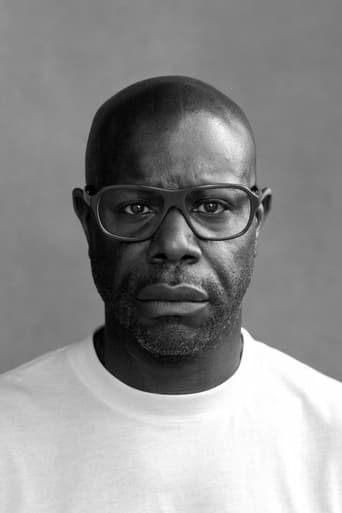
Geregisseerd door Steve McQueen
De Bezette Stad
Het verleden botst met ons heden in Steve McQueens gedurfde documentaire De Bezette Stad, geïnspireerd op het boek Atlas van een Bezette Stad. Amsterdam 1940-1945 van Bianca Stigter. McQueen creëert twee in elkaar grijpende portretten: het ene toont van deur tot deur de nazi bezetting die de stad nog steeds achtervolgt, het andere is een levendige reis door de laatste jaren van pandemie en protest. Wat naar voren komt, is zowel verpletterend als hoopgevend, een verreikende meditatie over geheugen, tijd en wat er in het verschiet ligt.
Occupied City draait in 1 bioscoop in Berlin - eerstvolgende voorstelling zondag 29 november om 17:00 in Arsenal - Institute for Film and Video Art E.V.
Volgende voorstellingen: zondag 29 november.
Volledig programma
Speeltijden van Occupied City, elke ochtend ververst
Kies je bioscoop en krijg een seintje voordat de film van het doek verdwijnt.
Steve McQueen himself told the guy in front of me during the screening to get off his phone - fucking CHAD#Cannes

A four-and-a-half-hour World War II documentary that doesn’t include a single frame of archival footage or talking head testimony, Steve McQueen’s provocative but emotionally stultifying “Occupied City” refracts the fading memory of Nazi-occupied Amsterdam through the prism of the city’s more recent COVID lockdown — a rare pause in the flow of time, and one that McQueen eagerly seized upon as a chance to measure its powers of erosion. The film’s conceit is as simple as it is almost immediately numbing: Each of its 130 fragments is dedicated to a different address throughout the city, the past and present of these sites fractured across two parallel timelines that are offered to us all at once. While our ears listen to monotone narrator Melanie Hyams list off the war crimes that took place at a particular location in the early 1940s, our eyes watch similarly clinical — if far more benign — 35mm footage of the same address as it existed during the early 2020s, when the people of Berlin were forced to abide by the first city-wide curfew since World War II. Amsterdam wasn’t bombed as often as other European cities, and that lack of erasure makes it a uniquely lucid setting for a film so compelled by how the present lives alongside its memory of the past. The darkest chapter of Amsterdam’s history wasn’t erased or razed to the ground, it was simply refurbished (while Hyams’ voiceover notes that several of the film’s locations have been demolished since World War II, it’s unclear if those haunted lots were targeted for exorcisms). Blissfully oblivious children play in the same park where Himmler once inspected Nazi soldiers. Girls attend high school in a building that was once home to Hitler’s secret police. Hopeful messages are graffitied across the pandemic-shuttered walls of the G-Star clothing store that now sits on the very spot where the first “No Jews” sign was hung after the German occupation began. These flashpoints stand out in an epic whose typical episode is simultaneously more specific and banal. The cold open, in which an old woman shuffles into her cellar for supplies while Hyams’ voice reads a list of the Jews who once hid down there, is positively action-packed compared to many of the snippets that follow. It gains further potency from being the first passage in a film whose relentless inventory of disembodied atrocities is designed to become white noise of the worst kind, as McQueen’s technique somewhat damningly suggests that we’re less inclined to forget history than we are to tune it out. To that end, half-listening to Hyams’ unfeeling narration as it repeats whatever awfulness once happened at this storefront or on that street corner emulates the split awareness of Amsterdam itself, a city whose past is still palpable enough to feel like a low whisper in your ear. At no point during the interminable running time of “Occupied City” does the whisper grow any louder than that. McQueen’s pointillistic approach invites our minds to wander freely between then and now, his film less interested in shuddering at the specifics of its awful facts than it is in probing our ever-evolving relationship to them, but the documentary’s monotonousness resists deeper engagement. For all of the fascinating questions it raises along the way, watching this thing in full ultimately feels less instigative than it would be to isolate any single one of its 100+ parts. ~this review continues on IndieWire~

Steve McQueen’s beautifully shot documentary OCCUPIED CITY is an extensive, somber & insightful look at modern-day Amsterdam while recounting the atrocities committed by the Nazi’s on the city during WWII. A love letter & haunting warning of what could come again but far too long. I can see why some may call this repetitious & dry. As a way of connecting the past to the present, it sort of worked for me. Had it been half the length it could’ve been great. It still would’ve communicated its message effectively but it feels like nothing was left on the editing room floor for this one which robs it of some of that power.My full review
Het is een documentaire die de nazi-bezetting van Amsterdam tijdens de Tweede Wereldoorlog verbindt met hedendaags beeldmateriaal van de stad, geschoten tijdens recente jaren van pandemie en protest.
Het werd geregisseerd door de Britse filmmaker Steve McQueen in 2023, bekend van werken als 12 Years a Slave en Hunger.
Het werd op 25 december 2023 in de Verenigde Staten uitgebracht.