An interesting film that exists in the in-between space of the Cold War, as Castro’s government had to approve the production and it did so because the film portrays Western interference in a satirical light. And it was shot in Cuba before the Soviet Union aligned with the country, and only three months after Castro’s revolution. So you could say, this exists in a kind of political in-between space with itself.Reed’s adaptation of Greene’s novel(I have not read it) is satirical and perhaps a bit too "exuberant" to fully draw me in. Still, as a style-driven work, this film shines simply by existing. The black-and-white cinematography is really beautiful, detailed and the streets of Havana come vividly to life in a deeply pleasing way, while a distinctly playful, critical attitude toward the Cold War wrestles within its depths.Guinness carries the story, with touches of light comedy, but the humor itself is not the film’s main point, nor is it actually as funny as it sometimes seems to want to be. It is, I wouldsay, rather, an elegant and assured black-and-white film.Lies set the tempo, and the absurdity merges with the everyday life of the surrounding country and its people. A classic that knows exactly what it is doing, yet one that never quite manages to draw you in on a deeper level. Reed is capable of that depth, but here it does not come through as strongly.So what remains is a noir-tinged tease and a rather weightless experience. Cynical, as films of this style often are, yet very much alive, and Havana is fascinating to watch as it goes on living its own life in the background because this, like I said before, was filmed three months after Castro's revolution. The runtime is felt, as pacing issues are noticeable, Reed is clearly experimenting with some new things here but tonally it ends up feeling somewhat incomplete. A good film nonetheless.61/100
Our Man in Havana presents a compelling blend of espionage satire and Cold War cynicism. The narrative follows a seemingly ordinary British individual who is recruited by MI6, subsequently navigating a precarious situation far beyond his capabilities. Alec Guinness delivers a masterful performance, expertly portraying the character's dry wit and inherent absurdity, making him captivating throughout the film. While the film benefits significantly from Guinness's performance and a vivid depiction of Havana's atmosphere, the satire's overall impact is somewhat diminished by its emphasis on humor over a more grounded approach, compounded by pacing issues. Nevertheless, the film remains an enjoyable experience, enhanced by Guinness's portrayal and the clever integration of satire and humor.
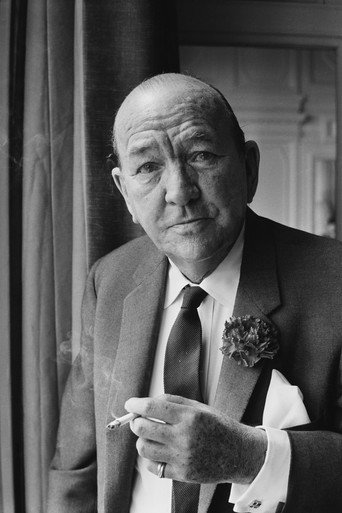
everything's legal in havana.Spy thriller. Comedy. Guinness, Ives, O’Hara, Richardson and Noël Coward, who always pops up where I least expect him. It’s based on Graham Greene’s novel of the same name, (I didn’t even know this film existed until recently) and that book is just brilliant. One of Greene’s best (his best is between The End of the Affair and The Quiet American).Talking about the film, it’s a satire of Cold War espionage -- a vacuum cleaner salesman accidentally becoming a “spy” and just… making everything up. But it’s quietly brutal about how intelligence systems actually operate, or fail to. If an institution is hungry enough for information, it starts rewarding confidence over truth and nonsense becomes policy. That idea from the book comes through well. And the main difference is that Greene’s novel is darker. It’s still funny, but more critical. He’s not just making fun of British (or American) intelligence... he’s criticizing the whole system -- the bureaucracy, blind trust in authority and how they far away make serious decisions based on false information. The film is lighter, it's more about the performance, especially Alec Guinness. He plays Wormold in a very relaxed way. It works well, but it loses that uncomfortable feeling that everything is built on lies and self-deception. But, Guinness is always fun to watch.One thing that I liked is how it treats success... the more ridiculous Wormold’s lies get, the more seriously he’s taken. The system rewards results that look impressive on paper. And once people higher up invest in those lies, there’s no going back, because admitting the truth would mean admitting the whole structure failed.Same with characters like Hasselbacher, in the book he’s almost the philosophical core, the one who casually shrugs off the system with lines that basically dismantle it. In the film though he's less central to the film’s ideas. Beatrice (O’Hara) here is more of a romantic presence, but in the novel she’s much sharper... someone who actually knows what’s going on. Captain Segura is an interesting piece too, almost cartoonishly sinister here, but he represents something very real... state violence being treated as normal, even respectable. The fact that he can exist so comfortably alongside all the absurdity says a lot. The joke never fully undercuts how dangerous he is.Carol Reed directs it with his shadowy style, but here it’s brighter and more open as well (love this shot). Havana is busy but mixed, with glamour next to places that are breaking down, which fits the story well. And the timing is interesting too. It was made around the time of Castro's Revolution and filmed just after it. Castro even visited the crew. To which he later said Greene’s story didn’t show how harsh Batista regime was, which he had just overthrown Greene’s whole angle, both in the book and the film, is that espionage in this period isn’t really about truth, it’s about maintaining the illusion of control. Institutions keep feeding themselves, mistakes get buried instead of corrected and people get pulled into something much bigger without ever really understanding it. It’s almost the anti–James Bond... instead of a hyper-competent agent.. and a system that’s too self important to notice it’s being fooled. And he wrote the screenplay as well, so a lot of it comes straight from the book. That’s probably why it was so “Greene” even when everything is lighter. And love that Reed chose to shoot (at least partly) on location. It does look like a place shaped by political pressure. And the ending is maybe the most telling part. Everything gets quietly absorbed. Well, yeah, institutions would rather protect themselves than admit error. A real punchline. Very human when you compare it to other spy films, even from its time. All in all, if you’ve read this far, I’d probably recommend the book more than the movie. It’s more willing to follow its ideas to uncomfortable places. But the film is an amazing adaptation too, just tuned differently. It’s more of a smooth satire.— well it's an odd coincidence.— life is full of coincidence.