



A page-turner. Her and that damn camera…
We gebruiken cookies om je ervaring persoonlijker te maken en het verkeer te meten. Je kunt je hier altijd voor afmelden.
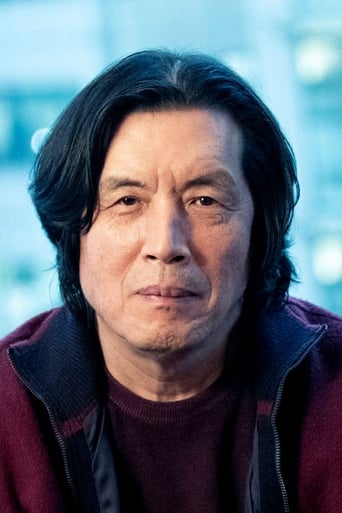
Geregisseerd door Lee Chang-dong
가능한 사랑
An acclaimed, grounded drama.
A laid-off worker and his wife cross paths with a documentary filmmaker and her spouse and confront their hidden desires.
Vandaag geen speeltijden voor Possible Love in Los Angeles.

Speeltijden van Possible Love, elke ochtend ververst
Kies je bioscoop en krijg een seintje voordat de film van het doek verdwijnt.


A page-turner. Her and that damn camera…

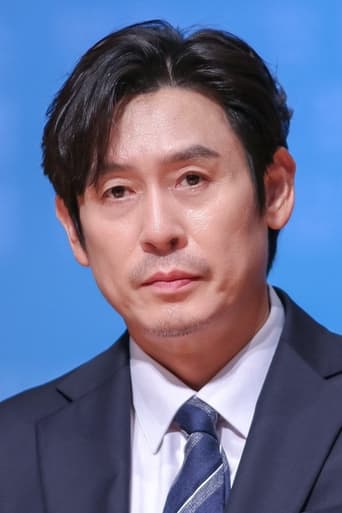
Another heart-stopping and novelistically layered stunner from modern cinema’s most literary auteur (a fiction author himself), Lee Chang-dong’s “Possible Love” might be dedicated to the memory of Krzysztof Kieślowski’s “Dekalog 10,” but let’s dispel any notion of it being a remake. Conceived independently, and then lumped during pre-production into the same tribute omnibus that kicked off with Asghar Farhadi’s dreadful “Parallel Tales” at Cannes this year this film shares nothing in common with the final episode of Kieślowski’s series beyond the biblical commandment that Lee splays on screen at the very start: “Thou shalt not covet.” And even then, the evidence of that instruction proves elusive in this sprawling drama about two very different couples who are brought together by the violent suppression of a workers’ strike at a major Korean metals factory. Who is coveting what, exactly? It’s simple enough to understand what the film’s characters want on the surface — or at least that’s true of its women. A casually rich dilettante whose pale skin glows with the same lustrousness as her salon-perfect bob, first-time director Ye-ji (Cho Yeo-jeong, similarly cast as the rich mom in “Parasite”) hopes to make a documentary about the declining state of labor across South Korea, with a particular focus on the recent unrest at a business called SP Heavy Industries. Although we see Ye-ji pitching the project to a grant board of some kind, the presumption is that most of her funding — and all of her creative freedom — has been provided by her imperiously chiseled husband Sang-woo (Lee newcomer Zo In-sung), a trust fund type who appears to enjoy a rather frictionless existence.On the other side of the economic divide, the plucky but sad-eyed Mi-ok (played by “Secret Sunshine” actress Jeon Do-yeon, who delivers another once-a-century performance less than 20 years since her first collaboration with Lee) is clearly willing to do whatever it takes to bring her husband back to life. One of the “dead” who lost his job and sense of purpose in the mass layoffs at SP two years ago, her taciturn and implosive Ho-seok (“Peppermint Candy” star Sul Kyung-gu) has been a shell of himself since being injured amid the crackdown that ended the ensuing strike, and Mi-ok hopes that participating in Ye-ji’s doc might allow him to process his trauma — to stop shuffling around like a zombie and snap back into the man she once fell in love with as a teenage seamstress who didn’t have any better options. That he might become a more present father to their young son Cheol, whose current rudderlessness is best expressed by his abject incompetence at Taekwondo. Beyond that simple baseline, the matrix of desire at work in Lee and Oh Jung-mi’s remarkably nuanced script is too slippery to pin down until the movie’s velvet gutpunch of a final scene. Yes, Mi-ok lusts after Ye-ji’s elegant wardrobe and designer handbags, and there’s an unspoken sexual charge in the air whenever she’s alone with Sang-woo (a charge that eventually sets fire to an unforgettable pre-dawn sequence on a private beach in the third act). But it would be unwisely reductive to conclude that the working-class woman is jealous of her hyper-affluent new bestie, just as it would be unhelpfully rash to assume that envy plays a more pivotal role in this story than resentment, or that a film as mottled and probing as “Possible Love” might be content to retrench the divide between Korea’s haves and have-nots. ~this review continues on IndieWire~

Lee Chang-dong masterfully probes the psychological and economic tension of his characters. His exploration of class divides in our automation-bound world is so fresh and richly examined. He builds its characters and world very deliberately, asking the audience to lean in and observe closely. When it ended I found myself replaying scenes and moments, only finding more and more to love about it. The performances are superb. I am already itching to see it again. Contender for best of the year.
Een ontslagen arbeider en zijn vrouw kruisen het pad van een documentaliste en haar echtgenoot, wat beide stellen confronteert met diepgewortelde economische spanningen en verborgen verlangens.
Lee Chang-dong regisseerde het drama uit 2026, dat bekendstaat om zijn romanachtige vertelstijl en nauwgezette karakterstudies.
De film heeft een speelduur van 165 minuten.