I wish this was 12 hours longer. What an insanely surreal experience to watch amongst the cast and crew of Edward II (including a now 47 year former old baby Edward III). I loved so many things about this, but one thing I found particularly interesting throughout was the intricacies of film funding, especially from television and especially when it comes to any form of ‘experimental’ work (in both form and content). Jarman writes extensively about his opinions of television and its ‘interest’ in film funding throughout his journals, but it’s particularly fascinating to watch that manifest on set. It strikes the most beautiful balance between being humorous, silly, horrifically relevant, and heartbreaking. Admittedly hard to watch Jarman speak about his hope for a better, more accepting society when even now, almost 40 years later, the UK is in a chokehold of growing oppression and increasing fascism. A film that truly has something for everyone, Jarman fan or otherwise. I can’t think of anyone who’d do a better job at handling 30 hours of archival behind the scenes Jarman footage. Thank you Theo for bringing this out into the world.
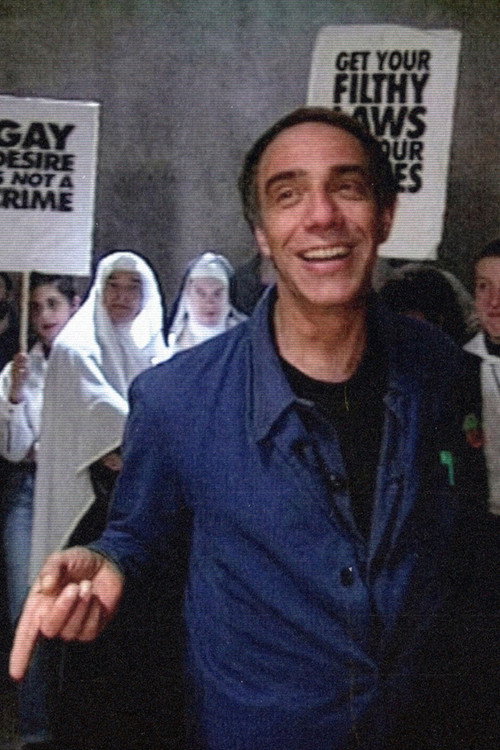
Reviewed by Travis Jeppesen from the 2026 Venice Film Festival for Sight and SoundIn 1991, Derek Jarman set out to film his own wild adaptation of Christopher Marlowe’s four hundred year old play Edward II. Making the film was in many ways a milestone, both for Jarman’s own career and the British cinema of the era. It was one of the first features funded by BBC, and Jarman’s largest budget to date, at 800,000 pounds, which still was not quite enough to accommodate the largesse of Jarman’s vision.By that point in his career, Jarman’s artistic work and his activism were indelibly fused, and his Edward II was anything but a traditional staging. Instead, he infused the queer politics of early 1990s England with Marlowe’s story of his protagonist’s fatal love for another man. This was a period when parliament was actively seeking to recriminalise homosexuality, when the AIDS epidemic was raging with no end in sight, when the age of consent was higher for homosexuals than their heterosexual counterparts, and Jarman managed to scramble these timelines in a postmodern stylistic menagerie that elicits a poignant combination of impending doom and the universal endurance of love in the face of all forms of oppression.Along the way, Jarman granted a young cameraman, Seamus McGarvey, carte blanche to film whatever he wanted on set. The resulting footage, unseen for many years, comprises the bulk of Queer Edward II and serves as a fascinating document, not only of Jarman’s process as a director, but of the wider political context which played such an outsize role in shaping the final film. In one memorable sequence, Jarman had enlisted the activist group OutRage to appear as themselves as extras in a scene; when its members found out that Cliff Richard, long rumored to be in the closet, was recording an album at the studio next door, they staged an impromptu action, bursting into his studio and demanding the singer come out – an action that led to a tabloid scandal and threats of lawsuits.Culled from more than thirty hours of McGarvey’s Betacam footage and supplemented with other archival footage from the era, ranging from interviews to documentation of major protest actions, director Theo Rollason tells a remarkable story of endurance in the face of tragedy both public and private; Jarman had been diagnosed with HIV five years prior to the making of the film at a time when most people given this death sentence could expect to live for another eighteen months on average. Jarman would live to create two more films after Edward II, the magisterial Wittgenstein (1993) and the minimalist classic Blue (1993), as well as scores of paintings. Now, thanks to the vital piece of cinematic history that is Queer Edward II, the restlessly inquisitive and gregarious spirit behind these films has also been preserved.
A rockstar doc about a gay man fighting tradition to make his strange movies, painstakingly pieced together by a debut filmmaker who understands his source material entirely. Made me so emotional thinking of the anarchy that once shaped the gay community. Enthralling and alive, a noble film full of sexy and brilliant people.